



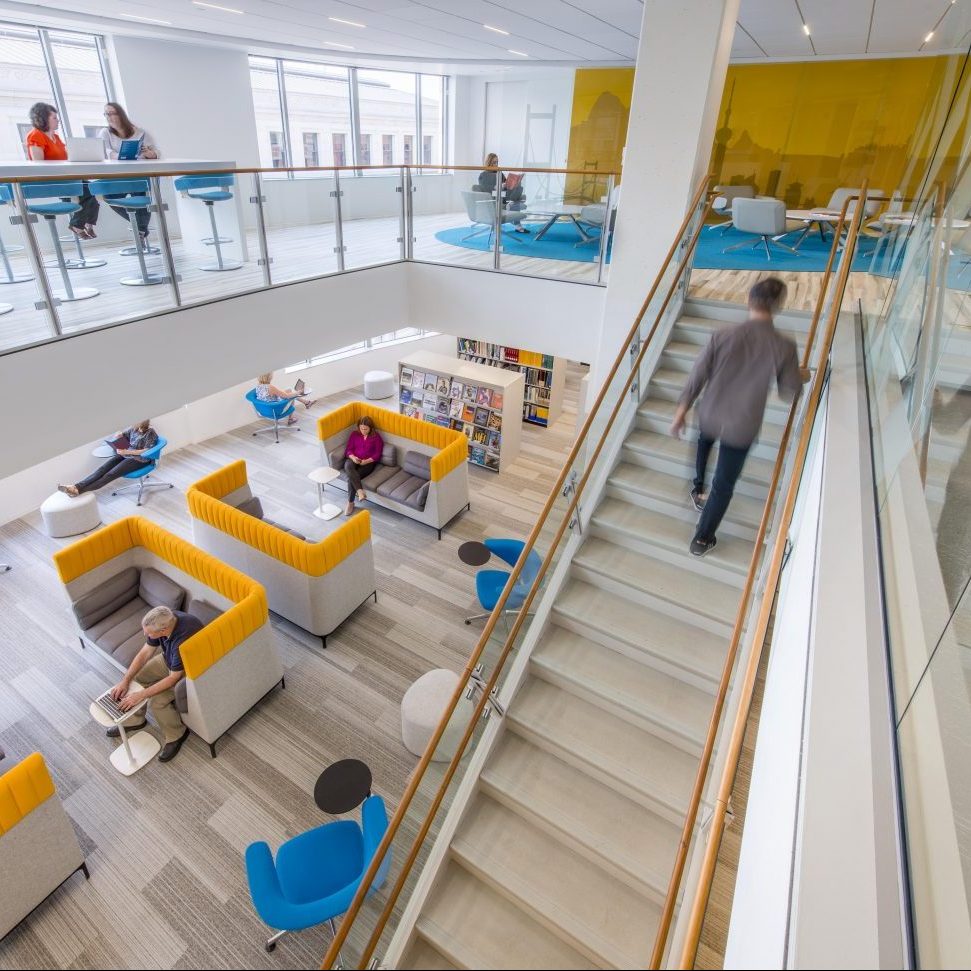
“The types of collaborative spaces are changing; they have gone beyond the boundaries of the traditional office and are supporting new types of collaboration” — Box Fox, founder and CEO of FOX Architects and publisher of Work Design Magazine, gets back to the roots of collaboration and discusses how design can help preserve, and develop, this fundamental element of the workplace.
This article is part of our ‘workplace design’ series

“Collaboration” is one of those overused words, so much so that we’ve watered down its subtle differences in meaning. This is especially true for the workplace design community.
In many ways, the word has become generic, and now that it has emerged as a key driver of the knowledge economy, we don’t have a good way to describe all of its nuances. It’s like the word “snow”: most of us think of it as frozen precipitation. But Eskimos? They’ve got 50 different words to describe it. Collaboration is a lot like that, except we don’t have 50 ways of looking at it, which makes it particularly hard to write about.

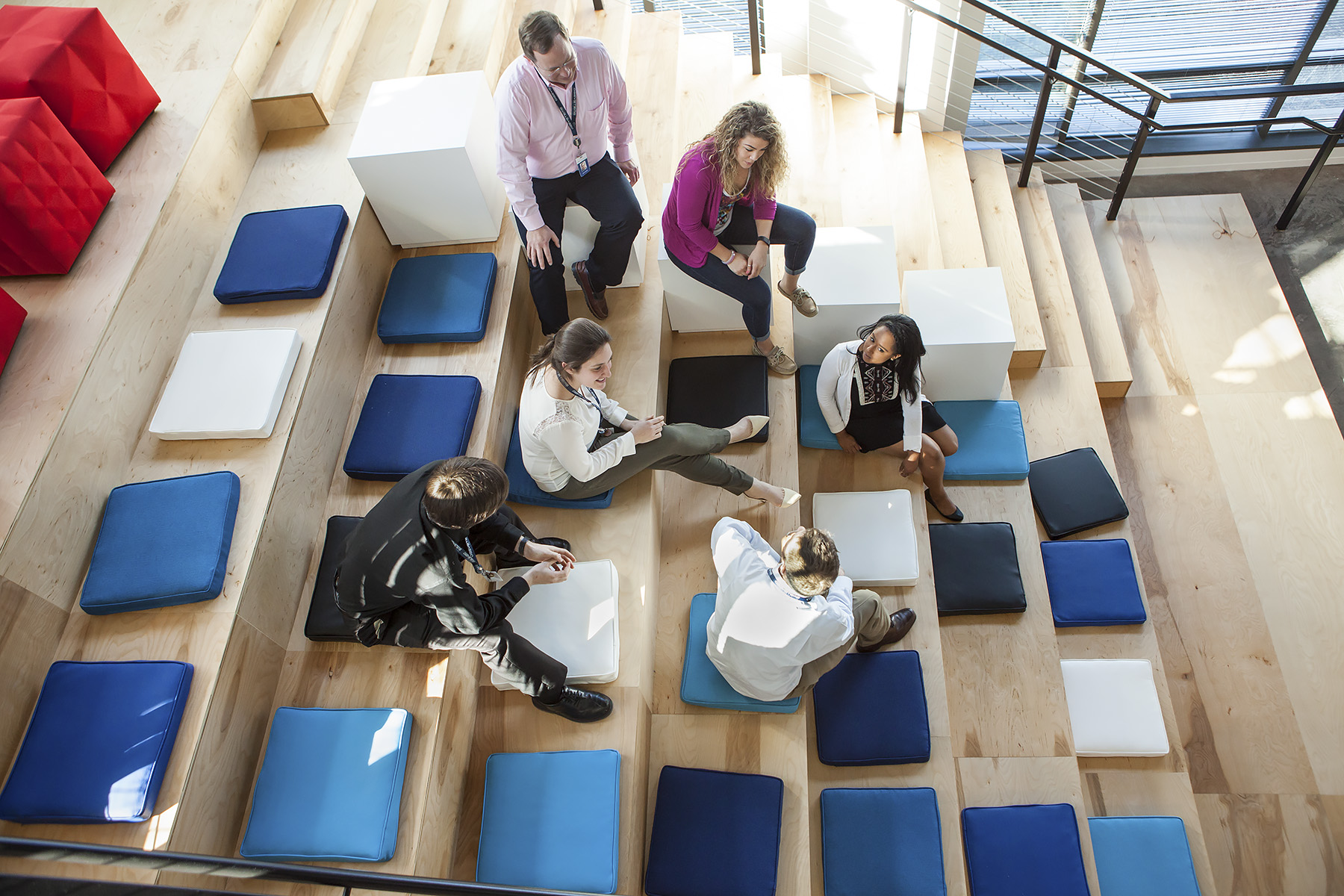
There are many things that influence how we collaborate: openness, flexibility, size, work surface, technology, video, seating, lighting, acoustics, vertical surface, glass, security, color, remote access, location, duration. And don’t forget the food. There’s more: culture, purpose, type of work, industry, process, communication. More recently, health and well-being all influence how we interact and collaborate.
There is not a lot of science behind collaboration; if there were, we would have strange scientific names that we could use. But apps that help facilitate collaboration are starting to collect data around it, and companies like Google have a considerable amount of data around how people interact.
When Work Design Magazine asked a group of designers to sketch collaborative spaces, they came up with 40 or 50 different types of collaborative space. They used words like huddle room, café, scrum, ideation, or simply collaboration space. These are arbitrarily assigned names with no specific set of rules about how they are defined or applied. A huddle room in one office might be completely different from a huddle room in another office.
Different combinations space plans can yield a vast number of types of collaboration spaces that can be created from derivatives of the above characteristics. Theoretically, you could have tens of millions of different combinations. Realistically, it might be a few hundred. But how many different words can you think of that describe different types of collaboration? My guess is maybe a dozen. Which make communicating the specific characteristics of collaboration very hard.

Most organizations have their own unique processes, behaviors, methods and tools for how they collaborate. If you get any of these out of sequence, or use the wrong tools, you can hinder the performance of that organization. The collaborative space is an important tool. You need to have the right tool for your work.
The types of collaborative spaces are changing; they have gone beyond the boundaries of the traditional office and are supporting new types of collaboration.
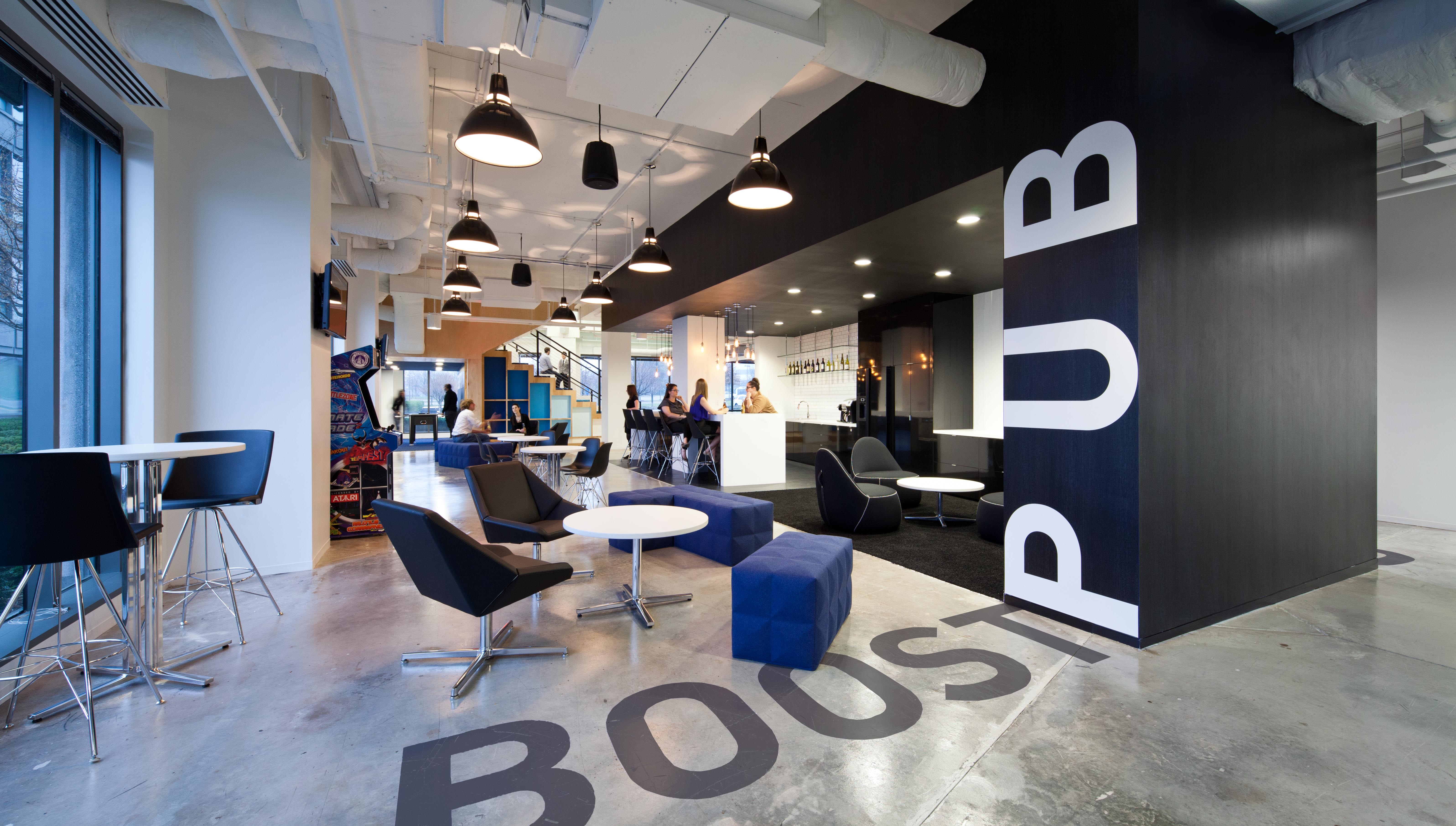
Collaborative spaces in today’s office mimic bars, food counters, diners, kitchens, living rooms and hotel lobbies. It used to be the café, then the third place, and now it’s much more integrated and flexible. The groups that they serve range from individuals working alone to small groups. The spaces are now more conducive to individuals or a group or two or three working with one other, who are getting work done, but remain open to interacting with others in the same location.
This type of collaboration is very different from the old ways that we thought about collaboration. People are there to work and they are open to meeting and interacting with others. The collaborative interactions in this kind of space are much more fluid, dynamic, unplanned, and spontaneous. Regulars come and go, catch up quickly and continue to get work done. The interactions are much more serendipitous, and these kinds of spaces enable people to be accessible and engaged in the community.
Most organizations realize that collaboration is key to their success. They are just unsure of how to describe or define exactly what they need; and so, it will remain simply “collaboration” and we will do it in collaborative space. Those of us in the workplace design arena will continue to communicate specific types and differences and iterate these spaces over time based on what we observe and experience.
Ultimately, collaboration is about people and how they work, interact, and exchange ideas. It is our need for social interaction in the community to which we belong, capturing new ideas and building value. It doesn’t matter what business we are in, collaboration is the prerequisite to innovation that we depend on to sustain our businesses. We are in an exciting time and I expect we will continue to see space and collaboration evolve.
Top image: Project: World Resource Institute | Architect: FOX Architects | Photographer: John Cole