



Every morning, millions of employees make a decision that shapes the future of office real estate. They decide whether to go in — or stay home. That choice has become the real test of demand.
In 2025, offices don’t succeed because leases are signed; they succeed because workers show up. Utilization data tells the story.

Average daily peak floor use hit 47% in Q1 2025, up from 43% a year earlier — the highest since tracking began (Density). Attendance may be stabilizing, but it still hovers well below pre-pandemic norms. For landlords and employers alike, the office is on a daily referendum — and workers are voting with their feet.
Why Workers Stay Home
The commute is the ballot box. Every extra minute spent in traffic or on a crowded train weighs against the office. For many, the calculation is simple: if the office doesn’t offer clear value, it’s not worth the trip.

A Robert Half survey in 2025 found that 70% of U.S. job seekers rank hybrid work among their top priorities (Robert Half). Employees have learned that productivity isn’t tied to a desk. When they control their schedules, they save commuting costs, reduce stress, and often deliver better output.
No surprise, then, that 22.8% of the U.S. workforce—about 36 million people—now work remotely at least part of the week (Backlinko).
Workers aren’t rejecting offices entirely. They’re rejecting wasted time.
What Brings Them Back
When employees choose the office, they do it for a reason: collaboration, mentorship, and connection. The data is clear. Microsoft’s 2025 Work Trend Index found that 73% of hybrid workers cite connecting with colleagues as the main reason to commute (Microsoft). Gensler’s 2025 Workplace Survey shows collaboration, access to resources, and professional development are the top drivers of office use (Gensler). Offices that support these outcomes attract traffic. Offices that don’t stay empty.
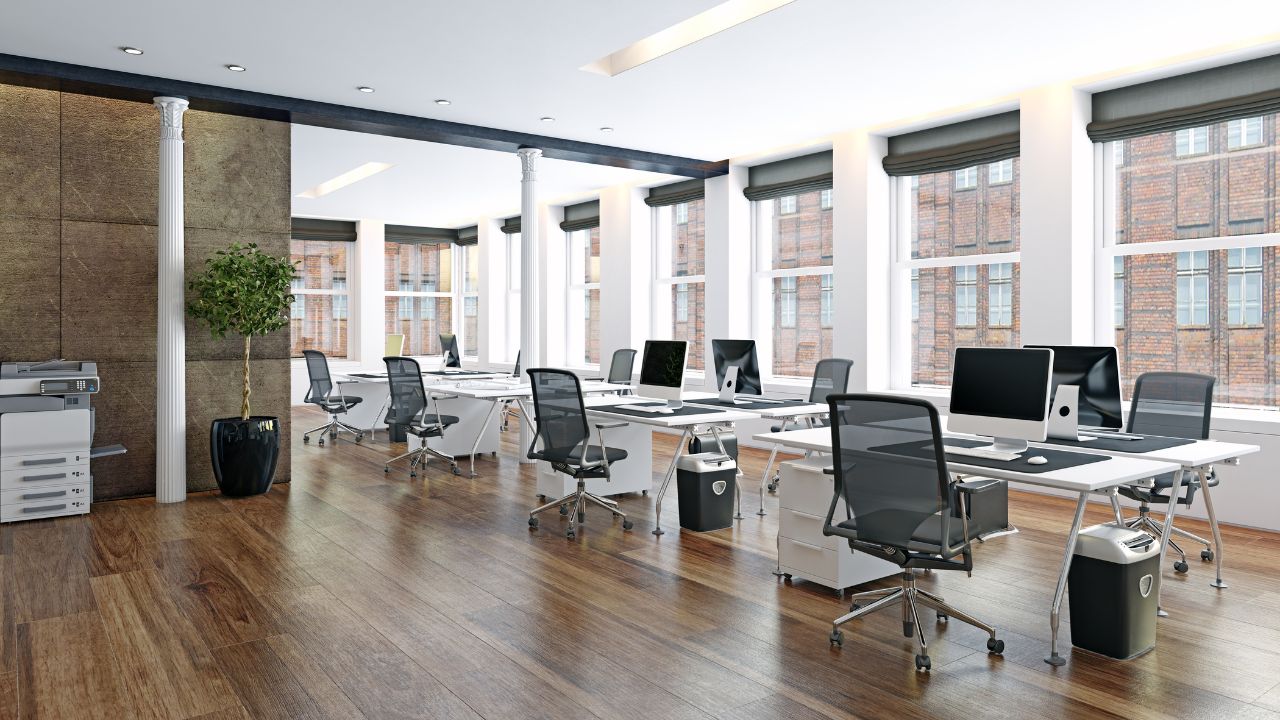
Companies redesigning layouts — fewer dedicated desks, more meeting rooms, better tech — are seeing stronger utilization. Wellness also matters. Offices that reduce friction, support well-being, and integrate services that employees actually use are more appealing than buildings filled with underused perks.
Workers want spaces that respect their time. They’ll commute for outcomes, not for foosball tables.
The Cost of Empty Desks
As we noted in Part 2 of this series, “Why The Cost Of Mismatched Portfolios Is Staggering For Landlords—And Tenants,” the financial impact of empty desks is severe. For occupiers, they drain budgets: a team paying for 100 seats but filling 50 is overspending every month. For landlords, empty floors cut directly into net operating income (NOI) and erode asset value.
CBRE’s 2025 Occupier Sentiment Survey finds that while 73% of companies hit capacity on peak days, only 34% report average attendance at capacity (CBRE). In practice, that means many leased desks sit unused for most of the week — wasted spend for tenants and a renewal risk for landlords.
The risk is clear: long leases may keep space on paper, but if employees don’t use it, tenants will shed it at renewal.
Lessons From Music
From a product market fit standpoint, other industries have been here before. Let’s look back to the early 2000s, record labels controlled how music was sold: bundled albums at fixed prices. But listeners wanted something different. They began downloading single tracks, first through Napster and then legally through iTunes. That shift put power directly in the hands of consumers.
Labels that clung to the old model saw revenue collapse. Those that adapted to singles, and later to streaming, survived.
Real estate is at a similar inflection point. Workers are shaping demand through their daily choices. Just like the music industry had to rebuild around how people actually listened, landlords and occupiers now have to align with how people actually use office space.
What It Means for Landlords
Leases may still be negotiated in boardrooms, but demand is determined at the desk level. The decision to commute — or not — has become the driver of office value.
For landlords, this shift is both a challenge and an opportunity. Assets that deliver the right experience — flexibility, productivity, wellness — will see stronger utilization, more renewals, and healthier NOI. Buildings that don’t adapt will struggle, no matter what the paper lease says.
Closing Thought
The real contract in 2025 isn’t written in lease terms. It’s written every morning when workers decide whether the office is worth the trip.
Landlords can’t solve that challenge alone, and neither can occupiers. The workplace of the future will be shaped through partnership — owners providing flexible, well-designed space, and tenants bringing insights into how their people actually use it. The more closely the two sides align, the more resilient both NOI and company culture become.
The opportunity isn’t someday. It’s today.