



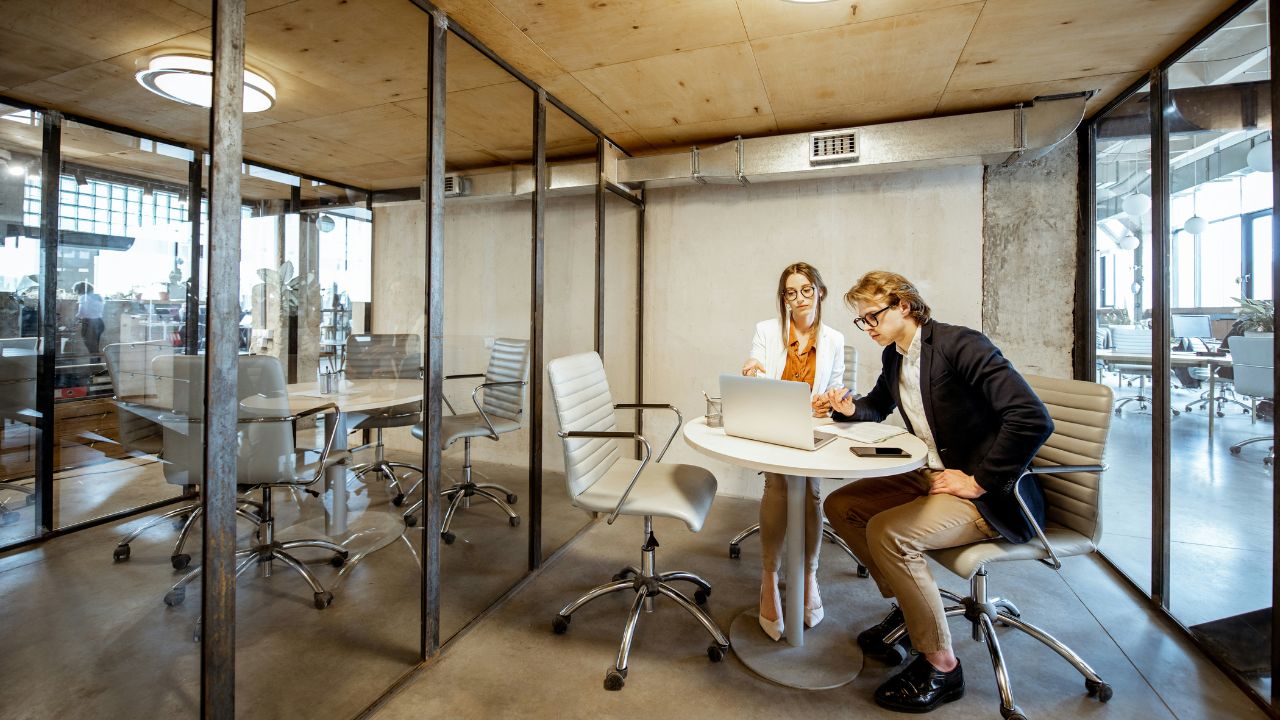
The commercial office sector is embracing new ways to deliver value, combining thoughtful services with flexible, self-contained workspaces.
Tenants today expect more than a desk; they want spaces that simplify their operations and create real value, according to Robert Schogger, Joint Chief Executive and Co-Founder of MetSpace. He joined us on the The Future of Work® Podcast to explain how service-first, self-contained workspaces are helping occupiers focus on running their businesses while landlords benefit from long-term, stable tenants.

He has been at the forefront of the U.K.’s flexible office sector since 1996, helping to define what a managed workspace truly means.
What “Managed” Really Means
The terms “managed” and “flexible” are often thrown around without clarity. Schogger explains that all offices are, in some sense, managed — they are overseen either through traditional service charges or by third-party operators.
The distinction lies in how services are delivered to the occupier.
“Managed refers to all offices, because they’re looked after. And then it’s how are they managed? Well, you’re managed through a service charge. You’re managed through a MetSpace managed product. Then you’ve got serviced, or coworking. That’s how these companies manage the space for the occupier,” Schogger said during our podcast conversation.
Flexibility, he notes, is about the tenant’s experience: short-term contracts, self-contained spaces, and all-inclusive services that allow businesses to operate without distraction.
A core principle of managed workspaces is removing operational headaches so tenants can focus on growing their business.
Reducing Pressure for Occupiers
“People are prepared to pay a premium for something that they don’t want to deal with,” Schogger said. “If you treat the occupier the right way, they’ll actually stay for as long a period of time as you might have gotten if you’d assigned them conventionally.”
This approach also benefits landlords by reducing vacancy risk, supporting longer tenancies, and creating stronger, more sustainable tenant relationships.
Relationships Drive Longevity
In the managed workspace sector, long-term success comes down to relationships. Schogger emphasizes that keeping occupiers, landlords, and suppliers aligned is critical.
When a workspace team consistently delivers top-tier service, anticipates what clients need, and provides support without overstepping boundaries, occupiers tend to stay longer.
They leave only if the space no longer fits their business or if management falls short. In this way, experience and careful attention to the human side of operations become the foundation of lasting success.
The Power Shift in Commercial Real Estate
One of the biggest changes Schogger highlights is that landlords no longer hold all the power.
With millions of occupiers entering the market every year, landlords must compete for tenants. Managed workspaces respond to this shift by creating environments where occupiers can operate efficiently and with confidence, ensuring the property is fully utilized.
This approach provides a cushion for landlords. Markets fluctuate, but with a flexible product, slow periods can be managed and opportunities captured when demand rises.

Why It Matters
Managed workspaces are no longer a niche product, because they are shaping the way commercial real estate operates. By taking operational pressure off tenants, delivering consistent service, and improving sustainability, operators can create environments where businesses thrive and landlords see measurable returns.
For occupiers, this model provides peace of mind and convenience. For landlords, it offers a way to maximize asset value and strengthen relationships in a competitive market.