




For years, coworking spaces have competed on aesthetics, amenities, and community. Fast Wi-Fi, good coffee, flexible terms, and well-designed meeting rooms became the baseline. Today, those features are expected — not differentiators.
As the future of work advances, so do the expectations of the people using these spaces. The next competitive edge for coworking operators may not be inside the building at all. It may be in the parking lot, the bike rack, and the power infrastructure behind the walls.

To accommodate a workforce increasingly shaped by sustainability, electrification, and multimodal commuting, coworking spaces that want to attract and retain tenants will need to think beyond laptops and outlets — and start planning for how people charge everything else.
The New Reality of How People Get to Work
Many of today’s coworking members arrive in electric vehicles, on e-bikes, scooters, public transit, or a mix of all four depending on the day. That is only accelerating.

Electric vehicle adoption continues to rise, especially among knowledge workers and urban professionals — the same demographic that fuels demand for coworking. At the same time, micromobility options like e-scooters and e-bikes have moved from novelty to necessity in dense cities and mixed-use neighborhoods.
Yet many coworking locations are still built around an old assumption: that “parking” means a place to leave a car, not a place to power one.
Why Charging Infrastructure Is Becoming a Workspace Amenity
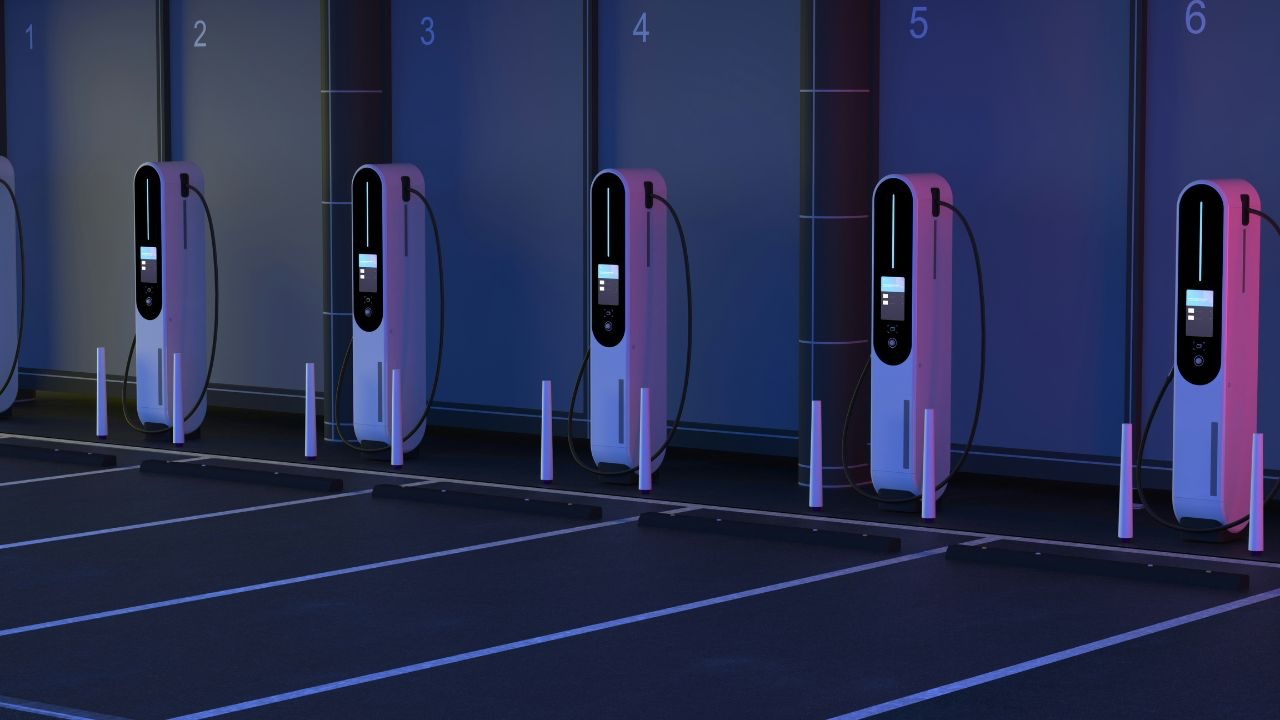
For members, access to charging is a practical concern. A coworking space that offers EV charging or secure charging stations for scooters and bikes solves a real, daily problem.
That convenience influences behavior. If a member knows they can work for a few hours while their car charges — or safely recharge a scooter during meetings — that location becomes easier to choose, and harder to replace.

For operators, charging infrastructure sends a clear signal about relevance. It communicates that a space understands where work, mobility, and sustainability are heading, not where they’ve been.
EV Chargers: From Perk to Expectation
In many markets, EV charging is already shifting from differentiator to expectation, particularly for premium coworking spaces and enterprise-focused flex offices.
Tenants are beginning to ask:
- Can I charge my car while I work?
- Is charging available on-site or nearby?
- Will this still meet my needs two or three years from now?
Coworking operators that ignore these questions risk appearing outdated, especially as more companies factor sustainability and emissions reduction into workplace decisions.
E-Scooters, E-Bikes, and the Last-Mile Workforce
While EV chargers often get the most attention, smaller-scale charging may be just as important.
E-bikes and scooters are becoming a primary commute option for freelancers, hybrid workers, and younger professionals. But without secure storage and access to power, these users face friction that can push them elsewhere.
Simple additions like lockable charging areas, indoor bike rooms with outlets, or designated scooter stations can dramatically improve the daily experience for members who rely on micromobility.
Energy Infrastructure as a Long-Term Strategy
Coworking spaces are becoming more technology-dense every year, supporting high-performance devices, video-heavy collaboration, smart building systems, and an increasing shift toward electrified transportation.

Spaces designed without future energy demands in mind may struggle to adapt. Retrofitting later is often more expensive than planning ahead.
Forward-thinking operators are beginning to treat energy infrastructure the way they once treated internet connectivity: as foundational, not optional.
Sustainability, Talent, and Tenant Demand
For many tenants, sustainability is tied to hiring, brand perception, and employee expectations.
Coworking spaces that support cleaner commuting options align themselves with sustainable priorities. That alignment can influence leasing decisions — especially for startups, remote-first companies, and enterprises seeking flexible space that reflects their values.

In this context, charging infrastructure signals that a space is built for the future workforce.
Plugging Into What’s Next
The coworking sector has always evolved faster than traditional real estate, and that agility is now being tested again.
As work becomes more flexible, more mobile, and more electrified, the spaces that support it must evolve as well. Charging laptops will always matter, but charging vehicles, scooters, and bikes may be what sets the next generation of coworking spaces apart.
For operators looking to attract tenants, increase retention, and stay relevant, the message is clear: the future of coworking may run on access to literal power. And the spaces that plug in first will be best positioned to lead what comes next.