
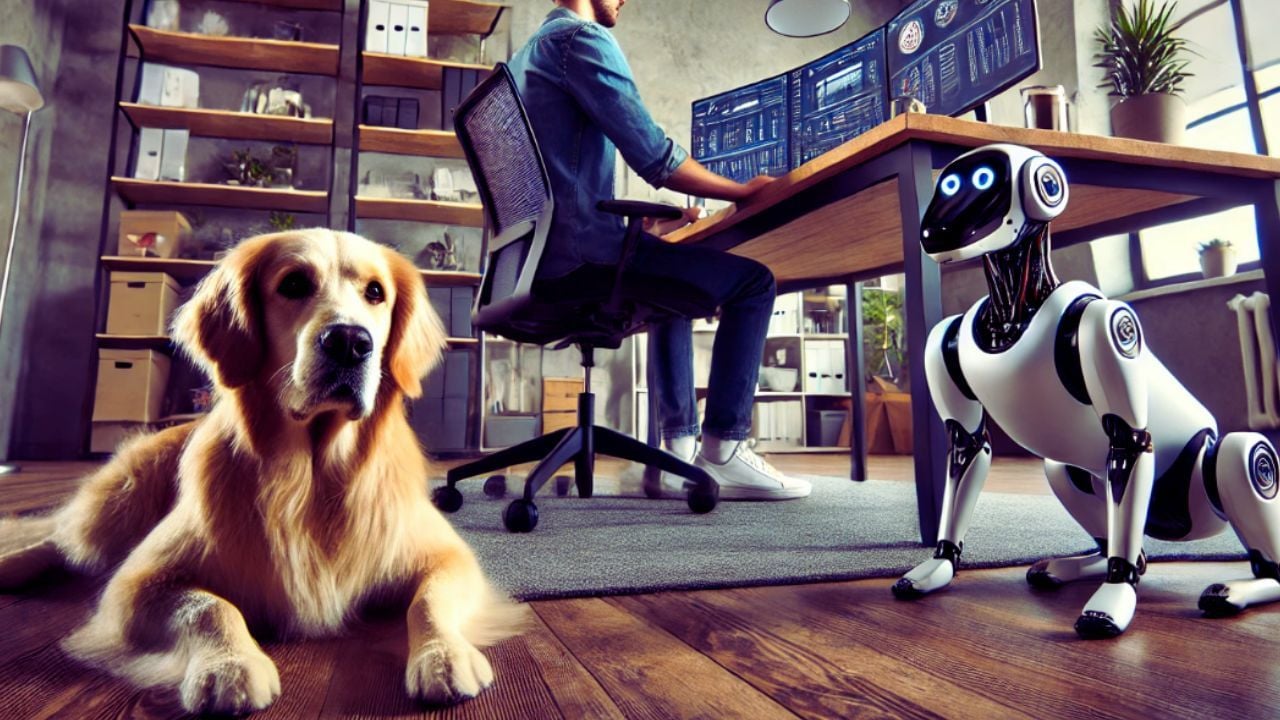
- Both furry friends and robotic companions in workspaces can boost productivity by reducing stress and enhancing focus. However, both types of pets can present challenges.
- When integrating pets into coworking spaces, it is essential to consider practicality, employee preferences, and relevant regulations.
- The future of pets in coworking centers will likely feature a mix of real pets and robots, balancing the practical benefits of technology with the emotional and communal advantages of domestic animals.
Would you work more efficiently if you had a cute four-legged friend keeping you company?
The idea sounds great, but for office spaces or coworking centers, it may be a hard sell.

When incorporating pets into coworking spaces, in particular, it is essential to consider practicality, employee and member preferences, not to mention relevant regulations.
Coworking center managers can gauge individual opinions through surveys or discussions and should review guidelines and policies on workplace pets.

Despite the hurdles, the impact on productivity and morale can be significant.
For instance, Allwork.Space noted that employees in pet-friendly environments experience a 16.5% increase in work dedication. Both robotic and real pets have the potential to reduce stress, enhance wellbeing and foster a positive workplace culture, promoting better social interactions.
Case studies provide valuable insights, such as research showing that robotic pets in care homes offer emotional and psychological benefits, including companionship and improved social interaction. Similar benefits could address workplace loneliness and enhance employee wellbeing.
However, integrating pets involves challenges — such as maintenance costs, potential malfunctions, and the risk of reducing human interaction. Practical factors include space requirements, cleanliness, and potential disruptions. Real pets also pose concerns such as allergies, noise disruptions, safety risks, and property damage.
Both real and robotic pets do offer significant benefits, but their integration requires careful management of associated challenges. Weighing the pros and cons of each can help coworking centers make informed decisions to improve their workplace environment.
Robotic Companions vs. Real Pets: Which is Best for Your Coworking Center?
Both robotic and real pets have unique advantages and pitfalls that need careful consideration based on the specific needs and circumstances of the individuals or coworking spaces involved.
The Pros — Robotic Pets
- Low Maintenance: Robotic pets require minimal upkeep, as they do not require feeding, grooming, or cleaning up after. These pets mimic the look and feel of real pets without the associated mess or maintenance.
- Suitability for Allergies: Robotic pets are ideal in environments where allergies are a concern, making them suitable for everyone.
- Functionality: These pets have the potential to perform tasks such as fetching water or answering questions. They are ideal for people with limited time, space, or financial resources that wouldn’t be able to support a real pet.
- Consistency and Predictability: They offer reliable, predictable behavior and interactions, which can be reassuring in professional settings. Recent technological advancements have enabled robotic pets to avoid collisions (as they can identify objects via cameras, 3D scanning, and deep learning).
- Therapeutic and Stress-Reducing: Robotic pets provide similar therapeutic benefits to real pets without the emotional or practical responsibilities of caring for a live animal. Assigning certain chores to robots can be therapeutic — as they perform tasks without emotions, demands, or errors.
- No Emotional Grief: There is no need to deal with the grief of losing a pet, given that robotic pets do not have lifespan limitations.
- Novel Attraction: Robotic pets are a relatively new phenomenon, and the novelty of these devices could attract a more diverse range of coworking members, including increased neurodiversity. Research has shown that neurodiverse individuals, especially those with ADHD, benefit from being around pets — including the robotic kind.
The Cons — Robotic Pets
- Lack of Emotional Connection: While robotic pets can offer companionship, they lack the loyalty exhibited by real animals. The bond formed with domestic animals developed over thousands of years. Robots cannot fully replicate the deep emotional bonds between humans and real pets, thus limiting their effectiveness for emotional support.
- Dependence on Technology: Heavy reliance on AI and other technologies could be problematic if the technology fails to function. There is still skepticism about whether robots can avoid collisions and accurately identify objects (although technological advancements aim to address these concerns).
- Privacy Concerns: There are potential privacy issues as robots might inadvertently collect sensitive data — despite efforts to mitigate these concerns.
- Animal Welfare: Many homeless or neglected animals need loving homes and carers, rendering real pet adoption a more compassionate choice. However, this is less of a concern for coworking centers where robotic pets are potentially supplementary to coworkers having the “real thing” at home.
- Disruptive and Distracting: Robotic pets can be a distraction if they are noisy or moving around where they are unwanted. They could also be visually unappealing to coworking members (compared to real pets).
The Pros — Real Pets
- Emotional Support: Real pets provide genuine companionship and emotional support. Interacting with them can reduce stress by lowering cortisol levels and blood pressure — improving overall wellbeing.
- Improved Work-Life Balance: Bringing pets into workspaces enables pet owners to balance work and pet care, facilitating better integration of personal and professional lives and enhancing loyalty to coworking space membership.
- Social Interaction and a Sense of Community: Pets can encourage social interactions among coworkers, fostering a sense of community — increasing productivity and overall wellbeing. Pet-friendly coworking spaces can also create a supportive network among coworkers, as pet owners bond over their love of their animals. Shared responsibilities such as dog-walking can also enhance teamwork.
- Health Benefits: Research shows that interacting with real pets can improve mental health and reduce stress. Regular breaks for pet care activities (such as walking dogs) also promote physical activity, reduce the passive nature of desk work, and promote overall wellbeing.
- Fostering a Positive Work Culture: A welcoming pet policy can create a more laid-back and accepting work culture. It encourages coworking members to bring their “whole selves” to work, which aligns with more inclusive workplace practices.
- Enhanced Member Satisfaction: Allowing pets in coworking spaces can enhance member satisfaction, increasing coworking center engagement and membership retention.
- Attraction and Retention of Talent: Pet-friendly policies can attract more diverse talent, particularly among professionals who value pet companionship. This benefit can set these coworking spaces apart in competitive job markets.
The Cons — Real Pets
- Allergies and Health Concerns: Some individuals may have allergies or health issues that render being around pets problematic. A fear of certain types of animals among some coworkers also requires consideration.
- Noise and Disruptions: Pets can be noisy and disruptive — causing distractions that may affect productivity. Coworking spaces must consider these factors to ensure the wellbeing of all members. Dogs, in particular, with their barking and playfulness could disrupt focus and break concentration for some coworking members.
- Potential Conflicts: Not all dogs are well-behaved or socialized. There is a risk of conflicts between pets or between pets and humans, leading to tense situations in coworking spaces.
- Safety and Cleanliness Concerns: Untrained or poorly behaved pets might pose safety risks to other members. Cleanliness and hygiene are also essential for maintaining a professional environment. Regular cleaning routines and pet health checks are necessary to minimize risks.
- Property Damage: Pets may cause damage to furniture and coworking spaces, leading to potential additional costs for repairs.
- Liability and Legal Issues: Incidents involving pets could result in legal liabilities for coworking spaces. Clear guidelines on liability and insurance for dog-related incidents are essential. Compliance with local regulations and laws regarding pets in workplaces is thus a prerequisite.
- Personal Discomfort: Some people may feel uncomfortable or even fearful around pets, which could prevent individuals from joining a pet-friendly coworking center.
The Future of Pets in Coworking Spaces
A recent Allwork.Space Future of Work Podcast featuring Josh Drean, Co-Founder & Director of Employee Experience at The Work3 Institute, explores how advancements in AI technologies are transforming workspaces and workplace culture. Given these insights and the rise of AI companions, what does the future hold for pets in coworking centers?
1.Technological Advances:
- Robotic Pets: Advances in AI and robotics are developing robotic pets such as Aibo (Sony), Kiki (Zoetic AI), and Spot (Boston Dynamics) that are more sophisticated. These robotic pets can offer companionship and support with added benefits such as monitoring capabilities and programmable behaviors.
- AI and Machine Learning: These technologies enhance robotic pets’ functionality, making them more responsive to human emotions and needs. This sophistication could appeal to coworking spaces seeking low-maintenance solutions that provide emotional support and interaction.
2.Changing Attitudes and Societal Trends:
- Acceptance of Pets in Workspaces: There is a growing trend towards integrating pets, especially dogs, into coworking spaces for their mental health benefits, community building, and improved work-life balance. Coworking spaces are increasingly adopting pet-friendly policies to attract and retain talent.
- Balancing Needs: Successful integration requires thoughtful policies to address allergies, fears, and behavioral concerns. Clear pet policies, designated areas, and regular assessments are crucial for maintaining an inclusive and productive environment.
3.Solutions for Integrating Pets:
- Pet Policies: Develop comprehensive policies on vaccinations, behavior, and responsibilities to ensure a harmonious environment.
- Designated Areas: Create specific zones where pets are allowed and other areas that remain pet-free to accommodate all preferences.
- Trial Periods and Assessments: Implement trial periods to evaluate the impact of pets in the workspace and gather feedback for informed decisions. Regular assessments help adjust policies as needed.
The future of pets in coworking centers will likely involve a mix of real pets and robotic pets tailored to the specific needs and preferences of the workspace. Robotic pets offer a high-tech alternative with practical benefits, while real pets provide emotional depth and community spirit.
Balancing these options requires thoughtful consideration of logistical and cultural factors to support the wellbeing and productivity of all members.