




Advertisements
Your Brand Deserves The Spotlight - Advertise With Us - Allwork.Space
  • Marketplace
  • Resources
  • Business Directory
  • Events
  • Advertise
  • Publish a Press Release
  • Submit Your Story | Get Featured
  • Get the Newsletter
  • Contact
  • About Us
The FUTURE OF WORK® since 2003
Allwork.Space
No Result
View All Result
Subscribe
  • Submit Your StoryNew
  • More
    • Columnists
      • Dr. Gleb Tsipursky – The Office Whisperer
      • Nirit Cohen – WorkFutures
      • Angela Howard – Culture Expert
      • Drew Jones – Design & Innovation
      • Jonathan Price – CRE & Flex Expert
    • Get the Newsletter
    • Events
    • Advertise With Us
    • Publish a Press Release
    • Brand PulseNew
    • Partner Portal
  • Latest News
  • Business
  • Leadership
  • Work-life
  • Career Growth
  • Tech
  • Design
  • Workforce
  • Coworking
  • CRE
  • Podcast
  • Submit Your StoryNew
  • More
    • Columnists
      • Dr. Gleb Tsipursky – The Office Whisperer
      • Nirit Cohen – WorkFutures
      • Angela Howard – Culture Expert
      • Drew Jones – Design & Innovation
      • Jonathan Price – CRE & Flex Expert
    • Get the Newsletter
    • Events
    • Advertise With Us
    • Publish a Press Release
    • Brand PulseNew
    • Partner Portal
  • Latest News
  • Business
  • Leadership
  • Work-life
  • Career Growth
  • Tech
  • Design
  • Workforce
  • Coworking
  • CRE
  • Podcast
No Result
View All Result
Subscribe
Allwork.Space
No Result
View All Result
Advertisements
Yardi Kube automates flex & coworking operations
Home News

Business Bankruptcies Surge 66% In Japan Due to Labor Shortage

The country faces a deficit of 3.4 million workers by the end of this decade and 11 million by 2040.

Emma AscottbyEmma Ascott
December 20, 2024
in News
Reading Time: 4 mins read
A A
Business Bankruptcies Surge 66% In Japan Due to Labor Shortage

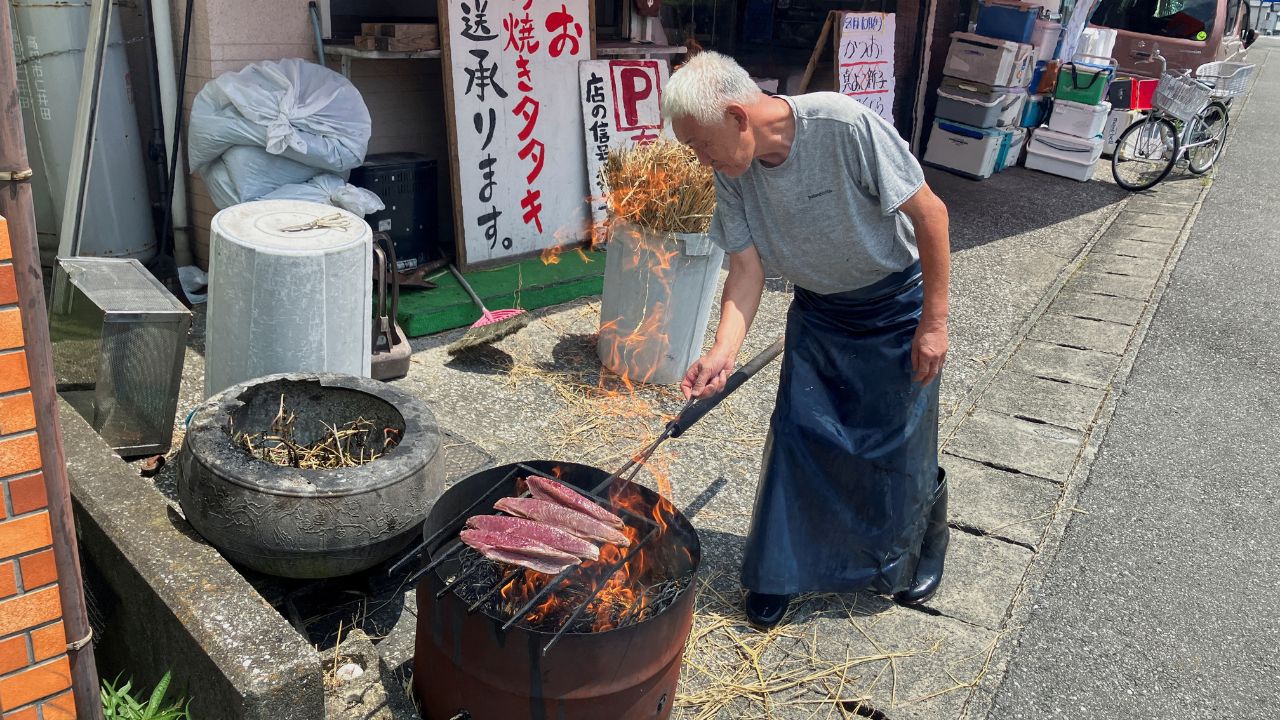
Fishmonger Yasushi Miyamoto, 70, prepares local delicacy, bonito seared over a hay fire, in Ino, Kochi Prefecture, Japan, August 10, 2024. REUTERS/Anton Bridge/File Photo

Over the last decade, Masato Shiota brought his papermaking business back from the brink, paying down debt and buying machinery to automate some production. But he struggles to find workers to keep output at full capacity.

“We have three machines but only have two running on any day,” said Shiota, president of Wako Seishi, which produces tissues, disinfectant wipes and toilet paper in Ino, a town on the smallest of Japan’s four main islands known for its paper industry.

Advertisements
Nexudus - Waste of Space? (Pink)

“If we don’t have the people we can’t make products and we can’t turn a profit. We’ll go under. This is the biggest problem for small and medium-sized companies.”

Shiota’s experiences and those of several other Ino business owners show how a labour shortage is a growing threat to smaller companies that provide seven out of every 10 jobs in Japan. The country faces a deficit of 3.4 million workers by the end of this decade and 11 million by 2040, according to a 2023 study by Recruit Works Institute.

Advertisements
Yardi Kube automates flex & coworking operations

In the first half of this year, a record 182 companies went under because of worker shortages, according to research firm Teikoku Databank, up 66% on a year earlier. Overall bankruptcies look set to surpass 10,000 this year, the highest since 2013, data from Tokyo Shoko Research showed this month. 

While labour shortage-related bankruptcies are a small portion of the total, the surge will ripple through to these companies’ suppliers and customers, potentially causing a “chain of bankruptcies or mergers,” according to Takayasu Otomo, a researcher at Teikoku Databank.

Japan in March raised borrowing costs for the first time in 17 years, signalling the world’s fourth-largest economy had turned a corner after years of stagnation.

Yet Reuters interviews with 16 people, including business leaders in Ino, industry experts and officials, reveal challenges for Prime Minister Shigeru Ishiba’s efforts to revitalise rural economies facing ageing and shrinking populations. 

Advertisements
Nexudus - Tech Stack Lovers

While Japan is allowing more underperforming businesses to fail, the accounts suggest the worker shortage is threatening firms that are otherwise robust, including those that have invested in automation and creative hiring.

Japan’s Ministry of Economy, Trade and Industry did not respond to questions about the experiences of business owners in Ino.

‘ECONOMIC METABOLISM’

Shiota, who also heads the local papermaking association, has 42 employees and saw demand for disinfectant wipes surge during the pandemic.

He has cut out unprofitable products and, with government support, invested 80 million yen ($520,000) to automate his lines. But Shiota said he has little ability to pay workers more beyond a recent increase in the minimum wage, which will rise again next year.

More stories for you

U.S. Planned Layoffs Plummet 53% In November, But Still Outpace 2024 Levels

U.S. Planned Layoffs Plummet 53% In November, But Still Outpace 2024 Levels

11 hours ago
U.S. Weekly Jobless Claims Fall To Three-Year Low Amid Mixed Labor Market Signals

U.S. Weekly Jobless Claims Fall To Three-Year Low Amid Mixed Labor Market Signals

11 hours ago
Meta Plans Steep Budget Cuts For Metaverse Team, Raising Layoff Concerns

Meta Plans Steep Budget Cuts For Metaverse Team, Raising Layoff Concerns

11 hours ago
U.S. Department Of Health And Human Services Makes It Harder For Federal Employees With Disabilities To Work Remotely (1)

U.S. Department Of Health And Human Services Makes It Harder For Federal Employees With Disabilities To Work Remotely

11 hours ago

Japan remains resistant to large-scale immigration, so some companies have plugged labour gaps by employing short-term workers from Vietnam and other Asian countries. But a weakening yen makes it harder to attract foreign workers.

Some Japanese officials see bankruptcies triggered by labour shortages as an inevitable effect of what they call “economic metabolism” — whereby less-dynamic companies are swept away, allowing workers and capital to migrate to more productive ones.

When asked about the rise in these bankruptcies, one senior official, granted anonymity to discuss a sensitive matter, said it was “natural” for such economic metabolism to take place. 

The bankruptcy rate remains low compared with some countries, the official said, adding that if such bankruptcies did not occur, workers would be stuck at low-wage companies. 

Advertisements
Build Your AI - Disaster Avoidance

LEARNING TO ADAPT

Nestled alongside the Niyodo river, Ino is known for traditional products such as “Tosa washi” paper, made by hand for 1,000 years and used in calligraphy and on “shoji” sliding doors.

Given its population of 20,000 and location off the beaten track, Ino’s papermakers have carved out niches to survive. Toyo Tokushi, owned by the Moriki family, diversified into adult diapers in 1970, which now account for 70% of sales.    

Faced with a staffing crunch, the company for the first time is considering hiring graduates straight out of high school, said Kei Moriki, the 32-year-old director. 

Even so, he said he isn’t sure that the company can muster the resources to train employees with no work experience.

Advertisements
Build Your AI - Disaster Avoidance

Old trophies from an annual softball tournament held by the local paper manufacturers association adorn the company headquarters. Toyo Tokushi hasn’t fielded a team in around 20 years, Moriki said, as his workforce has aged.

Elsewhere in Ino, there are few izakaya pubs left and only one fish shop, down from a dozen in 2007, according to locals. 

Ishiba has given few details about how he plans to revitalise rural areas, but has promised to lay out a plan by early next year to raise the minimum wage by 42% by the end of the decade.

Meanwhile, the government is on a push to help small and medium-sized enterprises raise prices so they can hike wages that lag the OECD average. Higher wages would also help smaller companies attract workers.

Advertisements
UltraSoftBIS Work Smarter, Not Harder

But in Ino, business owners say it’s not straightforward.

Kashiki Seishi, a maker of washi paper, used to source everything from local farmers, according to chief executive Hiromasa Hamada. But since 2017 the six-person company has also depended on volunteers from a programme that allows people to work on farms in exchange for room and board.

“I don’t think it’s healthy for a business to rely on volunteers,” said the 44-year-old Hamada, a seventh-generation papermaker.

But he appears to have little choice, as there are fewer farmers in the nearby ranges to collect wood and other materials he needs.

In 10 years, he said, “there might be no one left in the mountains.”

(Reporting by Anton Bridge and Makiko Yamazaki; Additional reporting by Ritsuko Shimizu; Writing by David Dolan; Editing by David Crawshaw.)

Advertisements
Subscribe to the Future of Work Newsletter
Source: Reuters
Tags: Asia-PacificBusinessWorkforce
Share9Tweet6Share2
Emma Ascott

Emma Ascott

Emma Ascott is a contributing writer for Allwork.Space based in Phoenix, Arizona. She graduated from Walter Cronkite at Arizona State University with a bachelor’s degree in journalism and mass communication in 2021. Emma has written about a multitude of topics, such as the future of work, politics, social justice, money, tech, government meetings, breaking news and healthcare.

Other Stories Recommended For You

U.S. Planned Layoffs Plummet 53% In November, But Still Outpace 2024 Levels
News

U.S. Planned Layoffs Plummet 53% In November, But Still Outpace 2024 Levels

byAllwork.Space News Team
11 hours ago

Layoffs announced by U.S. employers fell sharply in November, but hiring intentions continued to lag as businesses navigated an uncertain...

Read more
U.S. Weekly Jobless Claims Fall To Three-Year Low Amid Mixed Labor Market Signals

U.S. Weekly Jobless Claims Fall To Three-Year Low Amid Mixed Labor Market Signals

11 hours ago
Meta Plans Steep Budget Cuts For Metaverse Team, Raising Layoff Concerns

Meta Plans Steep Budget Cuts For Metaverse Team, Raising Layoff Concerns

11 hours ago
U.S. Department Of Health And Human Services Makes It Harder For Federal Employees With Disabilities To Work Remotely (1)

U.S. Department Of Health And Human Services Makes It Harder For Federal Employees With Disabilities To Work Remotely

11 hours ago
Advertisements
Get more revenue. Do less work - Alliance Virtual Offices
Advertisements
Nexudus - Revenue

Unlock your competitive edge in tomorrow's workplace.

Join a community of forward-thinking professionals who get exclusive access to the latest news, trends, and innovations that are shaping the future of work.

2025 Allwork.Space News Corporation. Exploring the Future Of Work® since 2003. All Rights Reserved

Advertise  Submit Your Story   Newsletters   Privacy Policy   Terms Of Use   About Us   Contact   Submit a Press Release   Brand Pulse   Podcast   Events   

No Result
View All Result
  • Home
  • Latest News
  • Topics
    • Business
    • Leadership
    • Work-life
    • Workforce
    • Career Growth
    • Design
    • Tech
    • Coworking
    • Marketing
    • CRE
  • Podcast
  • Events
  • About Us
  • Advertise | Media Kit
  • Submit Your Story
Subscribe

Welcome Back!

Login to your account below

Forgotten Password?

Retrieve your password

Please enter your username or email address to reset your password.

Log In
This website uses cookies. By continuing to use this website you are giving consent to cookies being used. Visit our Privacy and Cookie Policy.
-
00:00
00:00

Queue

Update Required Flash plugin
-
00:00
00:00