




Advertisements
Running Remote 2026
Advertise With Us
Friday, February 20, 2026
Explore
Allwork.Space
No Result
View All Result
Newsletters
  • Latest News
  • Leadership
  • Work-life
  • Coworking
  • Design
  • Career Growth
  • Tech
  • Workforce
  • CRE
  • Business
  • Podcast
  • MoreNew
    • Urban DictionaryNew
    • Expert Voices
    • Daily Brief NewsletterNew
    • Weekly Brief NewsletterNew
    • Product RoundupsNew
    • Advertise With Us
    • Partner Portal
No Result
View All Result
Newsletters
Allwork.Space
No Result
View All Result
  • Home
  • News
  • Leadership
  • Work-life
  • Coworking
  • Design
  • Workforce
  • Tech
  • CRE
  • Business
  • Podcast
  • Career Growth
  • Newsletters
Advertisements
Alliance Virtual Offices - Grow Center Ops
Home News

Two-Thirds Of Japanese Companies Struggling As Aging Workforce Drives Labor Crisis

With labor shortages driving up wages and a weak yen raising import costs, 44% of Japanese companies plan to raise prices for their goods and services this year.

Emma AscottbyEmma Ascott
January 16, 2025
in News
Reading Time: 2 mins read
A A
Two-Thirds Of Japanese Companies Struggling As Aging Workforce Drives Labor Crisis

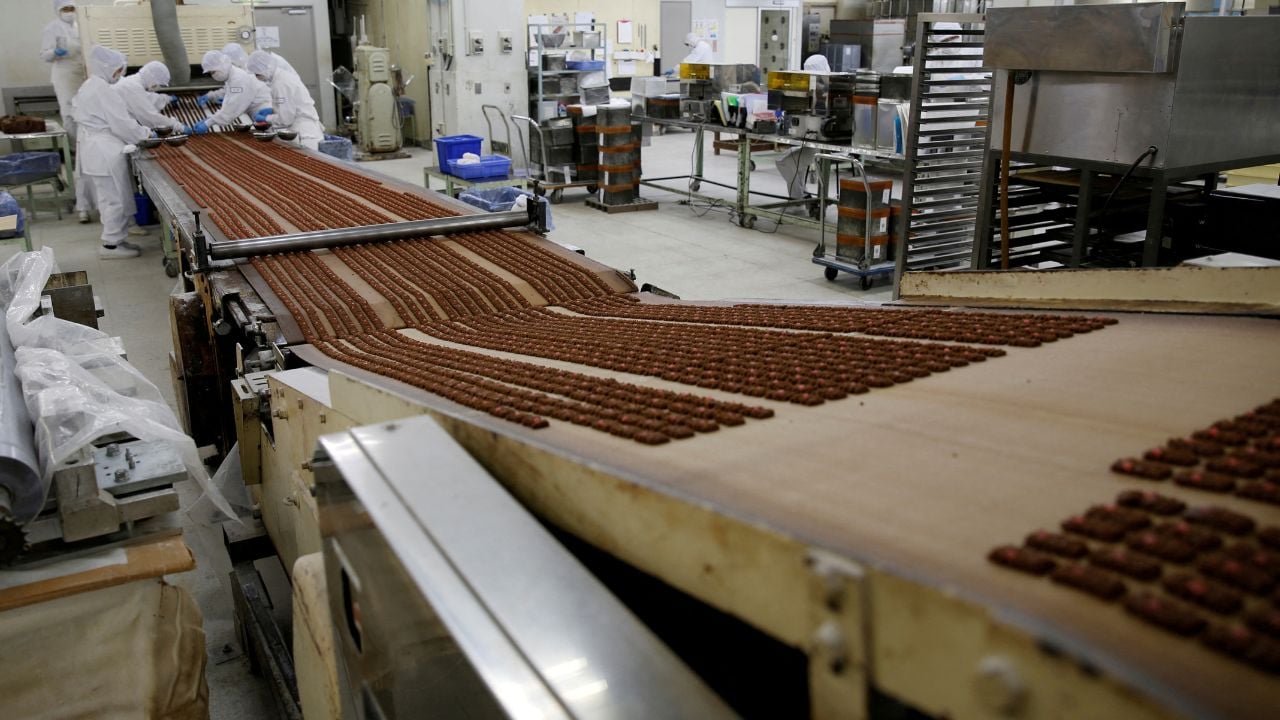
Employees of Izumiya Tokyoten work on a production line at its factory in Kawasaki, south of Tokyo, Japan July 9, 2024. REUTERS/David Dolan/File Photo

Two-thirds of Japanese companies are experiencing a serious business impact from a shortage of workers, a Reuters survey showed on Thursday, as the country’s population continues to shrink and age rapidly.

Labor shortages in Japan, particularly among non-manufacturers and small firms, are reaching historic levels, the government has said, stoking concerns that this supply-side constraint could stifle economic growth.

Advertisements
Deel - Upgrade your global team management

Some 66% of respondents indicated that labor shortfalls were seriously or fairly seriously affecting their businesses, while 32% said the impact was not very serious.

“It goes without saying this drives up personnel costs, but it could even pose a business continuity risk,” a manager at a railroad operator wrote in the survey.

Advertisements
Nexudus - Is Your Space Performing?

The number of bankruptcies caused by labor shortages in 2024 surged 32% from a year earlier to a record 342 cases, according to credit research firm Teikoku Databank.

Nearly a third of respondents to the Reuters survey said the labor shortage is worsening, with only 4% reporting improvements and 56% saying the situation is neither getting better nor worse.

The survey was conducted by Nikkei Research for Reuters from Dec. 24 to Jan. 10. Nikkei Research reached out to 505 companies and 235 responded on condition of anonymity.

When asked about specific measures to address the labor shortfall in a question that allowed multiple answers, 69% said they were intensifying recruitment activities for new graduates and 59% were implementing measures such as extending retirement ages and re-hiring retired employees.

Advertisements
Business As usual Is Over - HubStar

The official retirement age is set at 60 for about two-thirds of Japanese companies, although most have introduced measures allowing employees to keep working until they turn 65, a poll by the Health Ministry showed last year.

In response to a Reuters survey question about investment priorities for 2025, 69% chose capital investment and 63% selected wage hikes and other human resources-related investments. This question also allowed multiple answers.

“What’s essential are wage hikes for retaining employees and capital investment for rationalising production,” an official at a chemicals company said.

This trend in investment priority among Japanese firms aligns with the government’s policy of seeking economic growth through higher wages and investments.

With labor shortages driving up wages and a weak yen raising import costs, 44% of Japanese companies plan to raise prices for their goods and services this year, the survey found. That compares with 17% that intend to keep their prices unchanged and 26% that plan to raise some prices but cut others.

“We just cannot help but raise prices because of an across-the-board increase in wages and other fixed costs, in transportation costs and in costs of raw materials,” a manager at a metals company said in the survey.

Tokyo’s core consumer price index, which excludes volatile fresh food costs, rose 2.4% in December from a year earlier. That was an acceleration from a 2.2% rise in November, keeping alive market expectations for a near-term interest rate hike.

(Reporting by Kiyoshi Takenaka; Editing by Jacqueline Wong)

Advertisements
Business As usual Is Over - HubStar
Advertisements
Subscribe to the Future of Work Newsletter
Source: Reuters
Tags: Asia-PacificBusinessHuman Resources (HR)Workforce
Share10Tweet6Share2
Emma Ascott

Emma Ascott

Emma Ascott is the Associate Editor for Allwork.Space, based in Phoenix, Arizona. She covers the future of work, labor news, and flexible workplace trends. She graduated from the Walter Cronkite School of Journalism and Mass Communication at Arizona State University, and has written for Arizona PBS as well as a multitude of publications.

Other Stories Recommended For You

AI Doomsday — Or Something Else Fed Governor Lays Out Three AI Futures For The Labor Market
Workforce

AI Doomsday — Or Something Else? Fed Governor Lays Out Three AI Futures For The Labor Market

byFeatured Insights
7 hours ago

AI doomsday where many workers are ‘essentially unemployable’ is totally possible, Fed governor says.

Read more
Mid-Sized Cities Lead UK Productivity While National Growth Stalls

Mid-Sized Cities Lead UK Productivity While National Growth Stalls

22 hours ago
31% of Workers Say AI Added Tasks Instead of Saving Time at Work

31% of Workers Say AI Added Tasks Instead of Saving Time at Work

22 hours ago
Only 5% of Workers Are ‘AI Fluent,’ Google Study Finds — And They’re 4x More Likely To Get Promoted

Only 5% of Workers Are ‘AI Fluent,’ Google Study Finds — And They’re 4x More Likely To Get Promoted

22 hours ago
Advertisements
Yardi Kube automates flex and coworking operations
Advertisements
Nexudus - Is Your Space Performing?

The Future of Work® Newsletter helps you understand how work is changing — without the noise.

Choose daily or weekly updates to stay current, and monthly editions to explore worklife, work environments, and leadership in depth.

Trusted by 22,000+ leaders and professionals.

2026 Allwork.Space News Corporation. Exploring the Future Of Work® since 2003. All Rights Reserved

Advertise  Submit Your Story   Newsletters   Privacy Policy   Terms Of Use   About Us   Contact   Submit a Press Release   Brand Pulse   Podcast   Events   

No Result
View All Result
  • Home
  • Latest News
  • Topics
    • Business
    • Leadership
    • Work-life
    • Workforce
    • Career Growth
    • Design
    • Tech
    • Coworking
    • Marketing
    • CRE
  • Podcast
  • Urban Dictionary
  • About Us
  • Advertise | Media Kit
  • Submit Your Story
Newsletters

Welcome Back!

Login to your account below

Forgotten Password?

Retrieve your password

Please enter your username or email address to reset your password.

Log In
This website uses cookies. By continuing to use this website you are giving consent to cookies being used. Visit our Privacy and Cookie Policy.
-
00:00
00:00

Queue

Update Required Flash plugin
-
00:00
00:00