



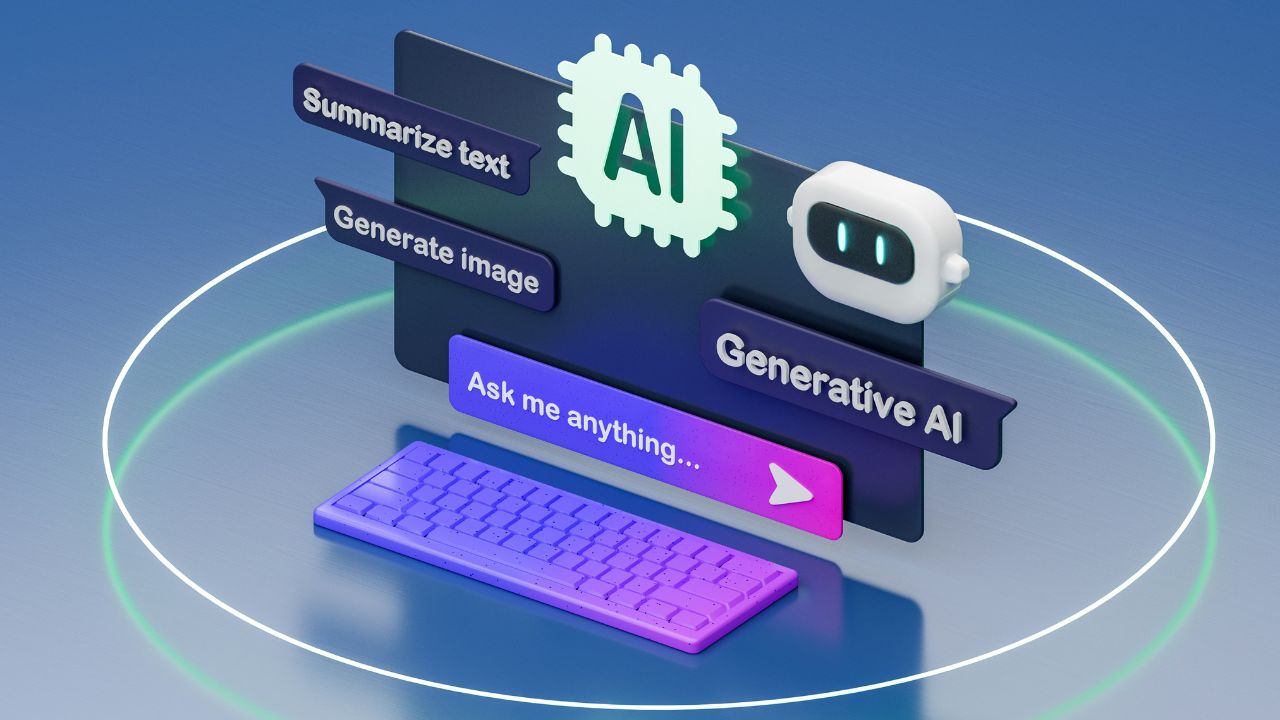
The companies that are outpacing their competitors in today’s volatile market have one thing in common: they’re deploying generative AI not just faster, but smarter.
That’s the core insight from Kevin Oakes, co-founder of the Institute for Corporate Productivity (i4cp), a leading HR research organization with a sharp focus on what separates high-performing organizations from the rest. According to Oakes in his interview with me, the most successful companies aren’t dabbling in Gen AI — they’re operationalizing it across their enterprises. And it’s paying off.

From Experimentation to Enterprise-Scale Integration
i4cp’s latest research, Workforce Readiness in the Era of AI, reveals that only 11% of companies have fully integrated Gen AI across their organizations. These companies are not just experimenting or cautiously researching — they’ve woven Gen AI into both internal operations and customer-facing functions.
The result? Superior business outcomes. These mature adopters consistently rank highest in i4cp’s performance index, which measures revenue growth, profitability, and market share.

This correlation is no coincidence. While some may argue that high performers simply have the resources to embrace cutting-edge technologies, Oakes makes a compelling case that Gen AI adoption itself is a driver of success.
“The strong are getting stronger,” he explains, “but embracing Gen AI is also pushing companies into that high-performance category.”
Maturity Begins With Training, Especially at the Top
One of the clearest differentiators between leaders and laggards in Gen AI adoption is how they approach workforce training. Oakes notes a surprisingly common shortfall: most companies only train a small segment of their workforce on Gen AI. High-performing companies, in contrast, begin with their leadership.
“Oddly enough, leadership is often overlooked,” says Oakes, “but top firms ensure CEOs and senior leaders are not just educated on Gen AI—they’re active users.”
From there, the training expands organization-wide. Effective approaches blend asynchronous courses, instructor-led workshops, and peer mentoring. The training content itself progresses from fundamentals — data security, responsible use, AI ethics — to advanced topics like workflow integration and output evaluation.
In top-performing organizations, leaders sometimes even teach the courses themselves, a strategy borrowed from Jack Welch’s GE playbook. This not only boosts executive fluency in Gen AI but sends a powerful cultural signal: this matters.
Creating a Culture of Co-Creation, Not Compliance
Another hallmark of Gen AI success is how companies handle automation decisions. Too often, automation initiatives are top-down edicts. Instead, i4cp finds that the best organizations empower employees to identify which parts of their roles should be automated.
This approach does two things. First, it taps into the deep, often tacit knowledge employees have about their own workflows — what’s repetitive, what’s draining, what’s ripe for AI assistance. Second, it cultivates buy-in.
“Now they’re contributing,” Oakes emphasizes. “It’s a co-creation mentality in the culture as opposed to being told.”
This collaborative method is especially critical in addressing the widespread fear that Gen AI will displace jobs. Oakes acknowledges the legitimacy of these concerns — Gen AI is replacing some roles — but points to a silver lining.
“Organizations are adapting. They’re reallocating human brainpower to areas that have long been neglected,” he says.
Curiously, i4cp discovered that the more training employees received on Gen AI, the more their fears about job loss increased. It’s a paradox driven by awareness: those who understand the technology best also grasp its full potential to disrupt.

Still, Oakes remains optimistic, drawing parallels to the early days of the internet.
“We had the same fears. Over time, they dissipate as we learn how to use the tech to our advantage.”
Communication: The Missing Link in Many Organizations
If there’s a single failure point common to many Gen AI initiatives, it’s communication.
“Most companies haven’t articulated a Gen AI strategy internally,” Oakes observes.
That leaves employees in the dark, unsure of how the technology will be used, how it will affect their roles, or what the company’s intentions are.
Clear, transparent communication is essential. From executives down to department managers, everyone should understand the strategy and their role within it. Oakes dismisses simplistic motivational slogans, such as “you won’t be replaced by AI, but by someone using AI better” as too often sounding like veiled threats.
Instead, he advocates for open dialogue and honest, ongoing conversations about how Gen AI fits into the company’s future.
Guardrails, Governance, and Getting Smart About Risk
The risks of Gen AI (data privacy, hallucinations, bias) are real. But so is the opportunity. The companies leading the pack aren’t ignoring the dangers; they’re addressing them head-on through proactive training and governance.
Basic training includes guardrails around responsible use, and many firms are adopting internal large language models or deploying Gen AI within walled-off applications to mitigate exposure.
“We got smarter about risks with the internet, with smartphones — we’ll do the same with Gen AI,” says Oakes. “It just feels scarier because it’s new and powerful.”
Indeed, the most forward-looking organizations are turning this moment of uncertainty into an opportunity to capture market share and build a competitive edge.
Metrics That Matter
When it comes to measuring Gen AI’s impact, usage is the first metric that matters. Companies are beginning to track who is using Gen AI, how frequently, and to what effect. This baseline data not only encourages familiarity, but also helps correlate usage with productivity gains.
Other meaningful metrics include department-level performance improvements and workforce well-being.
“If you’re freeing up time from rote tasks, you’re probably improving mental and even physical health,” Oakes notes.
Many of the same indicators used to measure culture — like engagement scores or turnover rates — can also be used to assess Gen AI’s organizational impact.
Looking Ahead: From Generative to Agentic AI
The future of Gen AI lies in something even more autonomous: agentic AI.
“It’s a dumb name,” Oakes jokes, “but agentic AI is going to be performing many tasks on behalf of organizations.”
These AI agents will execute complex workflows independently, and their rise will force companies to rethink job design and risk frameworks yet again.
While few companies have deployed agents at scale today, Oakes warns that by this time next year, every leader will need to know what they are — and how to use them responsibly.
“We’ll be talking about ethical issues, unintended consequences, and probably a few monsters in our systems,” he quips. “But the first step is getting familiar.”
For now, the lesson is clear: companies that want to stay competitive need to move quickly from curiosity to capability. The era of experimentation is closing. The era of enterprise-scale Gen AI has begun. And the strongest players are already surging ahead.