



The events industry is all about creating an engaging and memorable experience for its attendees. The key to any great event is capturing the audience’s interest and providing value through immersive and interactive experiences.
When new tech comes along, event organizers are naturally going to be intrigued as to how, and if they can apply it to their events.

XR (Extended Reality) technology is transforming how events are designed, delivered, and experienced, offering new ways to captivate audiences and create lasting impressions. It’s a no-brainer that it lends itself perfectly to the immersive world of events.
How XR is Enhancing Exhibitor Experiences
The global XR market reached 29.26 billion U.S. dollars in recent years, set to rise to over 100 billion U.S. dollars by 2026 – and this projection isn’t that surprising.

XR technology has genuinely revolutionized how exhibitors present their products and services to their audiences. The main benefit that XR brings? Immersion.
Exhibitors can enhance attendees’ experiences by allowing them to explore products in a 3D environment, which offers a much more engaging experience compared to traditional displays.
Virtual Showrooms and Interactive Product Demos
One of the most significant applications of XR in exhibitions is the creation of virtual showrooms. Using VR, exhibitors can construct detailed 3D environments where attendees can explore products as if they were physically present.
Companies like Audi and Volvo have utilized VR to offer virtual test drives and detailed car explorations. Attendees can experience driving in different conditions and explore various car features, leading to increased engagement and interest in the vehicles.

Augmented Reality Enhancements
AR technology allows exhibitors to overlay digital information onto physical exhibits, creating a hybrid experience that enhances the real-world environment.
For example, at a technology expo, an exhibitor might use AR to provide interactive 3D models of their devices, showing internal components or demonstrating functionalities in real-time. This not only attracts attention but also facilitates a better understanding of complex products.
Mixed Reality Experiences
MR combines elements of both VR and AR which allows exhibitors to create super immersive, interactive and engaging experiences for their audiences.
For example, a construction company might use MR to showcase a building project, allowing attendees to walk through a virtual construction site while simultaneously viewing real-world models and blueprints.
This blend of physical and digital elements helps attendees visualize the final product and understand the construction process.
Enhancing Attendee Experiences with XR
XR brings several incredible benefits to event-goers. The main benefit is how it can significantly enrich their experiences by providing immersive, interactive, and personalized encounters.
Virtual tours that are powered by VR allow attendees to explore entire exhibition spaces from anywhere in the world, whether it’s in their office, the event space itself or even their living room.
Let’s look at some of the main benefits XR offers to attendees in more detail.
Higher Immersive and Interactive Engagement
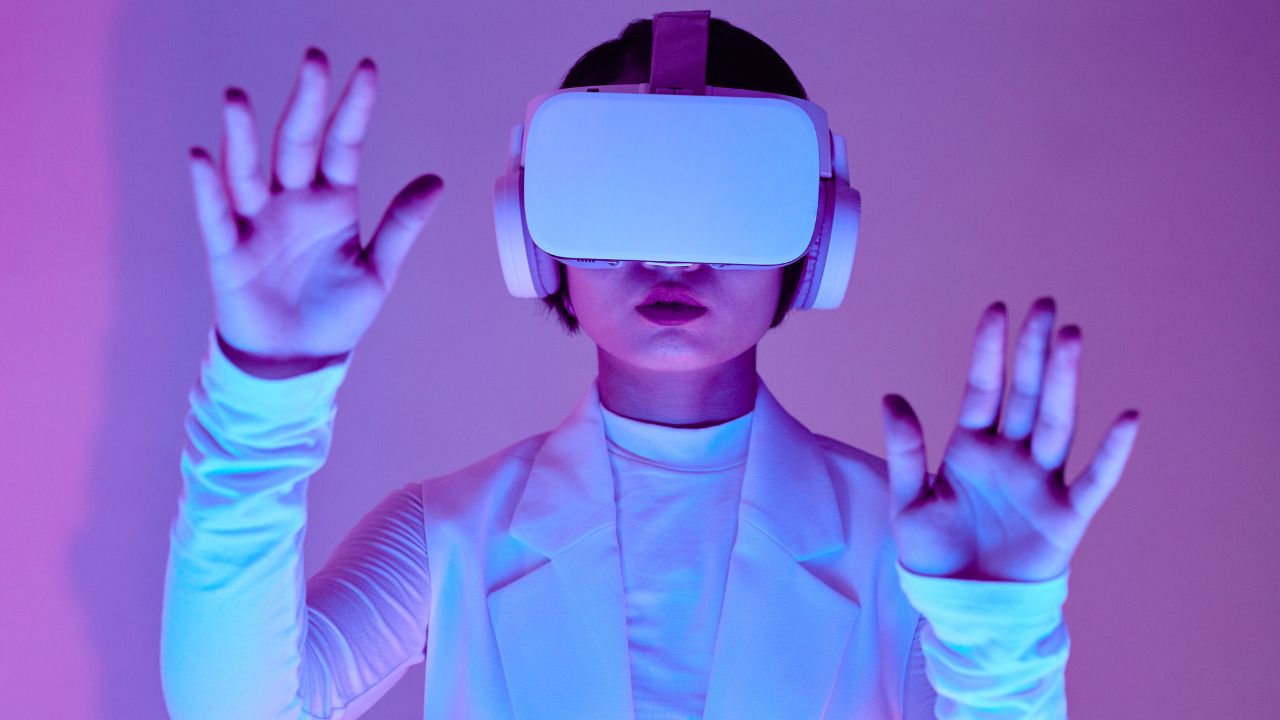
XR technology offers attendees an immersive and interactive experience that goes way beyond traditional exhibition formats.
Virtual Reality (VR) allows attendees to be fully immersed in a 3D environment, providing a sense of presence and engagement that static displays just cannot match.
Enhanced Learning and Understanding
Augmented Reality (AR) and Mixed Reality (MR) provide layers of additional information over physical exhibits, which improves the users’ understanding and retention. Attendees can use AR glasses or mobile devices to see detailed information, 3D models, and interactive content overlaid on real-world objects.
This can be particularly beneficial in fields such as healthcare, where complex equipment and procedures can be better understood through interactive 3D visualizations.

Personalized Experiences
The more personalized someone’s experience, the more engaging and memorable it will be. XR technology can personalize the attendee experience based on their interests and interactions.
AI-powered XR applications can track attendee preferences and adapt the content displayed to suit their specific needs. This personalisation increases engagement and satisfaction, making the experience more relevant and impactful.
Remote Participation
One of the biggest advantages of XR is its ability to make remote participation a reality. Attendees who cannot be physically present at an event can still experience it virtually through VR.
The main benefit here is that it expands the reach of the exhibition, making it accessible to a much bigger audience.
Conclusion
The future of events will likely blend physical and virtual experiences, creating hybrid events that welcome both in-person and remote audiences. This means events will have a wider reach and offer more personalized and interactive experiences.
XR is shaking up the events world. Embracing this technology will be key for everyone involved, from organizers to creators to participants. XR is paving the way for new ways to connect, create, and communicate.