



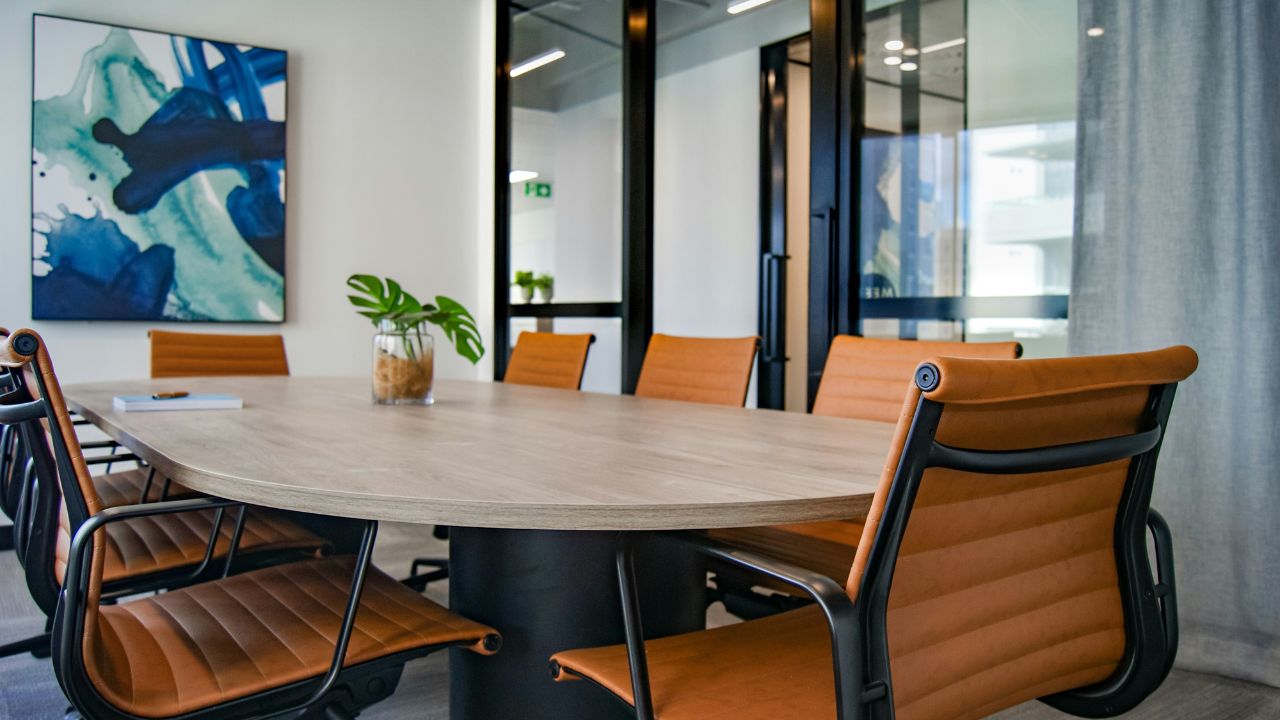
In 1999, corporate real estate decisions were made in an ivory tower. The CFO, head of real estate, and a handful of executives determined how much space a company leased and where it was located. Square footage and corner offices signaled power. Employees had little say.
Fast forward to 2025: the logic has flipped. The decision-making power that once lived exclusively in the C-suite has dispersed to thousands of employees, each making daily choices about when, where, and how to work.

The office is no longer imposed from the top down — it’s shaped from the bottom up.
COVID as the Accelerator
Technology, culture, and globalization were already nudging office power away from the C-suite. Then COVID put the shift into overdrive. (Yes, we’re still talking about the COVID impact).
In 2020, entire workforces went remote overnight. Many executives braced for a collapse in productivity. Instead, output held steady or rose.
A 2025 Federal Reserve analysis found that remote work improved productivity by reducing commuting time, giving employees more autonomy, and cutting office distractions (Federal Reserve).
But remote-only setups created new problems: burnout, collaboration gaps, and cultural drift. Those challenges cemented hybrid work as the long-term model.
COVID didn’t invent the shift in decision-making, but it accelerated it and proved that power could be redistributed without breaking the business.
Driver 1: Technology as the Enabler
The biggest accelerant of this shift is technology. Platforms like LiquidSpace and Desana let employees book desks, meeting rooms, or third spaces from their phones. Access-control systems such as Brivo provide secure entry without physical badges, Yardi Kube, Nexudus, and Essensys allow companies to manage memberships, billing, and services seamlessly.
Many workspace utilization scenarios that once required a signed 10-year lease now happen at the tap of a smartphone.
Driver 2: Shifts in Cultural Norms
The corner office no longer represents power. Employees expect autonomy: choosing not only where they work, but when and how.
Status has shifted from square footage to flexibility. A workplace that offers wellness, mobility, and choice carries more influence than a glass-walled office on the top floor.
Driver 3: Government & Regulation
Policy has advanced to support what technology enabled. With hybrid and remote work now mainstream, compliance and legal frameworks are evolving.
In the U.S., many states have refined their tax systems to ease cross-state remote work. The Tax Foundation’s 2025 primer outlines how nonresident income tax rules, safe-harbor thresholds, and simplified filing requirements are shaping the post-COVID era of mobility (Tax Foundation).
Globally, remote work has become a legitimate lifestyle and employment model. Over 70 countries now offer digital nomad or remote work visas, enabling people to live and work legally abroad — from Portugal to Dubai to Costa Rica (Citizen Remote; Deel).
The result: the office is no longer a geographic anchor — it’s one node in a global network of work, and governments are legitimizing that reality.

Driver 4: Measurement & Data
For decades, productivity was assumed to be tied to physical presence. COVID exposed that assumption.
Now, employers track output using collaboration tools, digital workflows, and utilization sensors. Density’s Q1 2025 Benchmark found peak floor utilization reached 47%, up from 43% the prior year — the highest since tracking began (Density).
The data proves productivity and presence aren’t synonymous.
Driver 5: Capital & Risk Management
CFOs once viewed real estate as a fixed cost, locked in for 10 or 15 years. That view has flipped.
Now, flexibility itself is a financial strategy. Shorter lease terms, termination options, and flex products help companies align costs with demand. According to CBRE’s 2025 Occupier Sentiment Survey, the average lease term for new U.S. office deals has dropped to just over seven years (CBRE).
For landlords, that means net operating income is more variable — and more dependent on meeting day-to-day occupier needs.
Driver 6: Generational Shifts
Millennials and Gen Z are no longer future leaders; they are today’s decision-makers. These generations value autonomy, mobility, and purpose. They’re digital-first by default.
When they ascend into management, they carry those values with them. The workplace isn’t a perk; it’s a tool. If the office doesn’t support how teams actually work, they’ll vote with their feet — and their budgets.
Driver 7: Globalization
Work is now global by default. A developer in Toronto, a designer in São Paulo, and a product manager in Austin can collaborate daily.
This dispersion makes demand dynamic and fragmented. The question is no longer, “How much space does the headquarters need?” but “Where do teams need access today?”
The Tipping Point
Each of these drivers alone would be meaningful. Together, they represent a tipping point.
Technology redistributed power. COVID proved it could work. Culture and regulation validated it. Capital and generational change locked it in.
The old logic of real estate — long leases, centralized decisions, prestige towers — no longer reflects how decisions are made. Office demand is shaped from the bottom up, not dictated from the top down.
Closing Thought
The balance of power in real estate has always moved with the times. In some eras, capital called the shots: cheap financing gave landlords leverage, while downturns shifted bargaining power to tenants.
In others, culture reshaped demand: the move to open offices, the rise of suburban campuses, or now, the normalization of hybrid work.
In 2025, that balance rests with the people sitting at the desks. Every daily decision about whether to commute, meet offsite with customers, attend conferences, log in from home or a third place, influences demand more than a lease signed in a boardroom.
For landlords, the opportunity is clear. Those who adjust assets — both individually and across portfolios — to fulfill occupiers’ evolving needs will protect net operating income and unlock new sources of demand and resilience.
The future belongs to owners who treat their buildings as platforms that enable and enhance how people actually work.