


The transition back to in-person work has revealed an unexpected battlefield: office parking lots. As companies are implementing return-to-office mandates, a critical infrastructure challenge showed up that’s making the journey back to traditional workspaces far more complicated than leadership expected.
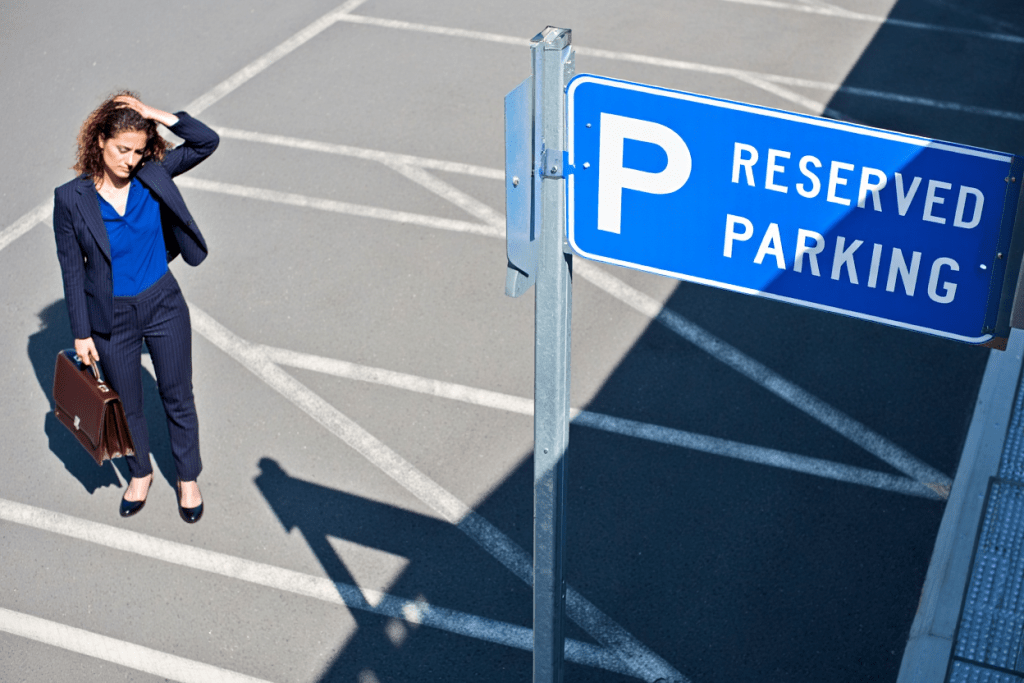
What seemed like a straightforward decision – asking employees to return to their desks – collided with the harsh reality of inadequate parking infrastructure. Employees are arriving at corporate campuses only to find parking lots at capacity, leading to frustration, delays, and in some cases, workers simply turning around and driving home.
Employees are also pointing out something that makes total sense: they’re doing the same job whether they’re at home or in the office. But now they must deal with commuting, parking, and all the stress that comes with it, often without any real benefit.
Some people show up to work at 6 a.m. just to get a parking spot. Others spend half an hour driving around in circles looking for somewhere to park. Many of them struggle to find a public parking space, often paid.
And yes, people are literally parking on the grass or illegal spaces because they’re out of options.
Infrastructure Caught Off-Guard
 So, what happened?
Well:
- During the height of remote and hybrid work adoption, many organizations scaled back their parking expansion plans, citing the abundance of remote workers as justification for reduced physical infrastructure needs. For example, the Texas Department of Transportation, halted plans for a larger parking structure at their Austin campus when it opened in 2022, specifically because of remote work prevalence. And then, during RTO, employees ended up parking on fire lanes.
- Employees are no longer willing to accept some policies. After getting used to no or fewer commutes, their expectations changed. And even if the situation in their company’s car parks might be the same, they are more frustrated with the lack of parking spaces than ever.
Now, let’s take a look a bit at the hidden costs of parking chaos:
- Workers arrive at their desks already frustrated before the day begins,
- Employees circle blocks searching for available spaces,
- Fuel consumption spikes from endless parking searches,
- Parking fairness issues appear as the same individuals consistently secure parking spots. For example, parents that are leaving their kids to school have almost no chance to find a free spot. The same goes for those employees with long commutes.
- Financial penalties accumulate when desperate employees park illegally and receive citations,
- Conflicts can arise as office workers occupy residential parking spaces,
- Administrative teams waste valuable hours manually coordinating parking arrangements and mediating parking disputes.
Beyond Traditional Solutions. How Tidaro Can Help
Smart companies are implementing strategic solutions to tackle the challenges we’ve just discussed:
1.Deploying intelligent parking management platforms that:
- Provide real-time visibility into parking availability across all company lots
- Enable advance space reservations to eliminate morning uncertainty
- Facilitate parking space sharing between colleagues and departments
- Allow priority-based allocation systems for different employee categories
- Guarantee a fair distribution of parking resources
- Monitor office attendance patterns and space utilization
2.Incentivizing alternative commuting methods through financial rewards, subsidies, and benefits for employees who choose public transit, cycling, carpooling, or other sustainable transportation options.
3.Implementing flexible scheduling policies that allow staggered arrival times and varied in-office days to distribute parking demand more evenly throughout the week
The result? A systematic approach that transforms parking from a daily headache into a managed workplace asset.
Now, here is the honest truth: there will always be more employees than parking spaces.
But companies can optimize the usage of their car park and increase its availability.
How come?
Well, by gaining visibility into the car park availability employees will know in advance if they will find an available parking space or not. It not, they can decide to take public transportation, look directly for a spot outside the office car park, or even join a colleague on the way to work.
Also, when the owners of assigned parking spaces are not coming to the office (they might be sick, on vacation, working from home, or just out for some business meetings), their parking spaces would sit empty. A parking app would allow for these spaces to be shared.
Let’s take the Tidaro parking spots booking app as an example. Here are some of the features that allow office admins optimize the car park experience:
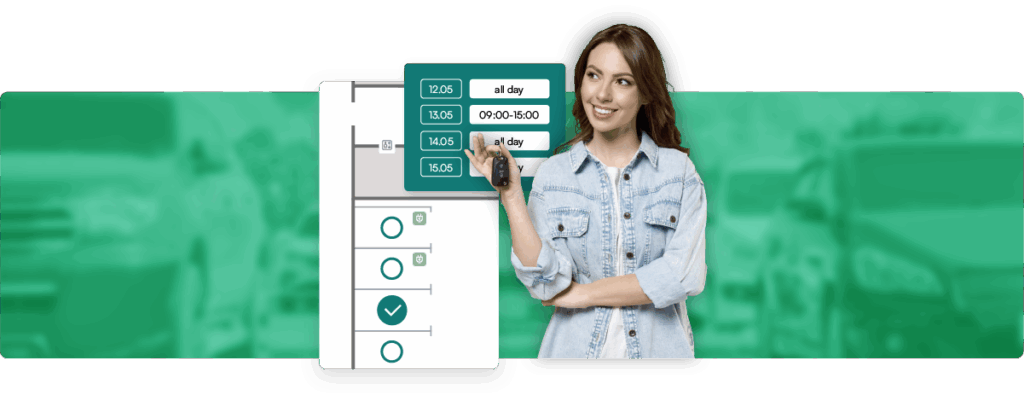
- Online spot bookings and cancelations using an interactive car park map. With Tidaro employees can book their parking spots in advance and diminish the admin burden by up to 90%.
- Spots sharing. What happens if someone with an assigned parking spot has a day off? That person can share the spot with a colleague.
- Waiting lists. What if the car park is full? Instead of checking every minute for spots availability, Tidaro employees can join a waiting list, so if someone cancels a reservation, they will be assigned a spot automatically.
- Hourly bookings. This feature helps employees with flex schedules book a spot. The feature can also be used for booking those spots with EV chargers.
- Booking priorities. Certain employee groups might have different priorities when it comes to booking a spot in the parking lot. Maybe you want to prioritize the access of HR to the car park.
- Zone management. Such a feature allows parking managers to divide the car park into zones that can be managed separately (e.g.: EV zone).
- Reporting and analytics. The system may generate reports and analytics on parking occupancy and employee behavior, supplying valuable insights for parking facility management.
- Intuitive interface for admins and users.
 Conclusion
The parking wars may seem like a logistical detail, but they’ve become a critical front in the broader battle over the future of work.
Forward-thinking companies are turning to workplace management platforms like Tidaro to address these challenges. As a specialized workplace management solution, Tidaro provides integrated parking, desk booking, and meeting room reservation systems designed specifically for hybrid work environments.
Want Tidaro’s help?
You can contact us at [email protected] or go through a free trial here. Big brands such as Danone, Zentiva, Honda, already trust us.