



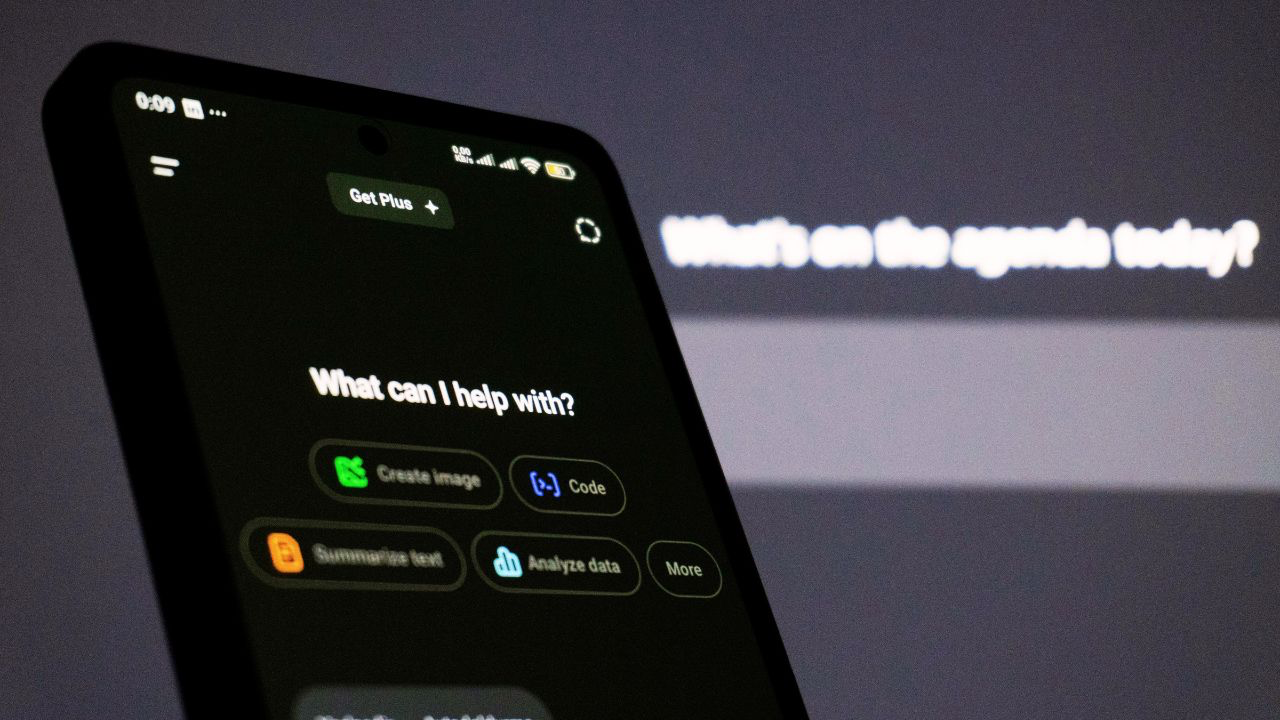
Type a single prompt into ChatGPT asking for the best solution in your category, and you will see the new marketing contest play out in real time on the screen. In seconds an AI assistant ranks brands, compares offers, and points a ready-to-buy customer straight at the winners, while everyone else is invisible.
Research already shows how quickly customers are moving to this behavior, with Gen AI shopping adoption reaching 71% of consumers in some markets and more than half saying they now prefer these tools for product recommendations over traditional search.

For David Lewallen, CEO of AI first agency Verbatim Digital, this is not an experiment or a future trend, it is the new front page of the internet, and he argues that brands now compete for share of answers inside large language models just as fiercely as they once fought for search rankings.
In our conversation he laid out a simple plan to win that contest, understand how chatbots rank brands, seed the data they rely on, and measure your placement before your rivals do.
See How Chatbots Collapse The Funnel
Traditional buying journeys asked people to bounce between search engines, review sites, brand pages, and comparison spreadsheets long before they ever spoke to a salesperson. Now a single natural language query hands that work to an AI assistant, which uses a mix of training data and live web results to pull options, explain tradeoffs, and suggest next steps in one fluent answer.
Retail analysts note that AI shopping assistants already merge product discovery and purchase into a single experience, so the tool that used to be a research helper is quietly turning into the main place where people decide what to buy.
Adobe already sees generative AI traffic to retail sites growing more than twelvefold year over year, still small in absolute terms but expanding at a pace that no marketer can ignore.
Lewallen sees this compression of the funnel every day in client testing, where one carefully phrased prompt lets a buyer learn the basics of a problem, narrow down providers, compare pricing models, and come away with a short list in under a minute.

If you do not know how often your brand shows up on those screens, in which position, and surrounded by which competitors, you are already losing a contest you cannot see.
Treat LLMs As New Search Engines With New Rules
Under the hood these assistants work very differently from a classic search engine, yet two ingredients still matter most for visibility, the data used to train the model and the external pages it consults when it needs fresher or more detailed information.
Public research confirms that large language models are fed huge volumes of publicly available text data from Wikipedia and Reddit, along with books, news sites, and academic papers, and that the Common Crawl archive now forms one of the most important raw materials powering many commercial models.
Wikipedia training data is already under scrutiny from Wikimedia researchers who are studying how heavy reuse of it affects the sustainability and bias of the encyclopedia, which gives marketers a clear signal that brand pages and citations there now echo far beyond classic search.
On top of this baseline, companies like OpenAI strike formal data deals, such as the OpenAI Reddit partnership that grants real time access to discussion threads, and they run additional data partnerships programs that invite publishers and brands to contribute high quality corpora in exchange for influence or compensation.
When a user prompt arrives, the model does not rely only on frozen training data, it usually fans out several queries to engines like Google and Bing, uses retrieval augmented generation techniques to pull in up to date pages, and then writes a blended answer that now often appears above classic blue links in AI Overviews.
For marketers this mix of training and grounding explains why generative engine optimization is emerging alongside classic SEO, with experts already advising brands on AI search visibility so they can influence how engines summarize options instead of hoping to be one citation among many.
In Lewallen’s work this translates into a twin strategy, long-term seeding of training data by strengthening Wikipedia entries, encouraging healthy Reddit engagement, and earning coverage in authoritative digital PR outlets, and short-term moves that target the pages chatbots already lean on, especially the best in category lists that show up again and again in grounding queries.

He is clear that conventional SEO remains the foundation, because engines still crawl and rank pages before they ever feed them into models, and because new products like Google AI shopping experiences that combine Gemini with the Shopping Graph rely heavily on structured, accurate product information pulled from those same optimized pages.
Build Your AI Visibility Program Now
Winning this new contest starts with measurement, and Lewallen argues that brands need an AI visibility program every bit as rigorous as their web analytics or paid media reporting.
New generative engine optimization platforms already simulate thousands of prompts across ChatGPT and rival tools to see which brands appear most often and in which context, mirroring the approach Lewallen’s team takes with its own testing tool.
Instead of keyword research alone, he recommends prompt research that maps the crucial questions buyers ask at high intent moments, for example requests to compare two categories or shortlist vendors, then tracks how your brand and a defined competitor set appear in those answers in multiple engines.
From there you can build concrete metrics such as share of prompt for priority questions, average rank within the answer block, and sentiment or messaging alignment, so you can see whether the assistant presents you as the safe incumbent, the innovative challenger, or leaves you off the page.
Because training new frontier models already costs hundreds of millions of dollars, and research on scaling laws suggests diminishing returns for brute force size increases, Lewallen expects most of the near-term improvement to come from better retrieval, which only increases the reward for brands that invest early in the pages and platforms assistants use to check their work.
At the same time, partnerships and ad products are starting to formalize visibility in ways marketers will recognize, from Walmart ChatGPT shopping integrations that turn a conversation into a checkout to agentic storefronts that let Shopify merchants control how their catalog appears across major AI platforms.
If you wait to think about AI visibility until those ad units are fully mature, the underlying organic signals in training data, reviews, and community discussions will already favor competitors who treated chatbots as a serious channel years earlier.
Looked at together, Lewallen’s advice turns AI chatbots from a mystery box into a measurable, influenceable part of your go to market engine, one where you compete for prominence in answers instead of only for positions on a results page.
The brands that win the AI chatbot marketing competition will be the ones that treat prompts like new keywords, treat Wikipedia, Reddit, reviews, and best-in-class lists like new shelf space, and hold themselves accountable for performance inside the assistants their customers already trust.
Start asking the same questions your buyers do, watch how the bots answer, and then organize your content, partnerships, and measurement so that the next time someone asks for the best in your category, your name is already on the screen.