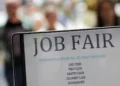





The U.S. job market appears steady on paper, but many workers are stuck outside it.
Today, one in four unemployed Americans — about 1.8 million people — has been searching for work for more than six months. At that point, most have also exhausted unemployment benefits, which typically replace less than 40% of prior income, according to CNBC.

The result is a growing group of job seekers still applying, but with shrinking financial support.
A Market That Isn’t Moving
Historically, the U.S. labor market relied on constant movement — workers left jobs and quickly found new ones. That churn has slowed. Hiring and separations combined are near the lowest levels recorded since tracking began in 2000.

Fewer layoffs doesn’t necessarily mean easier hiring. It can also mean fewer openings to reenter.
Why People Can’t Get Back In
Economists point to two structural pressures:
- Technology shifts faster than workers can retrain. Skills increasingly change on the job. Workers outside the workforce struggle to catch up without access to workplace training.
- Opportunity gaps widen over time. Networking, training access, and financial stability influence hiring chances. The longer someone remains unemployed, the harder reentry becomes.
Roles exist, but the path back into them is slower and more selective than in past cycles.
If technology continues shaping occupations faster than workers can transition, the gap between employed and unemployed populations may widen — even during periods of overall economic stability.

Policymakers and employers increasingly face the same challenge: not just creating jobs, but helping workers move into them quickly enough to keep the labor market dynamic.