



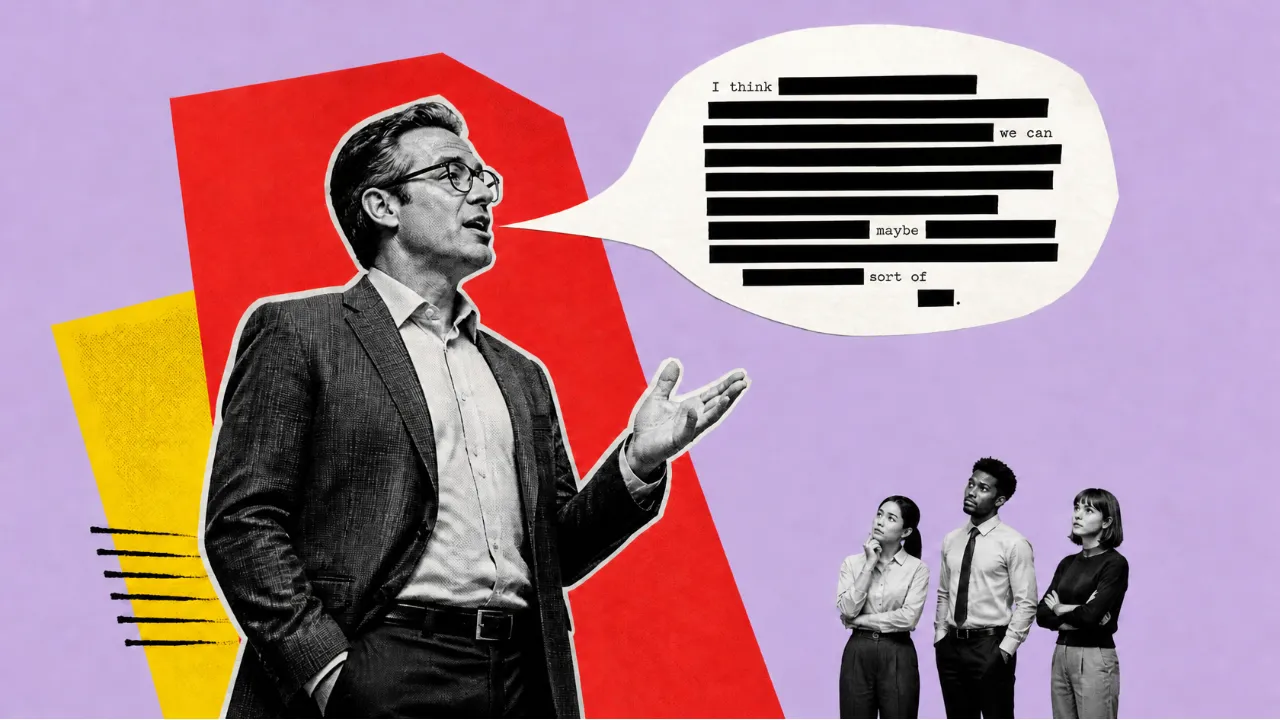
When a company announces a reorganization, a new operating model or a significant change in strategy, employees rarely save their hardest questions for the executive team. They take them to their manager.
Companies routinely spend weeks or months developing major business decisions among a small group of senior leaders. Managers farther down the organization may learn the details shortly before everyone else, through a briefing deck or talking points designed to prepare them for questions.

Then they are expected to make the decision understandable. That is too much to ask of a manager who was given the conclusion without enough of the reasoning behind it. It also creates an avoidable credibility problem. Employees are looking to someone they know and trust for context. When that person can only repeat language from an announcement, the gap is obvious.
Managers should not have to invent the logic behind a company decision. Yet that is what happens when organizations treat manager communication as the final step in a rollout. Leaders decide what will change, communications prepares the announcement, and managers receive materials explaining what to say. The process assumes that the message will supply what managers need.

A message cannot replace understanding
Managers need to know the business problem leadership is trying to solve and why the chosen approach was selected. They need enough context to connect an enterprise decision to the work happening on their team. They also need a clear view of what has been decided and what remains unresolved.
Without that information, even a capable manager faces a difficult choice. Repeat the corporate language and risk sounding evasive, or try to provide more useful context and risk saying something leadership did not intend.
Neither is a reasonable position to put them in. The problem becomes more pronounced as organizational change becomes more continuous. A manager may be explaining a restructuring while also introducing new technology, shifting performance expectations or adjusting priorities. Employees experience these changes together, regardless of whether leadership developed them as separate initiatives. They want to understand how the pieces connect. A manager therefore needs more than the facts of the latest announcement. The manager needs to understand the strategy well enough to explain what changes and what employees should do differently as a result.
That requires earlier involvement. Not every manager belongs in the room when senior leadership makes a confidential business decision. But organizations can involve a representative group of managers before a major announcement and test whether the decision can actually be explained at the team level.
Preparation should also begin before a high-stakes moment arrives. Organizations need to help managers build their communication muscle over time: understand the role they are expected to play, anticipate what employees will need from them and practice handling the questions they can answer as well as those they cannot.
That preparation gives managers the confidence and judgment to communicate credibly when the stakes are highest. What questions arise immediately? Which parts of the rationale remain unclear? Where will employees reasonably ask for specifics that leadership has not yet provided?
If leaders cannot equip managers to explain why a change is happening or what it means for the people responsible for carrying it out, the organization may not yet have translated the strategy into an operating reality.
Employees do not expect their manager to know every answer. They do expect the manager to distinguish between an answer the company has not communicated well and an answer the company genuinely does not have yet.
“I don’t know” can be credible when the manager can explain what is still being decided and when more information is expected. It becomes frustrating when it is the only available response because leadership has withheld the context needed to say anything more.
Managers also need a way to send information back up the organization. The first hours and days after an announcement reveal where employees are confused, skeptical or worried about unintended consequences. Managers see those reactions before senior leaders do.
A good change process uses that intelligence. Questions should be gathered, patterns identified and answers updated as the organization learns where the initial communication fell short.
The manager’s role in major change is substantial. They translate strategy into daily work, help employees understand what is expected and carry much of the emotional weight when difficult decisions reach a team.

Organizations should prepare them accordingly.