- Work is a mixture of routines, rituals, and interpersonal drama. Radically altering the daily routines of workers represents a major form of loss.
- The pandemic marked a form of separation that has been wildly disorienting for many workers, and especially for managers.
- An anthropological approach to change management can never be a system or a program that is uniformly applied to every organization. No shortcuts. No punchy acronyms.
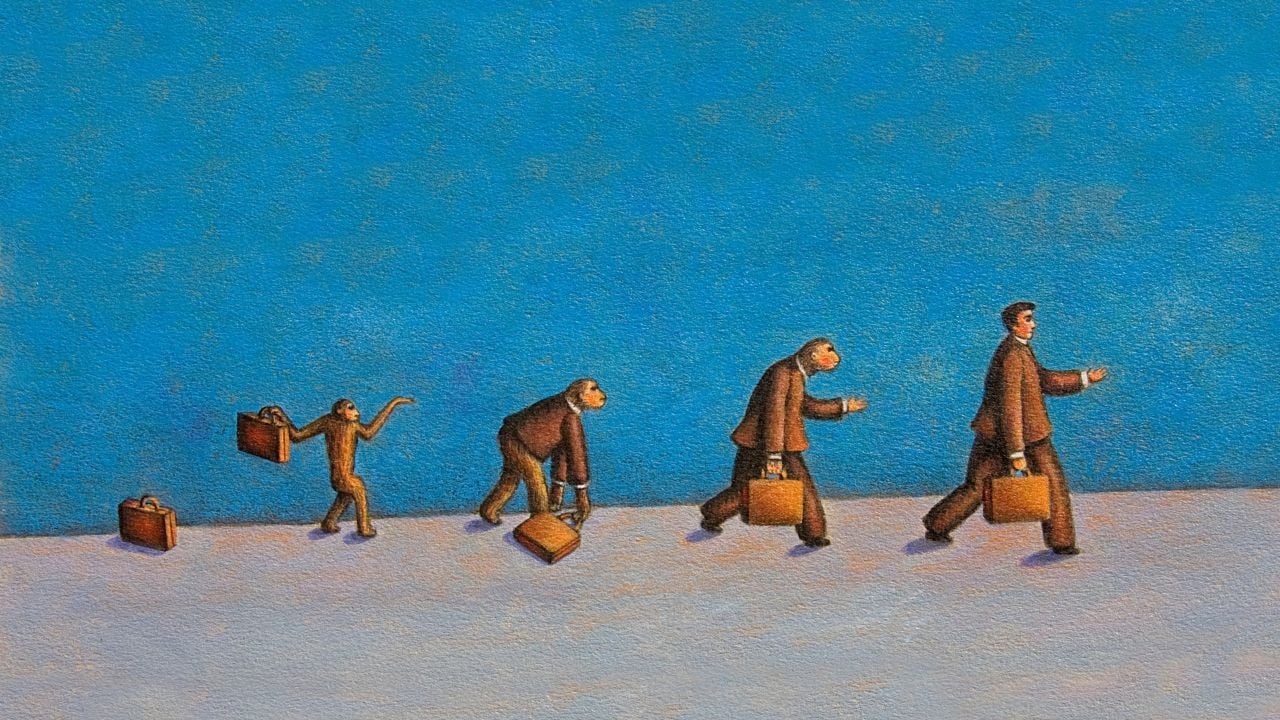
Extensive research indicates that conventional approaches to change management rarely work. Data from McKinsey suggests that around 70% of change programs fail, while others put the failure rate at between 70-80%.
Yet, year after year companies turn to the same old programs…to no avail.

What lies at the heart of these failures?
Common reasons for their failure include:

- Poorly defined strategy
- Poor communication
- People just don’t like to change
- People are not given enough or the right resources
- Not enough flexibility
- Denying resistance
- Not celebrating short-term wins along the way
Change Management and the Future of Work
The above reasons are commonsensical enough. Surely they contribute to change-management’s poor track record. However, in this era of massive and even unprecedented change post-pandemic, we are facing a change management challenge of epic proportions.
While all change initiatives prove difficult, the shift to agile, remote, activity-based ways of working (ABW) will continue to be exceptionally challenging into the future.
Each company is unique, therefore the linear, off-the-shelf programs that move from phase to phase as if on an assembly line, will likely be no more successful than previous change efforts.
But what to do?

Think Anthropologically
For generations, anthropologists (particularly Arnold van Gennep and Victor Turner) have written prolifically about the ways humans move through changes, particularly ritual changes. In what these writers refer to as a dramaturgical approach (i.e. human drama), moving from one status to another is often a rite of passage.
In anthropological literature, this most often pertains to movement through big thresholds in the life-course such as childhood to adolescence, then to adulthood, and then into married life, etc.
But the theories of these anthropologists can also be applied to the large changes that today we are asking knowledge workers to make.
Routines and Rituals
Everyday work is made up of countless routines, punctuated by rituals of various types. Task work, meetings, calls, collaboration sessions, research, report writing, etc. But then there are rituals that encapsulate something of the company’s values and cultures, which come together in particular ways.
Think of the tenor of client meetings and pitches, performance reviews (where performance — and drama — is even in the name), to celebrating product launches, to client acquisitions, to birthdays, to retirements, etc.
In his book The Ritual Process, Victor Turner outlines his theory of ritual change that we all go through. Turner suggests that throughout life we move through the process in a variety of settings.
During everyday, normal times, we exist in various forms of structure. Things have their places, and routines have their rhythms.
Whether through planned or unplanned events, when a given structure is upset or suspended, we experience a phase of separation and enter into what he calls a liminal state — a state between states. This he refers to as anti-structure.
During the phase of anti-structure, those involved in the transition share a collective experience of liminality, which can foster what he called communitas (or sense of shared experience).
At some point in the change process, a new sense of order and structure emerges, and members of a group experience an incorporation into a new structure. Think in terms of the cycle of life > death > rebirth, a near universal aspect of major religions. Schematically is looks like this:
Structure > Separation > Liminality > Communitas > Incorporation
Key to applying Turner’s idea of ritual process is his focus on drama, and storytelling.
At our core we are an emotional, storytelling species that aligns itself with different narratives in different contexts. Stories provide us the throughline that helps us maintain structure and meaning in our lives.
Corporate change management is no exception.
Dude: Where’s My Office
The upcoming and inevitable massive shrinkage of office space will be accompanied by the elimination of fixed offices or desks for most workers. This might take a few years, but it is coming.
It is no small thing to ask workers to share desks and offices, to not have a place to nest with pictures of their families and pets.
For several generations, we have lived and worked in a certain form of workplace structure.
The pandemic marked a form of separation that has been wildly disorienting for many workers, and especially for managers.
We seem to be currently operating within a state of liminality where no one seems to know precisely what will happen next.
The impending doom loop surrounding the office sector has many people frozen like deer in the headlights, unsure what to do next. Meanwhile, pundits claim that we need to do this or that — training, incorporating better technology, etc.
Again, all of these fixes are important, but they don’t address the emotional, dramaturgical dimensions of change.
There are five dimensions to this that will help in the broader, global transition to activity based working that I see on the horizon:
1.Craft a compelling story:
Companies need to be able to articulate how their core strategy will benefit from a move to ABW, or full remote work, or fixed schedule hybrid working. Until then, employees will remain in a liminal state.
Simply being told that the company wants to save money, or appease employee demand for flexibility and choice, will not be enough.
How does the company plan to execute its strategy and compete in the market by changing the way (when and where) employees are working?
2.Empathy and grieving
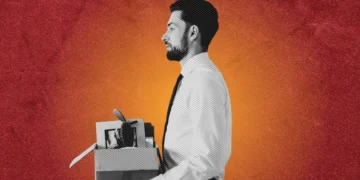
Work is a mixture of routines, rituals, and interpersonal drama. Radically altering the daily routines of workers represents a major form of loss.
Telling a person that they no longer have an office or desk, and that they need to radically alter the routines and rituals requires a deep empathy and an acknowledgement of real loss.
Simply announcing to staff that this is the new schedule, this is the new booking technology, and that these are the spaces where you can or can’t work will not be enough.
3.Communitas and co-creation
Rather than assuming that the end-goal of a change project is already known, and that employees need to just march towards that like obedient soldiers, teams need to be able to define their own shared future.
During this phase of maximum uncertainty, sustainable change is best achieved when participants can collectively co-create and test out different options.
Decisions regarding what types of spaces are most fitting, what schedules make sense, and what technologies to adopt should all be made by employees in conjunction with the design team.
4.Resetting routines and rituals
Rituals make routines. They are what punctuate everyday activities and create the separation between the two.
The world of work is in a decade-long process of adjustment and change, and employees need to be able to define their own routines (and rituals).
In the context of hybrid work, where companies are overwhelming their employees with an overabundance of meetings, revisiting the culture of meetings will be helpful.
As Peter Drucker once put it, “Meetings are a symptom of bad organization. The fewer the meetings the better.” Turning meetings into highly impactful rituals versus an everyday routine would be a great place to start.
No Two Companies are the Same
An anthropological approach to change management can never be a system or a program that is uniformly applied to every organization. No shortcuts. No punchy acronyms.
When you focus on the emotional states of employees and their routines and rituals, change management becomes something different.
It becomes a leadership challenge of recrafting the company’s strategy as a story that incorporates an explanation for why adapting to a new way of working makes sense for the business and its employees.
If that rationale is fully articulated, and if leaders follow that with proper hybrid manager training and support (something that most firms still are not doing), then employees can get on with the anthropological process of redesigning work routines and rituals that work for them.