
Advertisements
Your Brand Deserves The Spotlight - Advertise With Us - Allwork.Space
  • Marketplace
  • Resources
  • Business Directory
  • Events
  • Advertise
  • Publish a Press Release
  • Submit Your Story | Get Featured
  • Get the Newsletter
  • Contact
  • About Us
The FUTURE OF WORK® since 2003
Allwork.Space
No Result
View All Result
Subscribe
  • Submit Your StoryNew
  • More
    • Columnists
      • Dr. Gleb Tsipursky – The Office Whisperer
      • Nirit Cohen – WorkFutures
      • Angela Howard – Culture Expert
      • Drew Jones – Design & Innovation
      • Jonathan Price – CRE & Flex Expert
    • Get the Newsletter
    • Events
    • Advertise With Us
    • Publish a Press Release
    • Brand PulseNew
    • Partner Portal
  • Latest News
  • Business
  • Leadership
  • Work-life
  • Career Growth
  • Tech
  • Design
  • Workforce
  • Coworking
  • CRE
  • Podcast
  • Submit Your StoryNew
  • More
    • Columnists
      • Dr. Gleb Tsipursky – The Office Whisperer
      • Nirit Cohen – WorkFutures
      • Angela Howard – Culture Expert
      • Drew Jones – Design & Innovation
      • Jonathan Price – CRE & Flex Expert
    • Get the Newsletter
    • Events
    • Advertise With Us
    • Publish a Press Release
    • Brand PulseNew
    • Partner Portal
  • Latest News
  • Business
  • Leadership
  • Work-life
  • Career Growth
  • Tech
  • Design
  • Workforce
  • Coworking
  • CRE
  • Podcast
No Result
View All Result
Subscribe
Allwork.Space
No Result
View All Result
Advertisements
Nexudus - Waste of Space? (Pink)
Home News

Labor Crunch Pushes Japan To Reform Policy That Discourages Women From Working More Hours

Japan's largest trade union umbrella group Rengo, as well as top business lobbying groups, want more aggressive reform, calling for ditching the dependent spouse system.

Allwork.Space News TeambyAllwork.Space News Team
June 13, 2025
in News
Reading Time: 4 mins read
A A
Labor Crunch Pushes Japan To Reform Policy That Discourages Women From Working More Hours

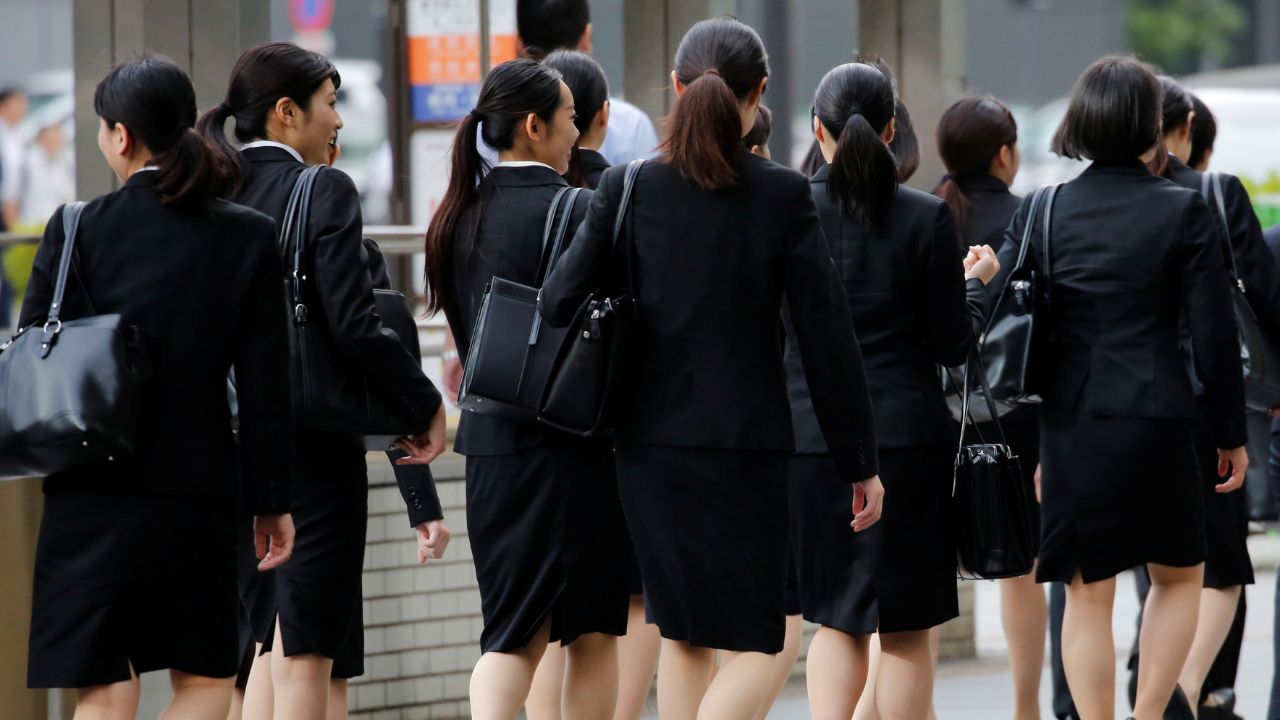
Female office workers wearing high heels, clothes and bags of the same colour make their way at a business district in Tokyo, Japan, June 4, 2019. REUTERS/Kim Kyung-Hoon/File Photo

Japan’s labour shortage is forcing its conservative lawmakers to consider overhauling decades-old social welfare rules originally designed to encourage married women to spend more hours looking after the home.

Policymakers are expected to pass legislation on Friday that would require part-time workers to pay into pension and health-insurance schemes, essentially scaling back exemptions now seen as a major disincentive for women to work longer hours or advance their careers.

Advertisements
Build Your AI - Disaster Avoidance

Introduced in 1986 during Japan’s economic boom, the exemptions apply to “dependent” spouses who earn less than 1.3 million yen ($9,028) a year, as part of an expansion of social welfare at the time.

While the proposed reforms are aimed at easing a current workers crunch in Japan, they would not completely scrap a system that many argue is both unproductive and a product of outdated gender expectations.

Advertisements
Yardi Kube automates flex & coworking operations

Businesses and analysts now say the economic pressures created by the current worker crunch outweigh historic concerns about ensuring all “housewives”, no longer a majority of married women, were covered by the pension scheme.

“From the standpoint of labour economics, it’s an irrational system that not only restricts the supply of high-quality female labour forces but also serves to limit pressure for wage growth,” Nobuko Nagase, professor at Otsuma Women’s University.

Japan’s labour shortage is hitting historic levels, particularly among non-manufacturers and small firms, driven by a rapidly aging and declining population.

Businesses complain the existing pension scheme makes it extremely difficult to fill shortages with part-time workers who wish to limit annual pay below the thresholds.

Advertisements
Nexudus - Tech Stack Lovers

The Japan Association of Corporate Executives, a major business lobby, this week renewed its call for the abolition of the system.

“We urge the government for an immediate review,” it said in its policy proposal. “It is necessary to revise the conventional system design that is based on the full-time homemaker ideal.”

But while arguments to get rid of the system have broadened, the appetite among conservative lawmakers for deeper reform has been mixed.

The bill has broad parliamentary support and in its current form effectively requires most part-timers who work more than 20 hours a week to pay into corporate pension and health-insurance schemes regardless of income levels and company size.

More stories for you

U.S. Planned Layoffs Plummet 53% In November, But Still Outpace 2024 Levels

U.S. Planned Layoffs Plummet 53% In November, But Still Outpace 2024 Levels

8 hours ago
U.S. Weekly Jobless Claims Fall To Three-Year Low Amid Mixed Labor Market Signals

U.S. Weekly Jobless Claims Fall To Three-Year Low Amid Mixed Labor Market Signals

8 hours ago
U.S. Department Of Health And Human Services Makes It Harder For Federal Employees With Disabilities To Work Remotely (1)

U.S. Department Of Health And Human Services Makes It Harder For Federal Employees With Disabilities To Work Remotely

8 hours ago
Boomerang Generation Sees One In Three Young Workers Moving Home, Struggling With Pay And Career Credibility

Boomerang Generation Sees One In Three Young Workers Moving Home, Struggling With Pay And Career Credibility

8 hours ago

According to the welfare ministry, the changes, to be implemented in phases, would mean about 900,000 part-time women would start paying insurance fees, shrinking the pool of about 6.7 million dependent spouses, 98% of whom are women.

But the bill still preserves the system for dependent spouses, stating bigger changes would require “a national debate” and more research.

“In the latest pension system reform, we were unable to reach a consensus,” Prime Minister Shigeru Ishiba told parliament last week. “There are various people eligible under this system, not only full-time housewives but also those who are unable to work due to illness, childcare, or nursing responsibilities,” he said.

In December, Ishiba argued the system should not be completely dismissed.

Advertisements
Your Brand Deserves The Spotlight - Advertise With Us - Allwork.Space

“Full-time housewives aren’t the type of people living a leisurely life of naps and trivialities…they diligently protect their homes and manage a wide range of responsibilities,” he said.

Although the government will subsidise the costs temporarily, the 20-hour threshold could simply prompt dependent spouse part-timers to limit their working hours, some say.

Maiko Takahashi, 45-year-old mother of three children, said she would choose to remain as a dependent spouse with her two part-time jobs.

“I would rather limit work hours instead of having to pay insurance fees, because I also want to spend enough time with my children,” she said. “But I always felt it’s a strange system. Why do they discourage those who want to work more?” she added.

Advertisements
Your Brand Deserves The Spotlight - Advertise With Us - Allwork.Space

Generational Shift

The debate about dependent spouses goes back to 2000, when a government panel was set up to see if pension schemes could better reflect demographic changes. By then, dual-income households already outnumbered families with full-time housewives.

The fairness of the scheme has also been questioned because those married to self-employed workers are not exempt from insurance fees.

Japan’s largest trade union umbrella group Rengo, as well as top business lobbying groups, want more aggressive reform, calling for ditching the dependent spouse system.

The system “is disturbing the development of women’s careers and causing a gender wage gap,” the 7-million member Rengo group said.

Advertisements
UltraSoftBIS Work Smarter, Not Harder

Tomoko Yoshino, the first female chief of Rengo, said she began to believe the system needed change in the early 1990s, when the economic boom burst and dual-income households increased.

“Despite the sense of unfairness shared among women, the issue unfortunately failed to reach decision-making levels at the group for discussions in the past, partly because of the very limited presence of women at those levels,” she said.

Nagase, professor at Otsuma Women’s University, said the reform has to come with a shift in the mindset of employers who still see part-time female workers as a source of cheap labour and supplementary to male workers.

Wages for part-time workers are very low compared with those for regular workers and opportunities for promotion are limited, Nagase said.

“A failure to tap full potential of those workers would be a loss for the Japanese economy as labour shortages intensify,” she said.

($1 = 143.9900 yen)

(Reporting by Makiko Yamazaki; Editing by Sam Holmes)

Advertisements
Your Brand Deserves The Spotlight - Advertise With Us - Allwork.Space
Source: Reuters
Tags: Asia-PacificWorkforce
Share8Tweet5Share1
Allwork.Space News Team

Allwork.Space News Team

The Allwork.Space News Team is a collective of experienced journalists, editors, and industry analysts dedicated to covering the ever-evolving world of work. We’re committed to delivering trusted, independent reporting on the topics that matter most to professionals navigating today’s changing workplace — including remote work, flexible offices, coworking, workplace wellness, sustainability, commercial real estate, technology, and more.

Other Stories Recommended For You

U.S. Planned Layoffs Plummet 53% In November, But Still Outpace 2024 Levels
News

U.S. Planned Layoffs Plummet 53% In November, But Still Outpace 2024 Levels

byAllwork.Space News Team
8 hours ago

Layoffs announced by U.S. employers fell sharply in November, but hiring intentions continued to lag as businesses navigated an uncertain...

Read more
U.S. Weekly Jobless Claims Fall To Three-Year Low Amid Mixed Labor Market Signals

U.S. Weekly Jobless Claims Fall To Three-Year Low Amid Mixed Labor Market Signals

8 hours ago
U.S. Department Of Health And Human Services Makes It Harder For Federal Employees With Disabilities To Work Remotely (1)

U.S. Department Of Health And Human Services Makes It Harder For Federal Employees With Disabilities To Work Remotely

8 hours ago
Boomerang Generation Sees One In Three Young Workers Moving Home, Struggling With Pay And Career Credibility

Boomerang Generation Sees One In Three Young Workers Moving Home, Struggling With Pay And Career Credibility

8 hours ago
Advertisements
Get more revenue. Do less work - Alliance Virtual Offices
Advertisements
UltraSoftBIS Work Smarter, Not Harder

Unlock your competitive edge in tomorrow's workplace.

Join a community of forward-thinking professionals who get exclusive access to the latest news, trends, and innovations that are shaping the future of work.

2025 Allwork.Space News Corporation. Exploring the Future Of Work® since 2003. All Rights Reserved

Advertise  Submit Your Story   Newsletters   Privacy Policy   Terms Of Use   About Us   Contact   Submit a Press Release   Brand Pulse   Podcast   Events   

No Result
View All Result
  • Home
  • Latest News
  • Topics
    • Business
    • Leadership
    • Work-life
    • Workforce
    • Career Growth
    • Design
    • Tech
    • Coworking
    • Marketing
    • CRE
  • Podcast
  • Events
  • About Us
  • Advertise | Media Kit
  • Submit Your Story
Subscribe

Welcome Back!

Login to your account below

Forgotten Password?

Retrieve your password

Please enter your username or email address to reset your password.

Log In
This website uses cookies. By continuing to use this website you are giving consent to cookies being used. Visit our Privacy and Cookie Policy.
-
00:00
00:00

Queue

Update Required Flash plugin
-
00:00
00:00