
Advertisements
Your Brand Deserves The Spotlight - Advertise With Us - Allwork.Space
  • Marketplace
  • Resources
  • Business Directory
  • Events
  • Advertise
  • Publish a Press Release
  • Submit Your Story | Get Featured
  • Get the Newsletter
  • Contact
  • About Us
The FUTURE OF WORK® since 2003
Allwork.Space
No Result
View All Result
Subscribe
  • Submit Your StoryNew
  • More
    • Columnists
      • Dr. Gleb Tsipursky – The Office Whisperer
      • Nirit Cohen – WorkFutures
      • Angela Howard – Culture Expert
      • Drew Jones – Design & Innovation
      • Jonathan Price – CRE & Flex Expert
    • Get the Newsletter
    • Events
    • Advertise With Us
    • Publish a Press Release
    • Brand PulseNew
    • Partner Portal
  • Latest News
  • Business
  • Leadership
  • Work-life
  • Career Growth
  • Tech
  • Design
  • Workforce
  • Coworking
  • CRE
  • Podcast
  • Submit Your StoryNew
  • More
    • Columnists
      • Dr. Gleb Tsipursky – The Office Whisperer
      • Nirit Cohen – WorkFutures
      • Angela Howard – Culture Expert
      • Drew Jones – Design & Innovation
      • Jonathan Price – CRE & Flex Expert
    • Get the Newsletter
    • Events
    • Advertise With Us
    • Publish a Press Release
    • Brand PulseNew
    • Partner Portal
  • Latest News
  • Business
  • Leadership
  • Work-life
  • Career Growth
  • Tech
  • Design
  • Workforce
  • Coworking
  • CRE
  • Podcast
No Result
View All Result
Subscribe
Allwork.Space
No Result
View All Result
Advertisements
Drive more revenue to your coworking space - Alliance Virtual Offices
Home Tech

What 3-D Modeling Tells Us About The Real Future Of AI In Design Work

Companies like Physna are using generative AI to transform 3D design into a dynamic, data-driven process—giving engineers tools to analyze, optimize, and build smarter and faster than ever before.

Dr. Gleb TsipurskybyDr. Gleb Tsipursky
August 7, 2025
in Tech
Reading Time: 5 mins read
A A
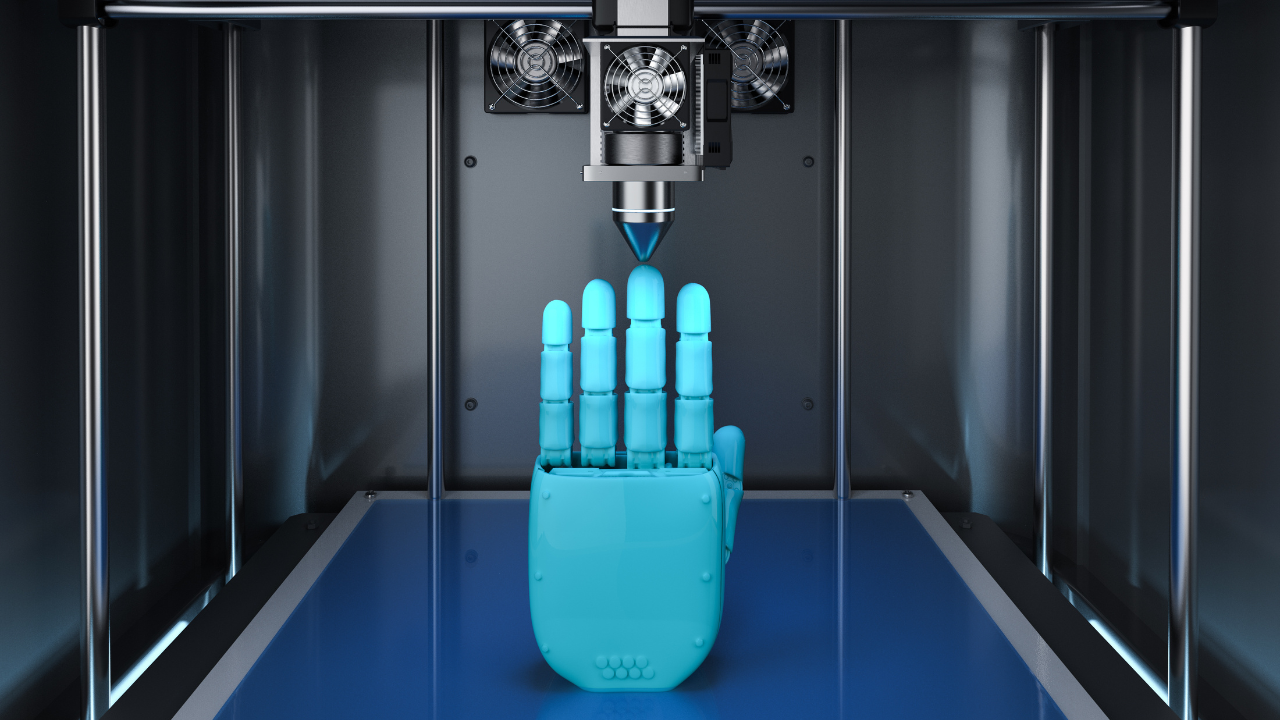
What 3-D Modeling Tells Us About The Real Future Of AI In Design Work Allwork.space

AI is turning 3D models into searchable data that speeds design, cuts costs, and helps engineers focus on innovation instead of repetitive tasks.

The world of design and manufacturing is being quietly but powerfully transformed by a new wave of artificial intelligence. 

Helping lead this revolution is Paul Powers, the founder and CEO of Physna, a company whose name is derived from “physical DNA.” In a recent interview, Powers offered a glimpse into how Gen AI is being used to decode the complexities of 3-D modeling, creating tools that not only understand the physical world but help shape its digital twin with precision. 

Advertisements
UltraSoftBIS Work Smarter, Not Harder

Unlocking the Language of 3-D Geometry 

Physna interprets 3-D models and translates them into code. This translation forms the basis of a novel approach where geometry is no longer locked in static visualizations but becomes a searchable, comparable, and analyzable data form. 

Powers describes this as building a “bridge between what’s physical and digital,” allowing machines to understand shapes and structures as intuitively as they parse text. 

Advertisements
Yardi Kube automates flex & coworking operations

At the core of Physna’s value proposition is its ability to extract more meaningful data from 3-D models than traditional systems. By transforming these models into a format readable by AI, the company has developed capabilities far beyond surface-level geometry. Their tools can decipher internal structures, assess proper scale and measurements, and ultimately enable both analytical and generative AI applications. 

From Insight to Innovation: The Lifecycle of an AI-Driven Project 

Physna’s projects follow a sequence that begins with ingestion and analysis of a company’s 3-D model data. 

“Instead of starting with a giant training dataset to make something generalized,” Powers explains, “we focus on data specific to a company or industry.” 

This specificity is crucial. A part designed for aerospace functions vastly differently than one built for automotive applications, even if they might appear similar on the surface. 

Advertisements
Nexudus - Tech Stack Lovers

The early stages of a project are analytical. By understanding the relationships between a part’s geometry and its metadata — such as how it’s manufactured or how it performs in the field — Physna provides immediate benefits. 

Companies can deduplicate parts, identify alternative suppliers, and streamline design processes by leveraging existing knowledge. This alone can significantly reduce costs and engineering cycle times. 

Only after these foundational insights are established does generative AI come into play. Here, Gen AI doesn’t attempt to create entire planes or vehicles from scratch. Instead, it is used to optimize individual components — say, a more wear-resistant fuel valve under a specific weight threshold. 

Powers emphasizes that reliable generative outputs stem from deep analytical understanding. “You need to understand what works and what doesn’t based on past data before you can responsibly generate new designs.” 

More stories for you

Added Workplace AI Features Spur Microsoft Productivity Suite Price Increases For 2026

Added Workplace AI Features Spur Microsoft Productivity Suite Price Increases For 2026

5 hours ago
Meta Plans Steep Budget Cuts For Metaverse Team, Raising Layoff Concerns

Meta Plans Steep Budget Cuts For Metaverse Team, Raising Layoff Concerns

5 hours ago
10 Must-Have Software Integrations To Streamline Your Business Center In 2026

10 Must-Have Software Integrations To Streamline Your Business Center In 2026

21 hours ago
95% Of CEOs Optimistic About 2026 As Flexible Workforces Deliver Higher Productivity And Retention, IWG Reports

95% Of CEOs Optimistic About 2026 As Flexible Workforces Deliver Higher Productivity And Retention, IWG Reports

1 day ago

Enhancing, Not Replacing, Human Ingenuity 

The specter of job displacement often shadows AI discussions. But in Powers’ experience, engineers and designers inside companies aren’t threatened by these tools. 

“They’re thinking, ‘You’re making my job way easier,’” he notes. 

Physna helps these professionals move away from redundant tasks like redesigning already existing parts and toward higher-value activities such as innovation and optimization. 

The fear of obsolescence, he argues, is largely external. Inside organizations, the reaction tends to be pragmatic. If a tool prevents engineers from inadvertently reinventing the wheel, it’s not eliminating jobs; it’s enhancing human capability. 

Advertisements
Get more revenue. Do less work - Alliance Virtual Offices

“You’re making them able to make faster, more accurate, and better decisions more rapidly,” he says. 

Breaking the Learning Curve with Intuitive Design 

One of the clearest insights from Powers is his view on adoption. 

“If we have to spend too long training somebody, we’ve messed up,” he says. 

His goal is to make Physna’s platform so intuitive that even highly technical tasks become accessible without extensive onboarding. This is achieved by designing interfaces that mirror natural human interactions — point, click, and increasingly, converse. 

Advertisements
Your Brand Deserves The Spotlight - Advertise With Us - Allwork.Space

He draws parallels with ChatGPT, noting how the lack of a traditional menu system allows users to engage in a more natural, conversational flow. While complex design tasks still require precision, the goal is to move toward an interface where users can communicate intentions directly and get results without elaborate instructions. 

Trust, however, remains the biggest barrier. Not blind trust, but a willingness to “dare to try something new.” Powers sees this psychological leap as more significant than any technical hurdle. 

Once users see the productivity gains, resistance fades. 

The Future of Gen AI in Design 

Looking ahead, Powers anticipates a future where AI systems become both more specialized and more generalized. It sounds paradoxical, but what he means is that domain-specific tools like Physna will offer generalized, intuitive interfaces. 

Advertisements
Your Brand Deserves The Spotlight - Advertise With Us - Allwork.Space

Users won’t need to understand the inner workings of 3-D modeling or AI to get meaningful results, as they’ll simply describe what they need, and the system will do the heavy lifting in the background. 

He also sees deeper personalization on the horizon. Gen AI tools, like language models today, will become increasingly attuned to individual users. Preferences, habits, and workflows will be learned and adapted to, allowing the AI to anticipate needs instead of just responding to commands. 

And the physical-digital divide will continue to shrink. Physna is already experimenting with integrations involving augmented reality, providing real-time interactions with 3-D models. In the near future, your glasses might not only display a model but also predict what you’re about to ask about it, and take action accordingly. 

Designing the Future, One Model at a Time 

Paul Powers and his team at Physna aren’t just digitizing design — they’re reimagining it. By blending the strengths of analytical and generative AI, they’re creating a platform that empowers engineers to innovate faster, smarter, and with more context than ever before. In this world, design becomes less about drawing from scratch and more about evolving with insight. 

As Gen AI continues to evolve, so too will its role in shaping the physical world. With leaders like Powers at the helm, the promise of AI in design feels less like a distant horizon and more like a rapidly unfolding reality.


Advertisements
Subscribe to the Future of Work Newsletter
Tags: AILeadershipTechnology
Share11Tweet7Share2
Dr. Gleb Tsipursky

Dr. Gleb Tsipursky

Dr. Gleb Tsipursky, called the “Office Whisperer” by The New York Times, helps tech-forward leaders replace overpriced vendors with staff-built AI solutions. He serves as the CEO of the future-of-work consultancy Disaster Avoidance Experts. Dr. Gleb wrote seven best-selling books, and his forthcoming book with Georgetown University Press is The Psychology of Generative AI Adoption (2026). Prior to that, he wrote ChatGPT for Leaders and Content Creators (2023). His cutting-edge thought leadership was featured in over 650 articles in prominent venues such as Harvard Business Review, Fortune, and Fast Company. His expertise comes from over 20 years of consulting for Fortune 500 companies from Aflac to Xerox and over 15 years in academia as a behavioral scientist at UNC-Chapel Hill and Ohio State. A proud Ukrainian American, Dr. Gleb lives in Columbus, Ohio

Other Stories Recommended For You

Added Workplace AI Features Spur Microsoft Productivity Suite Price Increases For 2026
News

Added Workplace AI Features Spur Microsoft Productivity Suite Price Increases For 2026

byAllwork.Space News Team
5 hours ago

Microsoft will increase prices for its Microsoft 365 productivity suites globally starting July 2026 for commercial and government clients, the...

Read more
Meta Plans Steep Budget Cuts For Metaverse Team, Raising Layoff Concerns

Meta Plans Steep Budget Cuts For Metaverse Team, Raising Layoff Concerns

5 hours ago
10 Must-Have Software Integrations To Streamline Your Business Center In 2026

10 Must-Have Software Integrations To Streamline Your Business Center In 2026

21 hours ago
95% Of CEOs Optimistic About 2026 As Flexible Workforces Deliver Higher Productivity And Retention, IWG Reports

95% Of CEOs Optimistic About 2026 As Flexible Workforces Deliver Higher Productivity And Retention, IWG Reports

1 day ago
Advertisements
Get more revenue. Do less work - Alliance Virtual Offices
Advertisements
Nexudus - Revenue

Unlock your competitive edge in tomorrow's workplace.

Join a community of forward-thinking professionals who get exclusive access to the latest news, trends, and innovations that are shaping the future of work.

2025 Allwork.Space News Corporation. Exploring the Future Of Work® since 2003. All Rights Reserved

Advertise  Submit Your Story   Newsletters   Privacy Policy   Terms Of Use   About Us   Contact   Submit a Press Release   Brand Pulse   Podcast   Events   

No Result
View All Result
  • Home
  • Latest News
  • Topics
    • Business
    • Leadership
    • Work-life
    • Workforce
    • Career Growth
    • Design
    • Tech
    • Coworking
    • Marketing
    • CRE
  • Podcast
  • Events
  • About Us
  • Advertise | Media Kit
  • Submit Your Story
Subscribe

Welcome Back!

Login to your account below

Forgotten Password?

Retrieve your password

Please enter your username or email address to reset your password.

Log In
This website uses cookies. By continuing to use this website you are giving consent to cookies being used. Visit our Privacy and Cookie Policy.
-
00:00
00:00

Queue

Update Required Flash plugin
-
00:00
00:00