
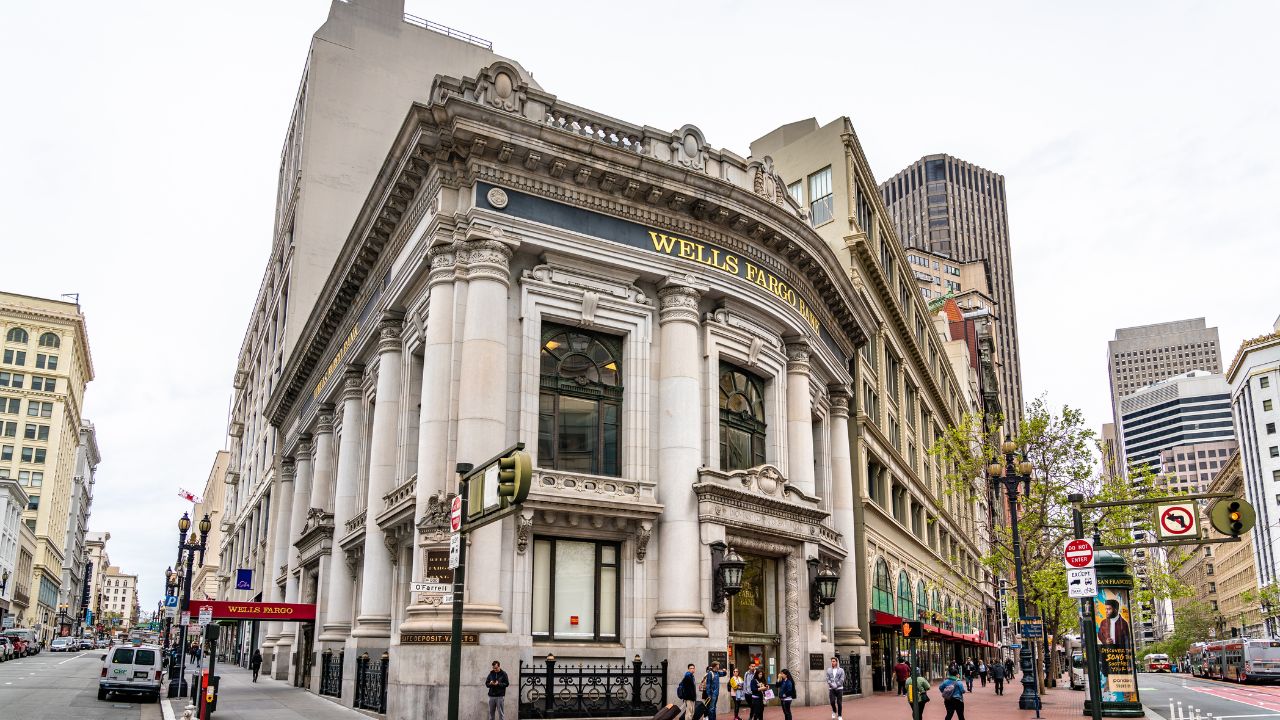
After years of uncertainty, the office real estate market is showing signs of steadying, and America’s two largest commercial real estate lenders — JPMorgan Chase and Wells Fargo — are beginning to see improvements in the quality of their loans.
While JPMorgan quietly grew its commercial real estate loan portfolio in the third quarter, Wells Fargo took a more cautious approach, continuing to shrink its exposure to office property loans. This contrast became clearer as both banks revealed their earnings on Tuesday, according to CoStar.

The office sector had been battered since the pandemic pushed many companies into remote work, drastically reducing demand for traditional office space. But Wells Fargo’s CFO, Mike Santomassimo, explained that the market is stabilizing.
Although some loan losses related to commercial real estate still occur, the numbers remain within expected levels.

Wells Fargo recorded $107 million in net charge-offs on commercial real estate loans during the third quarter, nearly double the previous quarter’s $61 million but far less than the $184 million reported a year ago. The bank is actively letting office loans run off its books, reducing risk tied to the sector.
Data shows a larger industry trend of banks scaling back their office loan portfolios. The Federal Reserve Bank of St. Louis reports that major U.S. banks have been steadily shrinking their commercial real estate loan holdings since early 2023. Increased regulatory scrutiny and ongoing stress in the office market are driving this cautious stance.
For Wells Fargo, the office loan balance dropped 18% compared to last year and by a third from two years ago. This reflects lower loan amounts, reduced mortgage servicing income, and the impact of lower interest rates.
Despite shrinking office loans, Wells Fargo’s CEO Charlie Scharf sees positives elsewhere. Demand remains strong across other commercial real estate sectors, and he expects lending growth to return over time.
The bank’s nonaccrual loans — loans where full repayment is uncertain — fell slightly in the third quarter, with office nonaccrual loans down from previous quarters. Meanwhile, Wells Fargo reduced its credit loss reserves on commercial real estate loans, signaling improved confidence.
JPMorgan Chase took a steadier path, posting a slight increase in commercial real estate loan balances to $146.5 billion at quarter-end, marking modest growth both sequentially and year-over-year. Its commercial real estate revenue also edged higher compared to the prior quarter, though it remained below last year’s level.
JPMorgan’s CEO Jamie Dimon has called for reducing mortgage regulations put in place after the 2008 financial crisis, suggesting these add unnecessary costs without increasing safety. Dimon also pointed to local zoning and permitting delays as barriers to new residential construction.
As the commercial real estate market adjusts, both banks are adapting their strategies — JPMorgan growing steadily, Wells Fargo cutting risk — to navigate a landscape slowly moving toward recovery.