



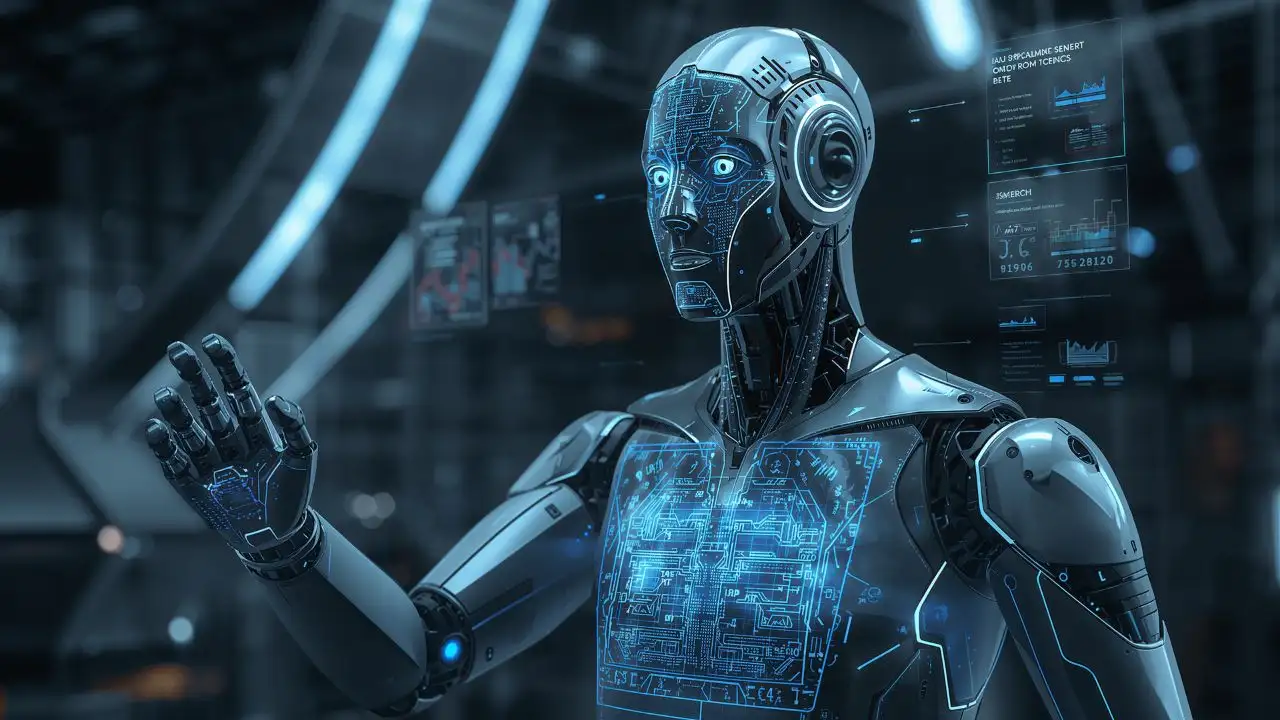
Artificial intelligence is still mostly used as a tool by people, but that balance is set to change. In a recent episode of The Most Interesting Thing in AI podcast, PwC global and U.S. commercial technology and innovation officer Matt Wood described a future in which most AI systems are ultimately used by other AI systems, not humans.
Wood, who holds a PhD in machine learning, said organizations are moving toward a layered model of work that reshapes how tasks are divided between machines and people.

AI-to-AI Systems Handle the Operational Core
At the foundation of Wood’s framework is a layer dominated by AI systems working autonomously with other AI systems. This layer includes transactional, repetitive, and high-volume operational work, such as supply chain logistics and ongoing business processes, according to TIME.
These systems may run for extended periods and are expected to outperform humans in consistency and output quality, even if they take a similar amount of time to complete tasks. Wood suggested that assuming AI will remain primarily human-facing tools underestimates how organizations will deploy them at scale.

Humans and AI Collaborate on Creative and Exploratory Work
The middle layer centers on human–AI collaboration, particularly for creative, exploratory, and problem-framing work. In this model, people work alongside AI systems to brainstorm, test ideas, and explore complex questions, relying on AI to handle analysis and early-stage synthesis.
Rather than being limited to first drafts or productivity shortcuts, AI is expected to take on a more substantial role in shaping how ideas are developed and evaluated.
Human-to-Human Work Moves Up the Stack
At the top layer, Wood sees humans spending more time working directly with other humans — through discussion, debate, teaching, and decision-making — while relying on AI to handle preparation and data processing in the background.
Meetings and collaborative sessions would be supported by AI agents that help participants arrive better informed, with relevant data already analyzed and summarized. The value of this layer, Wood argued, lies less in efficiency and more in the human desire to reason together and influence one another.

Rethinking Professional Identity
Wood said this change will require workers to reassess where they derive professional value and pride. AI systems are expected to surpass humans at many specific tasks, similar to how computers already outperform people in narrow domains today.
Rather than eliminating meaningful work, Wood suggested AI will push humans toward more compelling and complex problems, with machines handling much of the underlying execution.
A Gradual Transition, Not an Overnight Change
While the long-term direction is clear, Wood acknowledged that today’s AI systems still have limitations. Organizations are navigating an interim period marked by imperfections and workarounds, even as AI capabilities continue to improve.
The trajectory, he said, points toward AI systems that are increasingly reliable, always available, and inexpensive to operate — reshaping how work is structured across industries over time.