




From the rise of hybrid schedules to changing worker expectations, the way we work has fundamentally changed. Yet, for many employees, the physical office hasn’t kept pace. Instead of waiting for their employers to catch up, workers are taking matters into their own hands.
According to our research, two-thirds of global office workers are hacking their workspaces to compensate for design shortfalls — rearranging furniture, bringing in personal heaters, or making other creative adjustments.

These workarounds aren’t quirks. They’re clear signals about where the office is working — and where it’s falling short. Gensler’s 2026 Global Workplace Survey reveals what people actually need from their workplaces and highlights the biggest opportunities for improvement.
This year’s report draws on insights from more than 16,400 full-time workers across 16 countries and 10 industries, uncovering what enables workplaces to rise to the top, and what design issues are holding workers back from performing at their best.

Offices That Empower Individual Work and Collaboration are Making Today’s Workplaces Work
Reports of what people enjoy in their workplaces point to what’s clicking in today’s offices. When asked what they like most about their office environment, workers speak to the importance of comfort across spaces for quiet, focused work and open collaboration. Design features such as open layouts with dedicated quiet spaces, ergonomic furniture, and natural light can provide the comfort respondents seek. As one respondent put it:
“I appreciate the clean, well-organized layout of the workplace, which makes it easy to stay focused. The comfortable seating, good lighting, and availability of essential resources create a productive environment. I also value the quiet atmosphere, which allows me to work efficiently without unnecessary distractions.”
Certain industries and countries are particularly successful in delivering this balance. The sciences and media industries have the highest workplace performance ratings. For example, media companies that invest in content creation studios with abundant daylight, quality acoustics, and hospitality-level amenities appeal to creative talent. One media worker told us:
“What I like most about my company’s physical workplace is the collaborative atmosphere it fosters. The open layout encourages communication and teamwork, making it easy to share ideas and connect with colleagues. Additionally, the presence of natural light and comfortable communal spaces creates a welcoming environment that promotes both productivity and well-being. Having access to amenities like a café and quiet areas for focused work further enhances the overall experience, making it a great place to work.”
Mexico tops our list of countries in the effectiveness of the office for working alone, while also scoring high on effectiveness for working with others in person. India and Saudi Arabia are frontrunners in effectiveness for socializing and also rank high on the list for working alone. A respondent working in India said:
“What I like most about my company’s physical workplace is the overall environment that promotes productivity and collaboration. The space is well-designed with comfortable, ergonomic furniture and plenty of natural light, which makes it a pleasant place to spend the day. I also appreciate the dedicated areas for focused work, as well as open spaces that encourage team interaction and creativity.”
Many Offices Still Fall Short in Unlocking Worker Potential
Across countries, industries, and organizations of every size, employees are troubleshooting design issues that hinder their work. In the absence of perfect solutions from their companies, workers are making small adjustments, improvising setups, and devising creative workarounds that help them function day to day.
In fact, the majority of global workers report making at least one change to their workspace to fix design issues. These “hacks” reflect opportunities to design workplaces that make people truly thrive.
The most common change workers make is simple: personalization. Over one-third of respondents say they’ve made changes, such as adding décor, photos, and plants. These personal touches can have an outsized impact on basic physical comfort and productivity, opening the door for design moves that boost health, well-being, and performance. One worker highlighted these benefits, stating:
“I added extra lighting, a fan for warmth, headphones for concentration, and personal touches to my workspace as a small way to make it feel cozy and productive every day.”
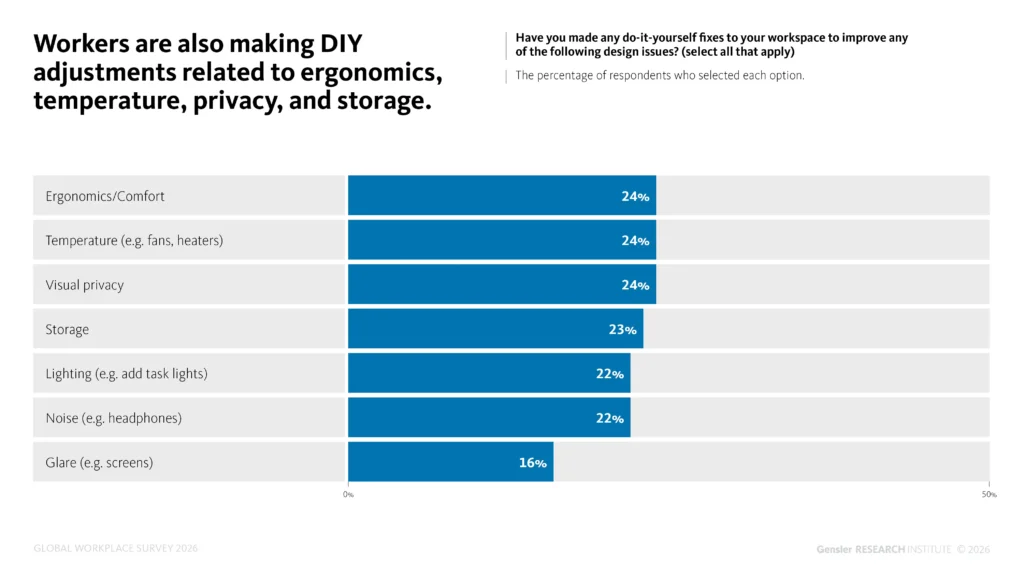
Our data show that these types of modifications are common. About one in four workers adjust their space to address ergonomics issues. A similar number have fixed temperature issues with workplace hacks, such as setting up fans and heaters, and modifying air vents.
 Personalization also emerged as a theme among workers in unassigned seating who felt their office seating arrangement left something to be desired. Their biggest frustration is their inability to make a space their own.
The message is unmistakable: people want environments that flex with their needs, reflect their preferences, and give them a sense of ownership over where and how they work.
This desire for more control over personal space shapes how people use the rest of the office. The majority of workers surveyed report using meeting rooms for focused work, taking up valuable space and making meeting room availability an office pain point:
“Meeting room capacity is a common problem causing scheduling conflicts, delays, and irritation when trying to have discussions with a team or call a client.”
When meeting rooms are used as personal workspaces, productivity suffers.
Despite its Challenges, Workers Still See Value in the Office
Clearly, workers face plenty of challenges navigating the current office environment, yet they still tend to say they need the office more than their current habits show. The average worker spends about 54% of their typical work week in the office, but says they would ideally spend about 61% of their week there.
This gap has remained consistent over the last three years of our survey data, suggesting that workers have a deep-rooted commitment to the office, even when it fails to live up to their needs and desires.
Investing in workplace enhancements that support deep focus and group work, encourage personalization, elevate comfort, and deliver consistency without sacrificing flexibility can meaningfully strengthen both employee experience and overall performance.
Workers have already bought into the value of the office — now it’s time for workplaces to deliver.