



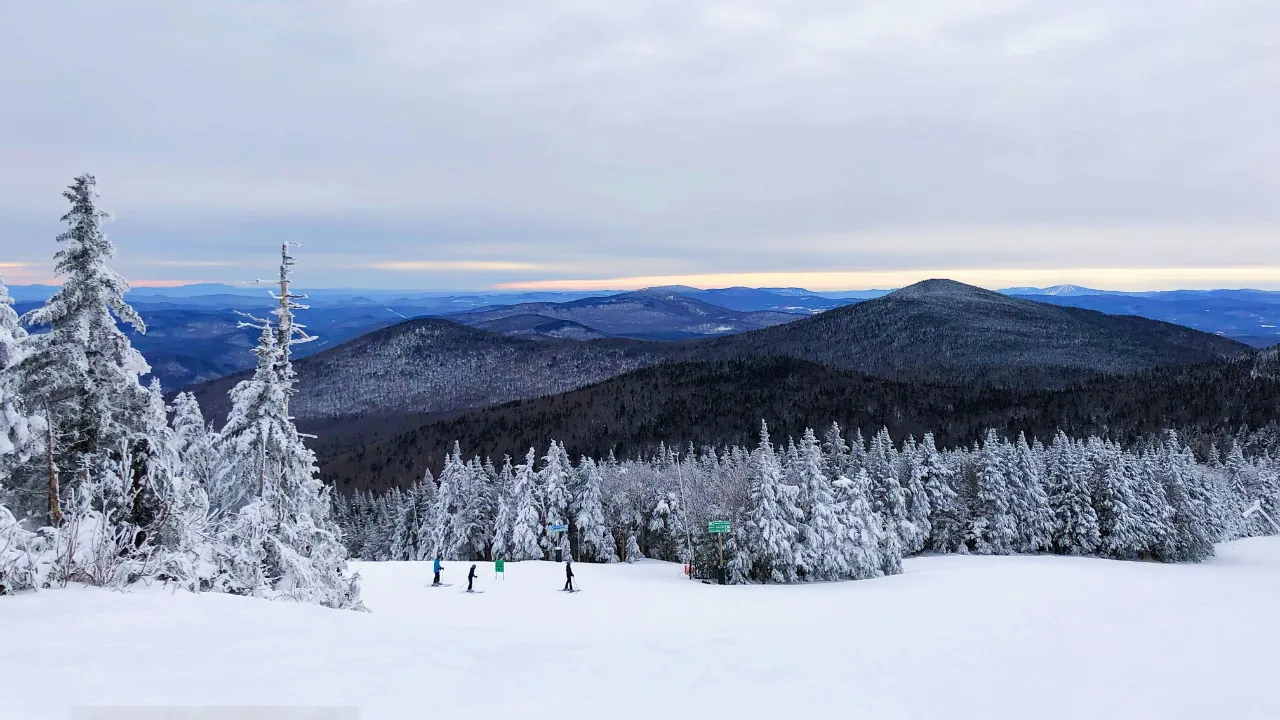
Most people come to Killington, Vermont, — a ski vacation hot spot — for a long weekend. They leave Sunday afternoon, maybe Monday morning if they can stretch it. For a long time, that was just how it worked.
That is changing, and the reason is simpler than you might think.

Thursday Morning at the Mountain
This past ski season we saw a pattern emerge at Slope Space that nobody planned for. A remote worker drives up from New York City or Albany on Wednesday night. Thursday morning, they are at a real desk, moving through a full slate of calls, clearing the week before the holiday weekend even starts.
By Thursday evening, they are done, unpacked, and completely switched off. Friday through Sunday, they are on the mountain.

That same trip used to start on Friday night. Now it starts Thursday morning, and the weekend feels twice as long. The only thing that changed was having an actual place to work when they arrived.
Families Have Stopped Leaving Early
Families have figured out a version of this that works even better. One parent works remotely. The kids are in ski school all day. Instead of packing everything into four rushed days and driving home Sunday feeling like it was over too fast, they book the full week.
The remote parent works mornings from a dedicated desk with fiber internet, not taking calls in a busy lodge on subpar wifi. The kids ski every single day. Dinner happens together every night. There wasn’t a forced choice between getting work done and being present, and nobody had to leave before they were ready.
The People Who Just Decided to Stay
The most interesting members are the ones who stopped thinking of themselves as visitors at all. Passionate skiers, snowboarders, golfers, and mountain bikers who made a deliberate choice to spend serious time somewhere they genuinely love.
Some own a condo. Some rent a ski house for weeks at a stretch. Having a real workspace nearby made it professionally and financially possible. They show up, get real work done, and spend the rest of their time exactly where they want to be.
What This Means for the Flexible Workspace Industry
The traditional coworking model is built around proximity to cities. Transit access, corporate offices, and urban density have always driven where spaces get built. Destination coworking flips that logic completely.
Killington draws just over one million visitors a year. A large percentage of them can work remotely. For most, the only thing sending them home early was the lack of somewhere worth staying to work. When the infrastructure is in place, the behavior shifts quickly.
This is not unique to ski towns. Coastal communities, national park gateways, lake towns, and anywhere people already want to spend real time are candidates for the same shift. The industry has spent years competing on density in urban markets. Destination coworking asks a completely different question.
Not “Where do you want to work?” but “Where do you want to be, and how do we make sure work does not get in the way of that?”