Organizations have been measuring employee engagement for years. They run surveys, track trends, and invest in retention programs.
Yet Gallup’s 2026 State of the Global Workplace report delivers the same conclusion it has for years: engagement is declining and negative workplace emotions are on the rise. Nothing seems to move the numbers in a meaningful or lasting way.

The problem isn’t a lack of effort; it’s a measurement blind spot. Traditional engagement data captures how people feel across weeks and months, but it misses the specific moment when someone reconsiders their job entirely.
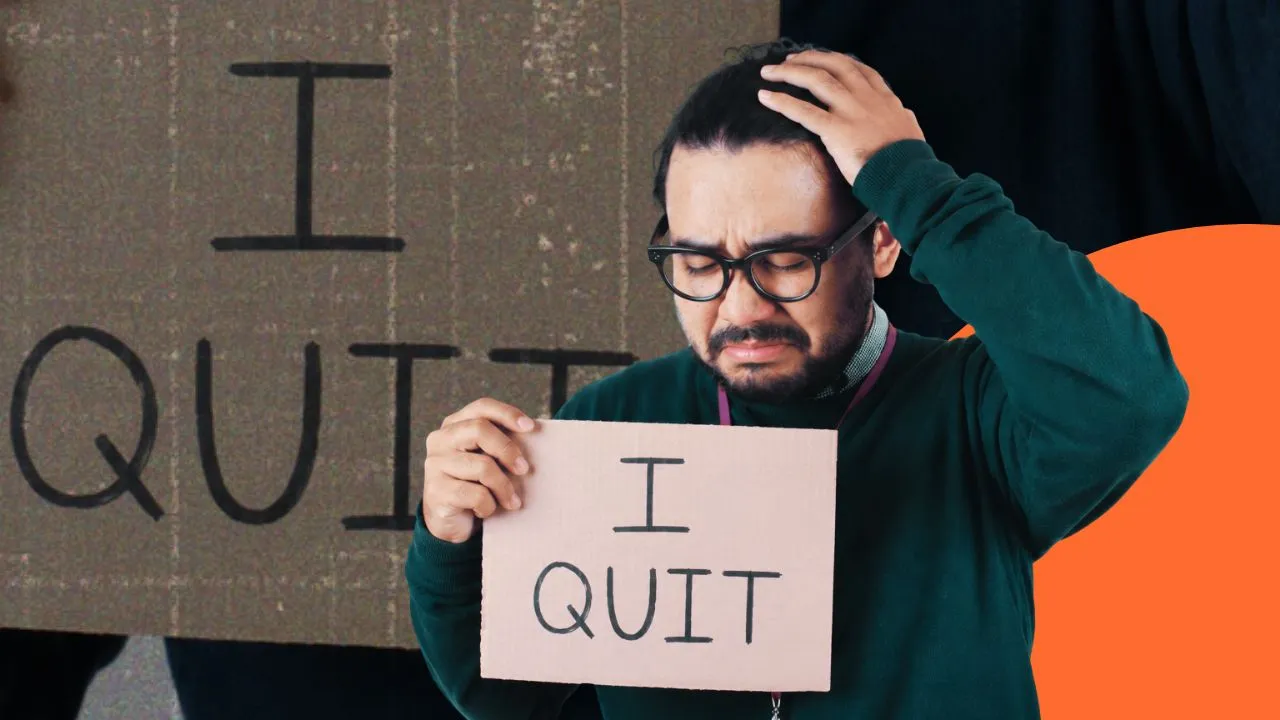
People don’t leave because of how they feel over time. Rather, they leave because of a moment.

And those moments are exactly what most organizations aren’t set up to detect. They’re also where leadership attention would matter most.
The Moment That Changes Everything — And Why Most Leaders Never See It
In a recent episode of The Future of Less Work podcast, Anthony Klotz — author of Jolted: Why We Quit, When to Stay, and Why It Matters, and the researcher who coined the term “Great Resignation” — described these turning points as “jolts.” A jolt is an event that forces someone to reinterpret their relationship with their work. It isn’t the same as being unhappy. Unhappiness can persist for years without producing a decision. A jolt is the threshold where something that was tolerable suddenly isn’t anymore.
Jolts come from every direction. Some are workplace events: a promotion that didn’t happen, a tone-deaf comment from a leader, news of a restructuring. Others are indirect — watching a trusted colleague walk out, or sensing a shift in team culture. Some have nothing to do with work at all. A health crisis, a new child, a personal milestone. Sometimes the catalyst is bigger than any one person’s experience — a pandemic, economic upheaval, or a wave of technological change. Even positive developments like mastering a new capability or achieving a long-held goal can trigger someone to question whether their current path still makes sense.
The common thread is what that event does to how someone frames their work. People can carry misalignment for years without acting on it. A jolt is the moment that tolerance breaks. What felt manageable yesterday suddenly doesn’t today.
That’s the shift from feeling to doing.
And unless managers are tuned in and watching for these signals, the moment passes invisibly… until it shows up as a resignation letter.
What’s Really Behind Declining Engagement Numbers
The standard interpretation of falling engagement scores is that employees are unhappy with their jobs or their managers. But there’s another way to read the data: what if this isn’t dissatisfaction — it’s ongoing reassessment?
Today’s workers are constantly exposed to alternatives. Social media surfaces stories of career reinventions, freelance ventures, and people building entirely different lives. AI is reworking job requirements and forcing people to rethink whether their hard-won expertise still carries the same weight. The lines between personal life and work have been permanently redrawn.
In that world, people aren’t coasting anymore, but instead are actively evaluating — continuously. What gets labeled “quiet quitting” often isn’t disengagement at all. It’s what happens after a jolt: an attempt to renegotiate the terms of work without leaving. Viewed through that lens, dropping engagement scores reflect a workforce that’s less willing to live with misalignment and more likely to act on it.
The difficulty for organizations is that their measurement systems are built for stability. Engagement surveys, pulse checks, and wellbeing metrics are designed to smooth out noise and reveal long-term patterns. That’s what makes them useful, and also what makes them blind to jolts. Jolts are personal, episodic, and often invisible to the company. Many happen off the clock. Others happen inside the organization but never make it into a feedback form.
They do show up, though, in small shifts in behavior. Someone starts speaking up differently. Boundaries change. Effort gets redistributed. Energy moves toward something new. Surveys won’t pick that up. But managers will — if they’re still having real conversations and if they haven’t cut their one-on-ones to save time. If they’re asking “How are you?” and actually staying for the answer.
Those managers catch the reassessment while it’s still in motion and before it becomes a data point on a report, and long before it becomes a decision that can’t be reversed.

Why AI Makes These Moments Happen More Often Than Ever
This dynamic intensifies in conversations about AI and the future of work, where people are constantly reevaluating their role, the relevance of their skills, and what their career looks like going forward.
AI isn’t one disruption with a clear before and after. For the people living through it, AI unfolds as a series of realizations. A task you spent years getting good at can now be done in seconds. A skill that once set you apart no longer differentiates you the way it used to. New doors are opening — but so are new uncertainties about what’s on the other side.
Each of those realizations can be a jolt. Some are unsettling. Others are genuinely exciting. All of them create movement — pushing people to reconsider what they do, how they do it, and whether it still matters to them. The result is a workforce going through cycles of reassessment faster and more frequently than any previous generation.
What Leaders Should Actually Be Doing About It
For leaders who care about retention and long-term engagement, this matters more than any single score on a dashboard. Piling on more measurement won’t fix a measurement problem. What leaders need is sharper attention to the moments that happen before the data catches up.
They need conversations, not just metrics.
Real conversations surface intelligence that no survey can capture. They catch friction early — when it’s still a signal, not yet a trend. They create space for the questions people are already asking privately to come into the open, before those questions turn into decisions.
Because the most consequential shifts in the workforce aren’t showing up in survey data. They’re happening in the quiet moments when someone stops and asks whether the work they’re doing still fits the life they want.
And the pace of those moments is accelerating.
And most organizations still aren’t built to notice them.