I’ve been talking about Google Business Profiles (GBP) and reviews on the Everything Coworking podcast for years. I genuinely believe your GBP is one of the most critical and underutilized assets in your coworking business. So when Google rolled out sweeping policy changes last year, I knew I needed to cover it thoroughly — and that’s exactly what I did in episode 424.
This article is the written companion to that episode. It covers every change, what it means for coworking operators specifically, and what a compliant review strategy looks like going forward.

Why your Google Business Profile is your most important marketing asset
If you’ve listened to me for any length of time, you’ve heard me say this: your Google Business Profile is the top of the funnel for your coworking business. It’s not your website. It’s not your Instagram. It’s your GBP.
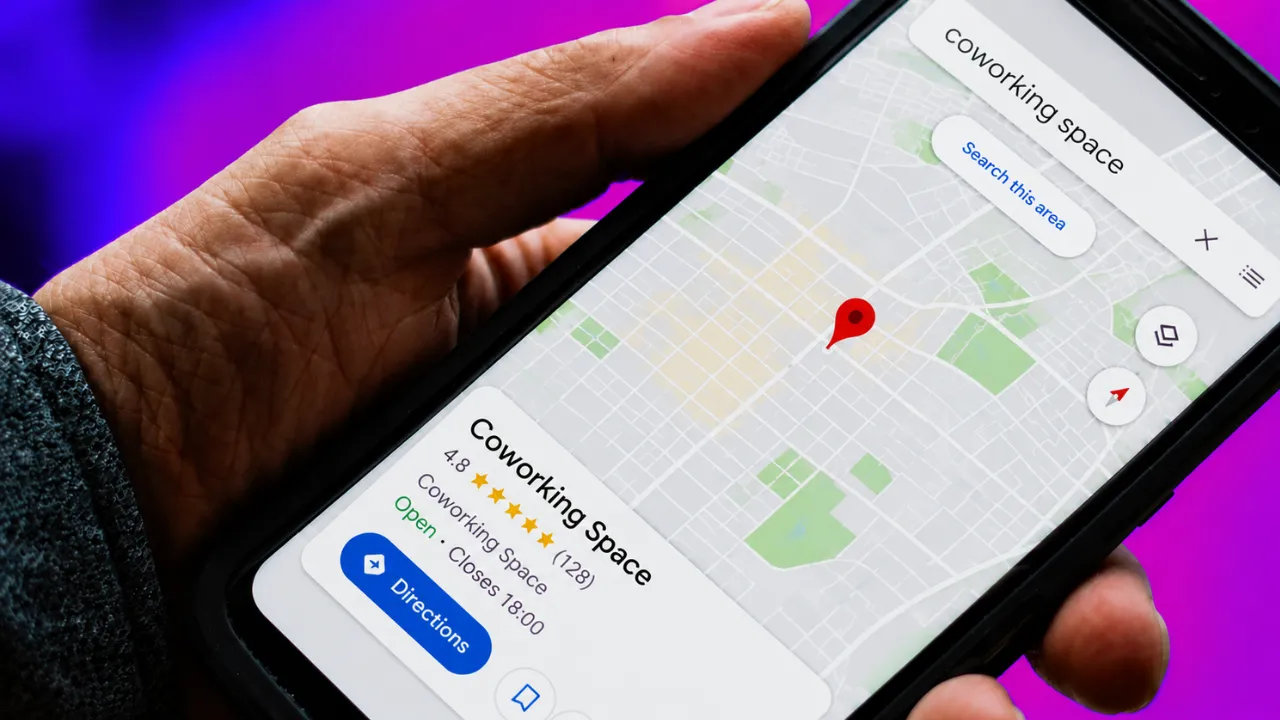
When someone types “coworking near me,” “office space near me,” or “meeting room near me” into Google or Google Maps, the map pack — those three featured listings — is what they see first. A well-maintained GBP generates significantly more traffic than most coworking websites for local searches, often 10 to 20 times more.

Reviews are the engine inside that machine. They drive your map pack ranking. They build social proof for prospective members. They help you rank for specific service keywords when reviewers organically mention things like “meeting rooms” or “private offices.” And they signal to Google that your business is active, legitimate, and worth showing to searchers.
This is why the April 2025 policy changes are so serious. Non-compliance isn’t a minor inconvenience. It can mean reviews being removed, losing review functionality entirely, or having your Google Business Profile restricted or suspended.
For a coworking business that depends on local search visibility to generate leads, that is an existential problem.
What Google changed in April 2025
On April 16 and 17, Google updated its Maps User Generated Content Policy and deployed Gemini AI enforcement tools to actively scan for violations — in new reviews and in existing ones. These changes are designed to crack down on review manipulation and ensure Google reviews reflect genuine customer experiences.

Here is a full breakdown of the seven key changes.
1. No more on-site review solicitation.
You can no longer ask customers to leave a review while they are physically inside your space. This applies to members, meeting room users, event space guests, and day pass visitors. Google considers in-person solicitation to be a form of pressured influence that compromises review authenticity.
The AI enforcement tools cross-reference IP addresses and flag clusters of reviews that appear to originate from inside your business location. No more going door to door on the coworking floor. No more asking guests on their way out of a meeting room booking. No more tablets at the welcome desk or review requests at happy hours.
2. No more incentivized reviews.
Offering anything of value in exchange for a Google review is now explicitly prohibited. Free day passes, membership discounts, referral perks, staff prize challenges — all of it must be removed from your review strategy. You also cannot offer compensation or refunds in exchange for having a negative review reconsidered or removed.
Any incentive that is specifically tied to leaving a Google review is a violation.
3. No more review gating.
Review gating is the practice of filtering customers based on their likely sentiment before directing them toward a review. The setup I’ve seen most often in coworking: a post-visit automation sends a thumbs up or thumbs down prompt, and if someone gives a thumbs up, they’re routed to the Google review page; if thumbs down, they’re sent to a private feedback form. This is now prohibited. Everyone must receive the same follow-up communication with the same call to action, regardless of how they felt about their experience.
4. No asking for specific content or staff name mentions.
This change has meaningful SEO implications, and I want to be transparent about that. In the past, I’ve advised operators to ask members to mention specific services in their reviews — because reviews that include terms like “meeting room” or “private office” help you rank for those searches. Google now prohibits this kind of directed or coached content.
Reviews must be written entirely in the reviewer’s own words about their authentic experience. You also cannot ask reviewers to name specific team members — even as part of a staff recognition program tied to review mentions.

5. No fake, friend, or family reviews.
Every review must come from an actual customer who genuinely experienced your space. Reviews from people who are leaving them as a favor — friends, family members, team colleagues who haven’t personally used your space — will be identified and removed.
I can usually spot these when I see them: they tend to say something like “this space looks great” rather than describing a specific experience. Google’s AI is getting better at spotting them, too.
6. No review requests while the customer is still on-site.
Even remote or automated review requests must be timed to go out after the customer has left your building. Automated sequences that fire while someone is still sitting in your coworking space during their visit are non-compliant — even if the message doesn’t mention Google. Follow-ups must happen after departure.
7. No AI-generated review content.
Google’s AI detection tools can identify text generated by large language models, including ChatGPT and Claude. This applies even if your approach is indirect — for example, sending a “prompt” to a member and suggesting they paste it into ChatGPT and personalize it. The resulting text still contains patterns that are detectable as AI-generated, and the review will be removed.
Authentic reviews must be written by the actual person, in their own natural language.
What compliant review collection looks like now
Given all of these restrictions, a compliant review strategy in 2026 comes down to three things: delivering experiences worth talking about, asking in the right way at the right time, and making it easy without being manipulative.
Automated follow-up communications remain your most practical tool — you just need to update them. The message should go out after a visit ends. It should not mention Google by name. It should not include a direct link to your Google review page with a pre-populated five-star prompt.
Instead, use neutral language like “We’d love to hear about your experience” with a link to your Google Business Profile, where the customer can choose to leave a review if they want to.
Your follow-up must go to every customer with the same message. No routing. No segmenting by sentiment. One email or text, sent to all, with a consistent call to action.
On the experience side, the removal of review gating makes proactive service recovery more important than ever. Because you’re no longer intercepting unhappy customers before they reach your follow-up sequence, you have to catch them while they’re still in front of you.
If something goes wrong — a room wasn’t ready, a member felt overlooked, a booking went sideways — address it immediately. Not in two days. Right now, before they leave, before the automation fires.
Your compliance action list
Here’s what I’d recommend you do this week.
- First, audit your automated flows. Go into your coworking management platform — whether you use OfficeRnD, Nexudus, Optix, Archy, Coworks, Yardi, or something else — and look at every automated message that touches reviews or feedback. Update the language to remove references to Google specifically. Remove any routing logic that sends customers to different destinations based on their sentiment. Confirm that follow-up triggers are set to fire after a visit ends, not during.
- Second, walk your physical space. Remove QR codes linked directly to your Google review page. Take down review request signage — yes, including the bathroom stall ask (I know, I know). Update welcome packets, onboarding materials, and any printed collateral that includes a review request or a Google logo. Replace anything that links directly to a review form with a link to your GBP using neutral language.
- Third, retrain your team. Your community managers, marketing staff, outsourced agencies, and contractors all need to understand these changes. The stakes are real: violations can result in review removal, loss of review functionality, and GBP suspension.
Make sure every person who represents your brand understands the new rules.
The consequences of non-compliance
Individual policy violations result in those reviews being removed. Repeat or significant violations can result in your account losing review functionality entirely — meaning new reviews cannot be posted to your listing. Your Google Business Profile itself can be restricted or suspended. Your local pack ranking can be penalized.
For a coworking business, all of these outcomes translate directly to fewer leads. Your GBP is where most of your prospective members find you. Protecting it is not optional.
The bigger picture
I won’t pretend these changes aren’t frustrating. Some of the tactics that are now off the table — staff incentive programs, member coaching on what to say, review challenges — genuinely worked for volume. But they were always a shortcut to an outcome that’s better achieved through authentic community building.
The good news is that a coworking space is one of the few business types that has a natural advantage here. You have ongoing relationships with your members. You have the opportunity to create experiences that people genuinely want to talk about. You have community events, thoughtful onboarding, and daily touchpoints that most businesses can only dream of.
Use them. Focus on the member experience. Respond to problems immediately. And build a review strategy that reflects who you actually are as an operator.
For the full audio breakdown — including the specific changes to email automation language and how to think about the CoLever-style flows that need updating — listen to episode 424 of the Everything Coworking podcast.