




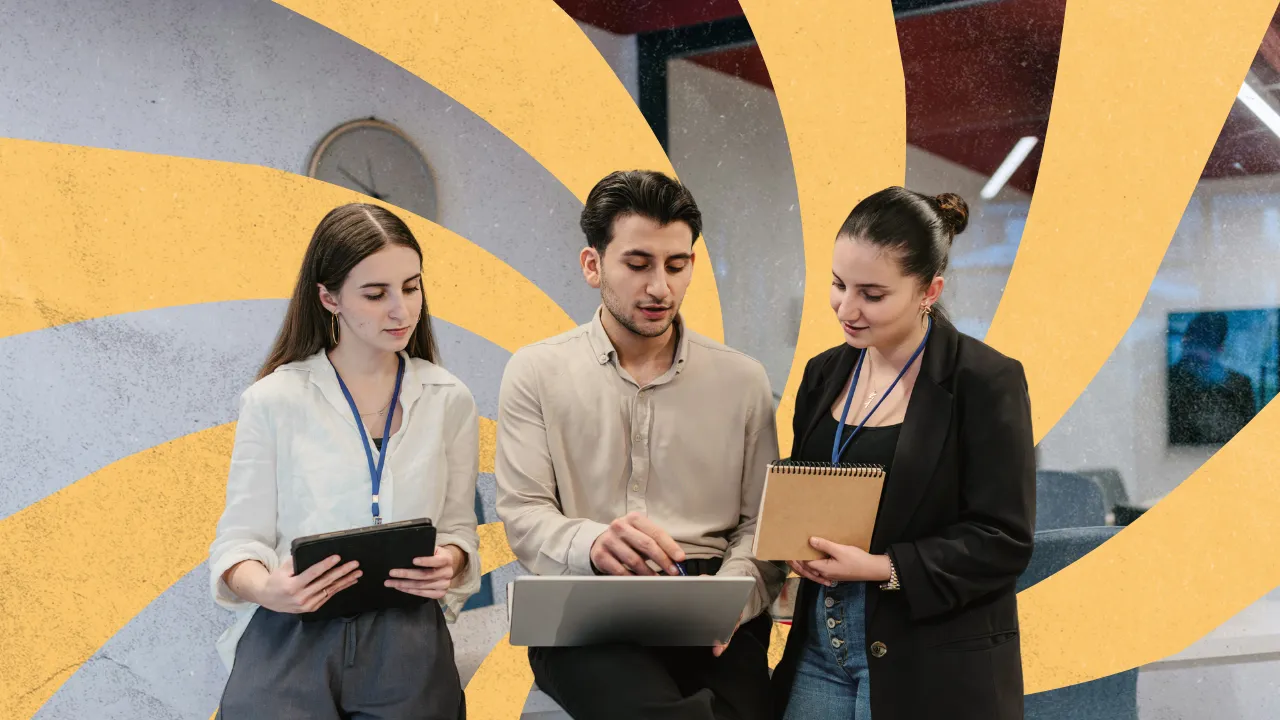
Internships have long served as the first step into professional life, giving early-career workers practical exposure to how organizations operate. But as artificial intelligence automates more of the routine work that once defined entry-level roles, that model is under increasing pressure.
Employers are now rethinking what internships are actually for. Rather than scrapping them, many organizations are redesigning internships around what AI cannot easily replicate: mentorship, workplace confidence, professional relationships, and the human skills that remain central to long-term career growth.

Routine Work is No Longer the Entry Point
For decades, internships were built around routine, manageable tasks that helped young professionals understand workplace expectations from the inside. Writing summaries, conducting research, organizing information, and supporting administrative work formed the backbone of many of these early-career roles.
That model is now being disrupted from both directions. Generative AI tools can complete much of the routine work that interns once handled, while entry-level hiring for new graduates in the U.S. has declined by 6%, creating fewer traditional entry points into professional life.

This disruption is part of a larger shift in how organizations structure early careers. Generalist roles are shrinking, while more specialized positions in healthcare, sales, and technical fields continue to grow. For workers who once relied on internships and junior roles as stepping stones, the pipeline into long-term employment is becoming narrower.
Remote work has added another layer of complexity, since internships have historically depended on observation, proximity, and immediate feedback. In distributed workplaces, those direct learning opportunities can be harder to access, stripping away some of the informal development that made internships so valuable in the first place.
Allwork.Space spoke with Dr. Colleen Batchelder, the Founder and CEO of Indiviti, and generational workplace expert specializing in Gen Z talent, about the changing role of internships in AI-driven workplaces.
She believes internships remain highly valuable, but the reasons behind that value are changing. Instead of routine or low-skill tasks, they are increasingly centered on mentorship, networking, and real-world learning.

“Gen Z isn’t interested in spending all summer doing coffee runs. This generation wants to feel like their internships have an immediate ROI, or, as I like to call it, real observational intention.”
For Dr. Batchelder, the strongest internships now prepare younger workers for a workforce where human skills increasingly complement AI’s technical capabilities.
Where Human Skills Still Define Internship Value
Despite growing automation, internships continue to offer forms of development that technology cannot replace.
Early-career growth is not only about completing tasks. It is also about learning how to communicate professionally, exercise judgment, navigate ambiguity, and understand workplace expectations in real time.
These skills remain especially important in service-based industries such as coworking, hospitality, and client-facing businesses, where tone, responsiveness, and problem-solving directly shape customer experience.
Frank Cottle, chairman and CEO of Alliance Business Centers Companies, says maintaining consistent service levels has become more difficult as staffing hours decrease.
Front desk roles that once operated across full days are increasingly being covered on reduced schedules. In this context, interns can help maintain continuity in customer service while gaining practical experience that extends beyond mere observation of others.
Cottle highlights Alliance Virtual Offices as one example, where around 10% of employees are interns at any given time. These interns are fully embedded in day-to-day operations rather than separated from them — a model that reflects a broader trend in which internships are becoming a core part of operational strategy rather than just temporary learning experiences.
Internships as a Workforce Strategy
This change is especially visible in the hospitality and creative industries, where high entry-level turnover creates constant hiring demand. In these sectors, internships are starting to function more as structured pathways into long-term employment.
That raises a more pertinent question: if AI is changing the work itself, is it reducing internships or simply redefining them? Dr. Batchelder sees AI as a force of transformation rather than elimination.
“There’s no such thing as a job that’s safe from AI,” she says. “Whether someone is looking to start a blue-collar business, enter a white-collar profession, or find themselves somewhere in between, AI’s impact, much like the internet boom, is integral in all professions and will remain so for the foreseeable future.”
For early-career workers, she argues, that may not necessarily be negative. As repetitive work becomes automated, internships can become more focused on accelerated learning, deeper professional development, and higher-level contribution earlier in a career.
Dr. Batchelder also suggests that higher efficiency may also allow companies to invest more in training, talent development, and compensation over time.
Some organizations are already building around this model. Barge Design Solutions uses internships as a long-term talent pipeline rather than short-term placements. The company reports a 75% conversion rate into full-time roles, with programs structured around recruitment partnerships, defined learning pathways, and continuous feedback.
Programs such as this suggest that the most effective internships are becoming increasingly intentional, designed not just to fill short-term needs but to build future talent.
What Makes an Internship Worthwhile in the Age of AI
Internships are no longer judged only by the technical skills they offer. For junior talent, the value of an internship increasingly depends on whether it provides meaningful responsibility, clear progression, and a realistic path into employment.

Dr. Batchelder argues that internships have also become more reciprocal. Younger workers often bring digital fluency, marketing insight, and familiarity with emerging tools that companies are still adapting to. This exchange matters now more than ever as companies face growing pressure to adapt quickly and remain relevant to their customers.
As a result, internships that focus too narrowly on administrative output risk losing relevance as AI continues to absorb much of that work. Dr. Batchelder notes that the most effective programs are therefore those that create direct pathways into full-time employment, alongside stability, competitive pay, and opportunities for long-term career growth.
As internships become more structured and outcome-focused, candidate behavior is also changing. Gen Z applicants, in particular, are becoming more selective, increasingly rejecting internships that lack meaningful responsibility or clear progression, and prioritizing skills development and long-term outcomes over traditional credentials or workplace perks.
Internships are Being Tested
As AI continues to challenge the foundations of early-career work, internships are being measured against a new standard: do they build real human capability, or just assign administrative tasks?
Internships focused on routine output are losing ground, while those built around relationships, specialization, and deeper workplace integration are becoming more valuable; part of what experts call a fundamental redefinition of the role rather than its disappearance.
Ultimately, AI isn’t ending internships; it’s forcing them to mature: less photocopying, more mentorship, stronger human skills, and clearer paths to meaningful work.