
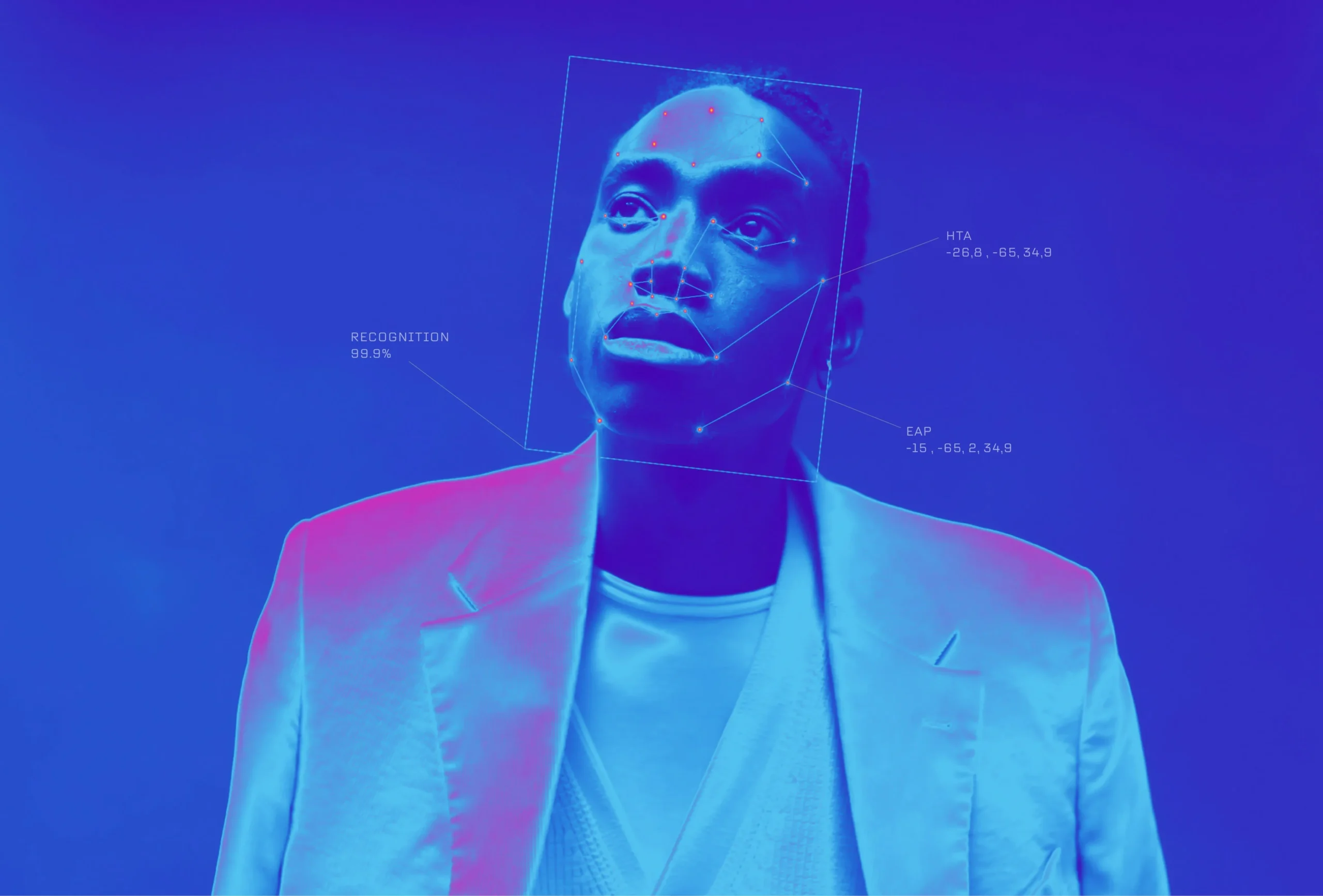
Workplace monitoring has already moved well beyond tracking whether employees are at their desks or logging into company systems. Now, artificial intelligence is being developed to interpret something considerably more personal: how people feel.
Emotion AI can analyze facial expressions, body language, tone of voice and other behavioral signals to estimate a person’s emotional state. The technology is increasingly being explored for uses ranging from employee training and workplace safety to hiring and performance management, according to research from Korn Ferry.

That creates an obvious problem. An expression that looks like anxiety to an algorithm may have nothing to do with work. A person could be worried about a family issue, distracted by a phone call they just received or simply concentrating. Yet if an AI system interprets that expression as a sign of distress or disengagement, that interpretation could potentially make its way to a manager.
Korn Ferry describes a scenario in which an employee arrives at work after receiving a call from a teacher about their child. Facial recognition technology interprets the employee’s expression as anxious and sends an alert to the manager recommending a check-in. The employee may simply be having a difficult morning, but the technology has turned a private moment into a workplace issue.

AI Is Making Workplace Monitoring More Personal
The growth of emotion AI comes as employers are already collecting more information about employees. More than seven in 10 employees are subject to some form of corporate monitoring, and the expansion of AI is making that monitoring possible in places where employees may not expect it.
The technology is not necessarily being positioned as a surveillance tool. Companies see potential benefits in identifying when workers may be distracted, improving training, supporting workplace safety and understanding employee engagement. In factories and warehouses, for example, detecting signs of distraction could potentially help identify safety risks.
But there is a significant difference between identifying a potential safety problem and making assumptions about someone’s state of mind. AI can have some of the same subjectivity problems as employee surveys and other forms of sentiment data. The information may be incomplete, and the interpretation can be wrong.
Dennis Deans, Korn Ferry’s vice president of global human resources, is particularly concerned about managers treating emotion AI as evidence of individual performance. An employee who appears anxious, distracted or disengaged is not necessarily going to perform poorly, and using an inferred emotional state to make decisions about that employee could turn an uncertain measurement into a consequential judgment.
That concern becomes more significant as monitoring moves outside the employee’s computer and into the physical workplace. Office cameras, sensors and other connected systems can collect information without requiring an employee to actively interact with them.
The Flex Office Could Add Another Layer
This raises an interesting issue for flexible and serviced office operators, which are already using technology to understand how their spaces are being used.
Workspace management systems can track things such as occupancy, meeting room usage, access and traffic patterns. Those tools can help operators determine when spaces are busy, where demand is concentrated and how members use a building. Emotion AI could theoretically take that analysis further by attempting to measure how people are responding to the environment.
That could eventually lead to a concept we have not really had to confront before: monitoring the community itself.
Flexible workspace operators often describe community as one of the most valuable parts of their offering, but community is difficult to quantify. Operators can look at event attendance, member retention, feedback and participation, but none of those measurements really capture how people experience a space from one day to the next.
Emotion AI could, at least in theory, offer another source of information. An operator might want to know whether members appear engaged at an event, whether people are responding positively to a redesigned common area or whether a particular environment is creating discomfort.
The problem is that the people being analyzed would not necessarily be employees of the company operating the workspace. They could be members, visitors, guests or employees of dozens of different businesses renting space in the building. That makes the privacy question considerably more complicated.
The Technology Still Has To Prove It Knows What It Is Seeing
There is also a basic question about whether emotion AI can reliably determine what someone is feeling in the first place. The technology’s subjectivity may be like other forms of sentiment measurement — where the information available to an organization can be incomplete or influenced by bias.
A facial expression does not provide much context on its own, and neither does someone’s tone of voice. The same expression could mean frustration, concentration, exhaustion or something entirely unrelated to work. That matters because workplace technology tends to become more consequential once the information it collects is connected to decisions.
A system used simply to understand general patterns is one thing. A system that alerts a manager about a particular employee, influences a performance assessment or contributes to a hiring decision is something else.
For flexible workspace operators, the same distinction would apply if emotion AI eventually becomes part of building or community management. Understanding broad patterns in how people use a space could be useful, but is very different from creating individual profiles based on how members appear to feel.
Where Should Workplace Monitoring Stop?
The general debate over AI monitoring is moving beyond whether employers should track productivity. The more difficult question may be whether there are parts of human behavior that should remain outside the workplace data set, even when technology makes them measurable.
Emotion AI is likely to keep developing because there are legitimate applications for it, particularly in areas such as safety and training. But the fact that a system can infer something about a person does not necessarily mean an employer needs to know it, or that the inference is reliable enough to act on.
That distinction will matter for both office owners and flexible workspace operators. Technology can make buildings more responsive and help operators understand how spaces function, but there is a line between understanding a workplace and overstepping while trying to understand the complex emotions of the people inside it.