Europe’s office market is showing a growing divide between the amount of space available and the quality of space companies want, with prime rents rising as new development remains limited, according to a new report from Savills.
Average office vacancy across Europe held at 9.4% in Q2 2026, but vacancy in central business districts averaged 4.9%, falling to about 2% for prime CBD space.

At the same time, European office take-up declined 6% year over year in H1 2026 and remained 3% below its five-year average as deals took longer to complete.
Tech Demand Picks Up
Technology companies provided a larger share of office demand during the first half of the year. The sector accounted for 22% of European take-up, up from 14% in 2025, supported by expanding AI companies and renewed activity from traditional technology firms.

Professional and business services remained the largest source of demand at 24%, although that was down from 26% last year. Finance, banking and insurance accounted for 16%, compared with 21% in 2025.
Several cities recorded particularly strong leasing activity relative to their historical averages. Dublin was 63% above its five-year H1 average, followed by London’s West End at 36%, Berlin at 30% and Munich at 28%.
Prime Rents Continue to Climb
Limited availability of high-quality space is supporting rental growth. Prime European office rents increased 3.7% in the year through Q2, with Munich rising 11%, while Frankfurt and Warsaw each increased 10%.
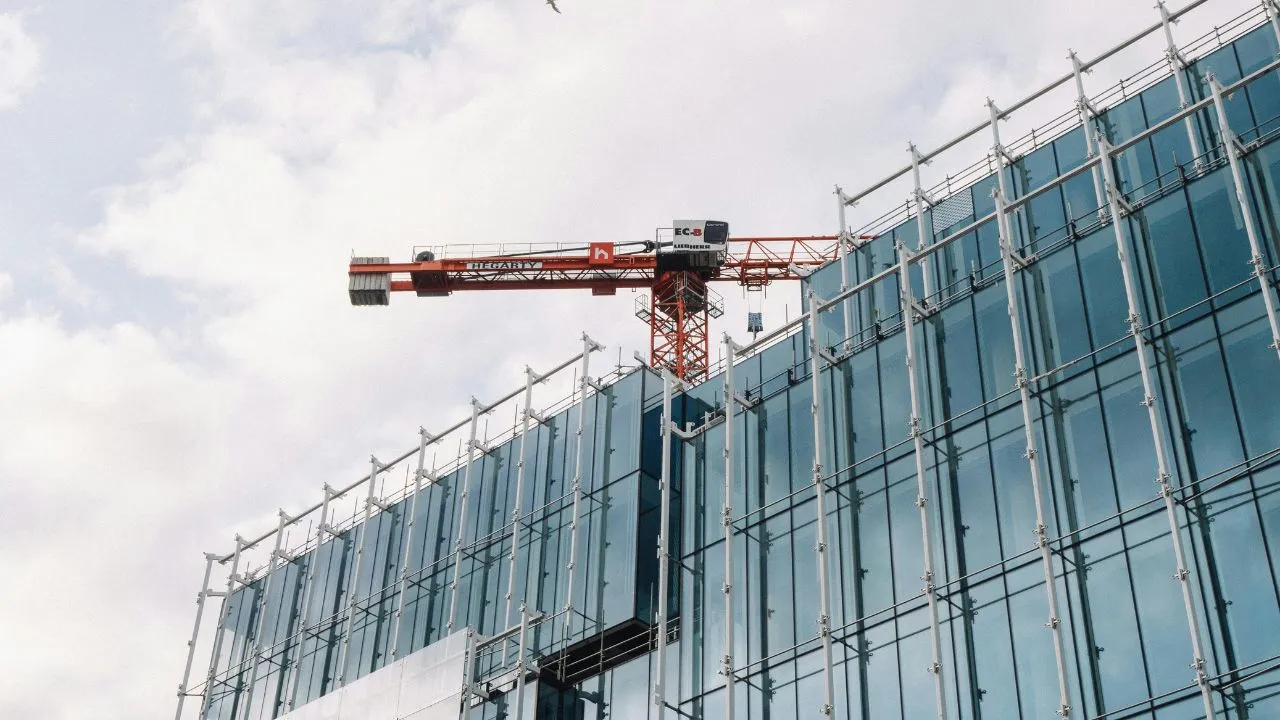
Savills said Europe’s new-build office pipeline is at its weakest level in more than a decade, limiting the supply of new high-quality buildings.

Paris was a notable exception to the relatively stable vacancy picture. Its CBD vacancy rate reached 6.8% in H1 2026, passing 6% for the first time since 2009 as slower take-up delayed the absorption of new space. Vacancy also edged higher in Hamburg, Berlin and Lisbon, while La Défense, Amsterdam and Warsaw recorded declines.
Older Offices Face a Growing Discount
The rental gap between prime and secondary CBD offices has widened considerably since the end of 2019. Prime rents have increased 27% across the markets analyzed by Savills, compared with 9% for secondary space.
London City has seen an even sharper divergence. Prime rents have risen 49% since 2019, while secondary rents have fallen 19%.
The shortage of new supply is making refurbishment more financially attractive in some markets. Savills estimates that the payback period for comprehensively upgrading a secondary CBD office to prime standard has fallen from about 10 years to five, based on a self-financed refurbishment taking 12 months and a year of forgone rent.
In continental European markets, the estimated payback period has fallen by roughly one-third.
The data also suggests that “prime” has not become substantially more exclusive. Savills found that prime offices have maintained an average 38% rental premium over top-quartile space in selected markets since 2015.
With developers still cautious about committing to new projects without evidence of sufficient investment demand, the supply of high-quality, well-located offices is likely to remain constrained, leaving existing buildings to meet more of the demand.