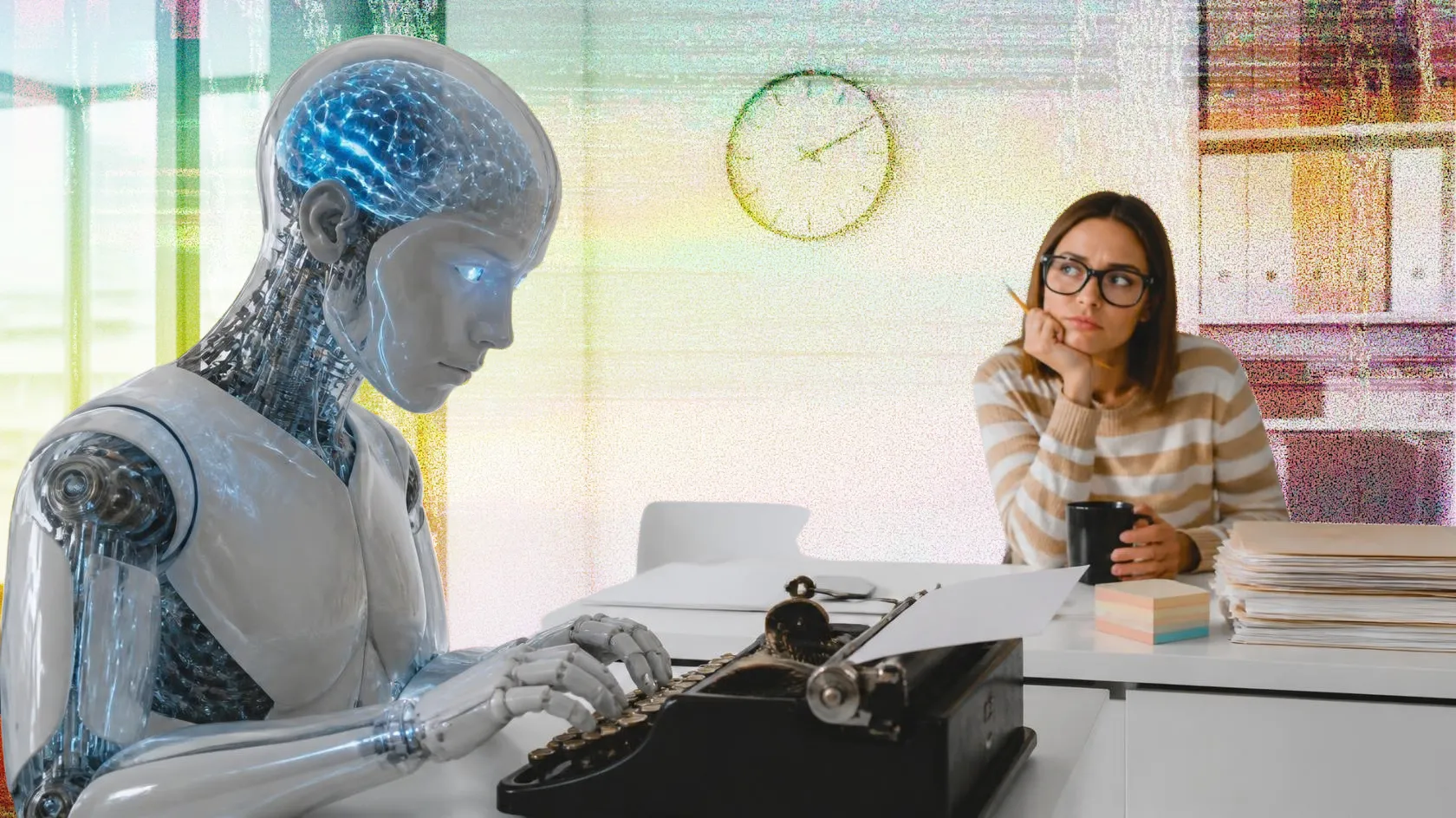
AI is making one of the most time-consuming parts of office work easier, and for many employees, that is exactly the point.
Workers are using AI to draft emails, marketing materials, self-evaluations, internal updates and other routine communications. For people who dislike writing or struggle with it, AI can turn an intimidating blank page into a workable first draft.

That creates a very different calculation from the one facing professional writers, for whom the writing itself is the product, according to Bloomberg.
Writing Is Becoming A Task AI Can Take Off Employees’ Plates
For the wider workforce, writing is often something employees have to do alongside their actual jobs. Small-business owners use AI to clean up client messages and marketing emails, while executives use it to turn ideas and talking points into routine written content.

The appeal is less about producing great literature than getting a necessary task finished faster.
AI is also becoming a skill employers expect workers to understand. Employees who once worried that using AI to write evaluations or other workplace documents might be considered cheating are increasingly finding that companies actively encourage the practice.
Writers Face A Much Bigger Threat
The calculation changes when writing is the job. The growing backlash against AI-generated books, journalism and other professional writing reflects concerns about authorship, quality and the future value of human writing. Research cited in the debate has also found that AI-generated text can become more homogeneous.
That helps explain why AI writing has generated far more controversy in publishing and media than in ordinary corporate workplaces. A marketing manager using AI to draft an email is outsourcing one task. A writer using AI to produce the work they are paid to create is outsourcing the core of their job.
Some Employers Are Discovering A Limit
The corporate embrace of AI writing also has a ceiling. Some companies are finding that AI-generated documents can become longer and more polished without becoming more useful. At one AI company, concerns that employees were producing lengthy documents that took too long to review led management to prohibit AI-generated client communications and project proposals.
The result is a new workplace question: If AI makes everyone capable of producing more writing, does that actually make work more productive?
For many employees, AI may finally make writing a less painful part of the job. For professional writers, the same technology is forcing a much more difficult question about what happens when the task they are paid to perform becomes increasingly easy for everyone else to automate.