



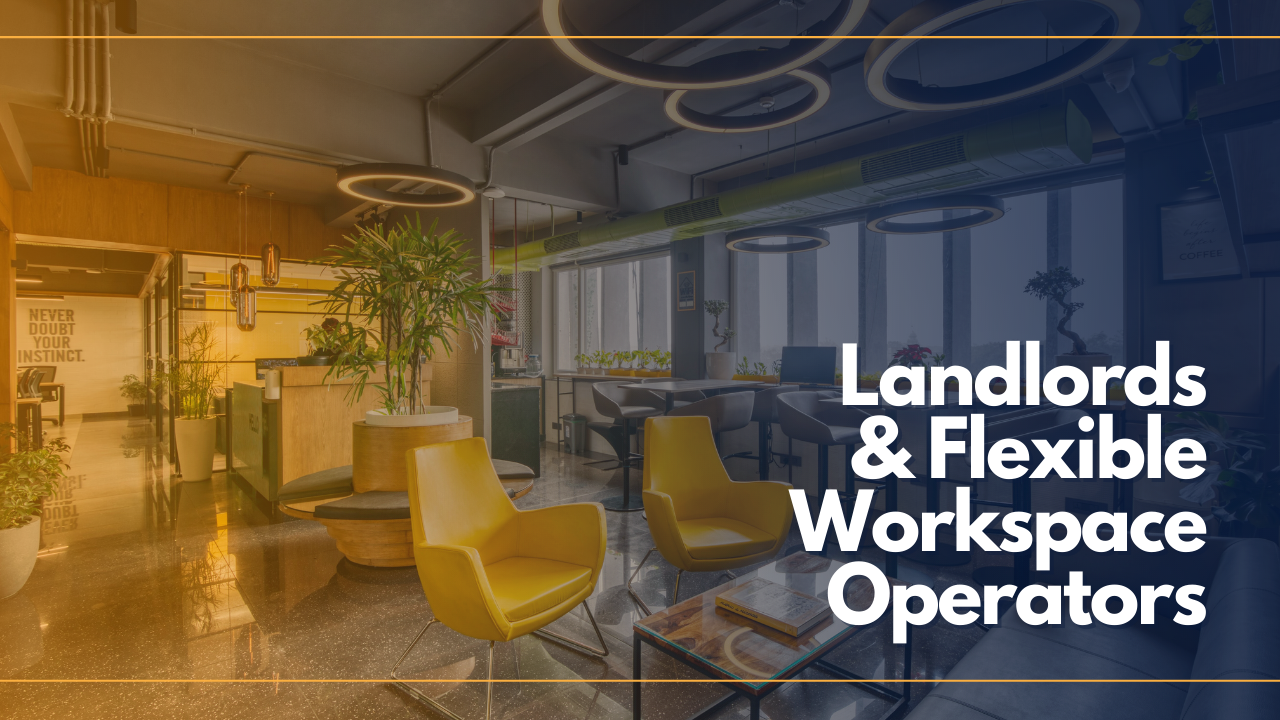
- Research by Savills suggests that 75% of landlords expect tenants to ask for more flexible lease terms going forward.
- A recent webinar by essensys and GWA explored the opportunities and risks involved in partnering with landlords.
- The panel suggested that landlords want to work with flexible space operators, and the biggest risk is not doing anything.
75% of landlords expect tenants to ask for more flexible lease terms going forward, according to research from Savills, as demand for flexible workspace grows.
This will effectively pave the way for landlords to enter the flex sector, with 29% stating they are already planning to, or would like to, operate their own brand.

The research, conducted at the end of 2020, claims that this focus on flexibility has also impacted the way landlords consider the asset management of their CRE portfolio. Around half confirmed they would be happy to lease 10-25% of a building (totalling 50,000 sq ft or above) to a flexible workspace provider.
Moving forward, Savills anticipates that all larger buildings of 100,000 sq ft and above will have a flexible offering “as standard”.
What does this mean for flexible workspace operators?
In a statement accompanying the research, Cal Lee, global head of Workthere and joint head of Savills Flex, said, “…in time, we expect more and more [asset managers] to begin building their own flex brands, learning from their partnerships with the operators.”
From the operator perspective, landlords that want to incorporate flexible space in their portfolios represent both an opportunity (the potential for growth and financial stability) and a risk (partnership breaking down, or competitive threat from the landlord setting up their own flex brand).
But is there equally a risk in doing nothing?

A webinar hosted by essensys and the GWA in February 2021 offered some answers.
The panel included Dan Zakai from Mindspace, Giovanni Palavicini from Avison Young, and Jeremy Bernard from essensys.
The discussion centered on ways in which the flexible space sector is uniquely positioned to meet the complex needs of tenants who are emerging from the pandemic, and the opportunities and risks involved in partnering with landlords.
Here are the highlights from the webinar.
Access the full recording here
- The biggest risk is not doing anything. One of the key points put across by the panel is that landlords want to work with flexible space operators, and the biggest risk is not doing anything. Landlords now understand the advantage of having flexible space in their buildings; they want to provide a hospitality experience and they are approaching operators with the intention of partnering with them.
- There’s a lot on the line. Continuing the topic of risk, the panel noted that “there’s a lot on the line for landlords” and they do have concerns, such as: What if the flexible space doesn’t fill? Or the partnership fails? They will take care to choose a reliable partner, which is why operators lining up for partnerships or management agreements should be prepared for a rigorous analysis of their operations. If landlords don’t feel confident in a partnership, they will do it on their own.
- Be clear about your objectives. Both landlord and operator must be clear about their objectives in running a flexible space, and they must share those same values. The panel noted that both parties must understand who they’re targeting and why. It might be to provide a cafe-style facility in the building that isn’t monetized, or perhaps they want to launch a new brand of flexible space that becomes profitable. Whatever the objective, clarity and mutual understanding is essential for a successful partnership.
- Not if, but when and how. It’s no longer a question of ‘if’ asset managers and landlords want to incorporate flex space into their buildings, but ‘when and how’. That’s the clear takeaway from the panel, and from a tech perspective, it’s essential to make the right investment at the beginning to ensure a seamless experience for both tenant and operator in the long run.
- Boost confidence with positive experiences. Operating a flexible space is incredibly complex with “lots of moving parts”; users want an easy and trouble-free experience and the more touchpoints that can be automated, the faster and more seamless the experience becomes. This, concluded the panel, will not only make the lives of user and operator easier, but will help to bring back confidence and trust in the workplace during and after the pandemic.