



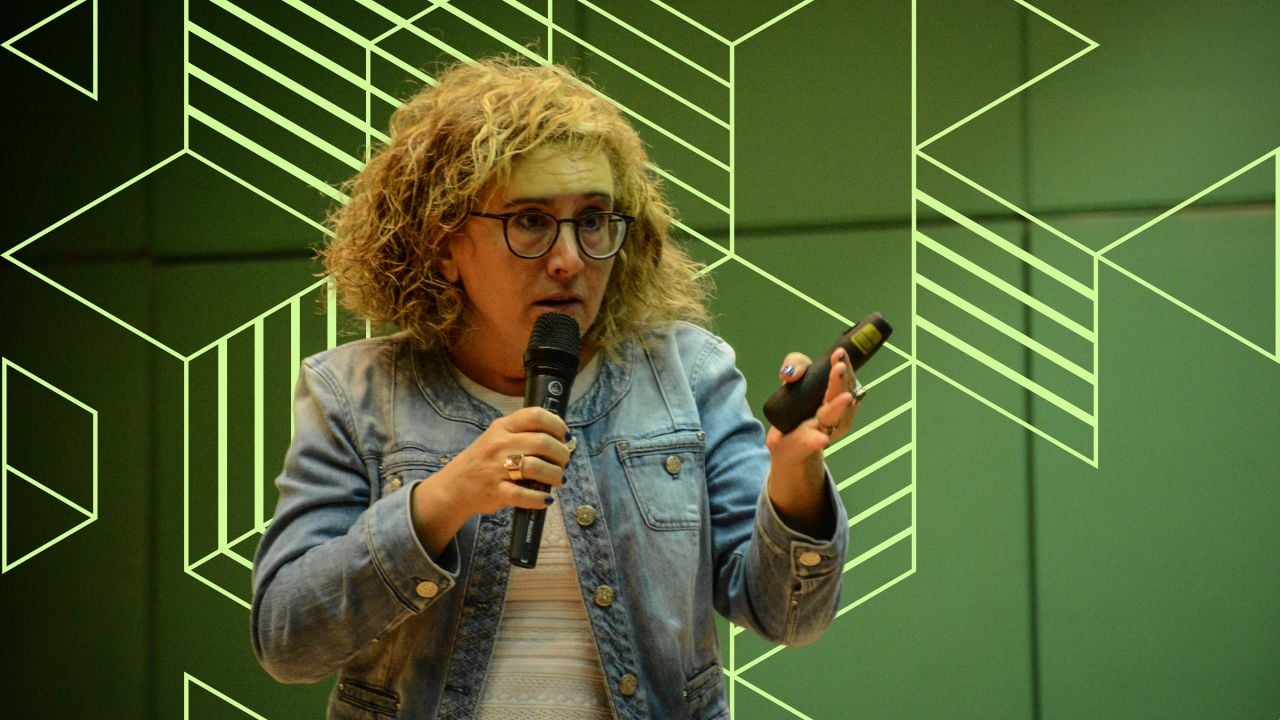
- HR strategist Nirit Cohen joined the Allwork.Space Future of Work podcast to discuss the shift towards flexible work models and personal fulfillment, as people redefine success beyond traditional work hours and locations.
- Cohen envisions a future of work where lifelong learning is essential, with organizations adapting to a fluid workforce through varied employment structures.
- Cohen argues for redefining success to balance work, personal growth, and efficient adaptation in a fast-paced environment.
This article is based on the Allwork.Space Future of Work Podcast episode featuring Nirit Cohen, a globally recognized HR strategist and thought leader with 30 years of leadership experience at Intel. Click here to listen to the full episode.
It’s safe to say that it’s been a wild few years in the world of work, and organizations are now facing new challenges and opportunities in managing talent, balancing work-life dynamics, and embracing technology.

Nirit Cohen, a globally recognized HR strategist and Forbes columnist with 30 years of leadership experience at Intel, recently joined the Allwork.Space Future of Work® Podcast to share her opinion on these trends, and what organizations must do to stay ahead.
The Transition Towards Flexibility and Personal Fulfillment
Cohen highlighted a key trend that has been brewing for years — shifting perspectives on work-life balance.

While the pandemic accelerated these changes, the seeds were planted much earlier.
As people sought greater mobility and flexibility, the concept of the “office” began to evolve.
Work, rather than being a physical location, increasingly became something people do rather than a place they go.
The rise of “workations,” digital nomadism, and flexible work arrangements are now mainstream, driven by technology that allows employees to work from virtually anywhere.

But, Cohen explained during our conversation, the pandemic was a wake-up call for many workers. People began to reassess their relationship with work and life, recognizing that life is finite and every day spent working is a day traded for something else.
This has led to the redefinition of success and a new conversation around how much work is actually necessary to live a fulfilling life.
The Future of Less Work
This transformation in mindset is at the heart of what Cohen calls “the future of less work.”
While not advocating for total disengagement from work, she notes that success in the future will not necessarily equate to longer hours or constant hustle.
Instead, work will become more about finding a sustainable balance that allows individuals to pursue personal fulfillment while still contributing to society.
Cohen draws on history to illustrate this shift, noting that the standard 40-hour work week is a relatively recent invention, emerging from the industrial revolution and the rise of unionism.
In fact, in the past, the most successful people didn’t work long hours at all; they had others working for them, and their success was defined by leisure, not labor.
This historical perspective challenges the current narrative that working longer hours equates to being more productive or successful.

Today, the rise of movements like FIRE (Financial Independence, Retire Early) reflects a desire to transition away from traditional career models and focus on a more balanced approach to life.
In Asia, younger generations are also pushing back against the expectation of workaholism, with movements like “lying flat” gaining traction as they question the value of endless work.
Rethinking Retirement and Work-Life Integration
As work and life continue to blur, the traditional trajectory of work — education, career, retirement — no longer seems like the only option.
Cohen envisions a future where people can “unbundle” their employment and work in phases.
Rather than working full-time for 40 years and retiring at 65, individuals may choose to step in and out of work throughout their lives, adjusting their hours to meet their personal needs and goals.
This could mean working part-time while raising children, studying new skills later in life, or reducing work to focus on hobbies or passions in the later years.
Cohen also suggests that organizations will need to adapt to this new reality, understanding that full-time, permanent employees will no longer be the only way to build a successful workforce.
Companies will need to accommodate different work models, allowing people to engage in work on their terms — whether it’s through flexible hours, temporary contracts, or project-based engagements.

This change will require businesses to rethink their approach to talent and recognize the value of workers at different stages in life, with varying levels of commitment.
Technology and Societal Changes
Central to these shifts is technology, which has enabled people to work more efficiently and with greater flexibility. Cohen points out that as the cost of living continues to decrease in certain areas, technology may even change the fundamentals of what people need to work for.
In the future, basic needs like food, shelter, and education may no longer require full-time employment, potentially leading to a redefined concept of work.
While she cautions against jumping to conclusions about concepts like Universal Basic Income (UBI), Cohen sees technology playing a role in rethinking the social contract between workers and employers.
As societal expectations change, there will likely be more public services and digital innovations designed to make it easier for people to live with less financial stress, and still, contribute to the workforce in a meaningful way.
Embracing the New Era of Work
Ultimately, Cohen believes the future of work is about more than just reducing hours: it’s a total change in how people perceive success and productivity.
As workers seek greater flexibility and employers adapt to a more fluid workforce, the traditional 9-to-5 career model is likely to continue its metamorphosis.
The future of work will be a blend of technology, personal fulfillment, and sustainable work practices, with a more diverse and inclusive workforce that moves in and out of employment as needed.
Lifelong Learning May Be The New Standard
Cohen stresses that lifelong learning is no longer a luxury, but a necessity in today’s fast-paced work environment. With technology evolving at breakneck speed, staying current is imperative for success.
“You cannot know what you need to know if you’re not learning all the time,” she warned.
This shift places the responsibility for learning squarely on the shoulders of individuals — she says you have to take ownership of your learning and make time for it.
This constant learning mindset is essential for workers who want to remain competitive in an increasingly tech-driven job market.
The Road Ahead: Embracing Change and Redefining Success
Cohen believes that the future of work will not be defined by traditional job structures, but by how individuals and organizations can navigate the new realities of flexible, tech-driven employment.
“We’re still trying to put the pieces back together, and the interesting thing is different people are putting them back together in different ways, which is different from the mold that we’re used to,” she said.
Cohen challenges businesses and employees alike to rethink the way they define success.
As work becomes more decentralized and individualized, success will no longer be measured by hours worked or the position one holds.
Instead, success will be redefined by how well individuals balance their work and personal lives, and how effectively they can adapt to change — which we’re experiencing a lot of, as of lately.