




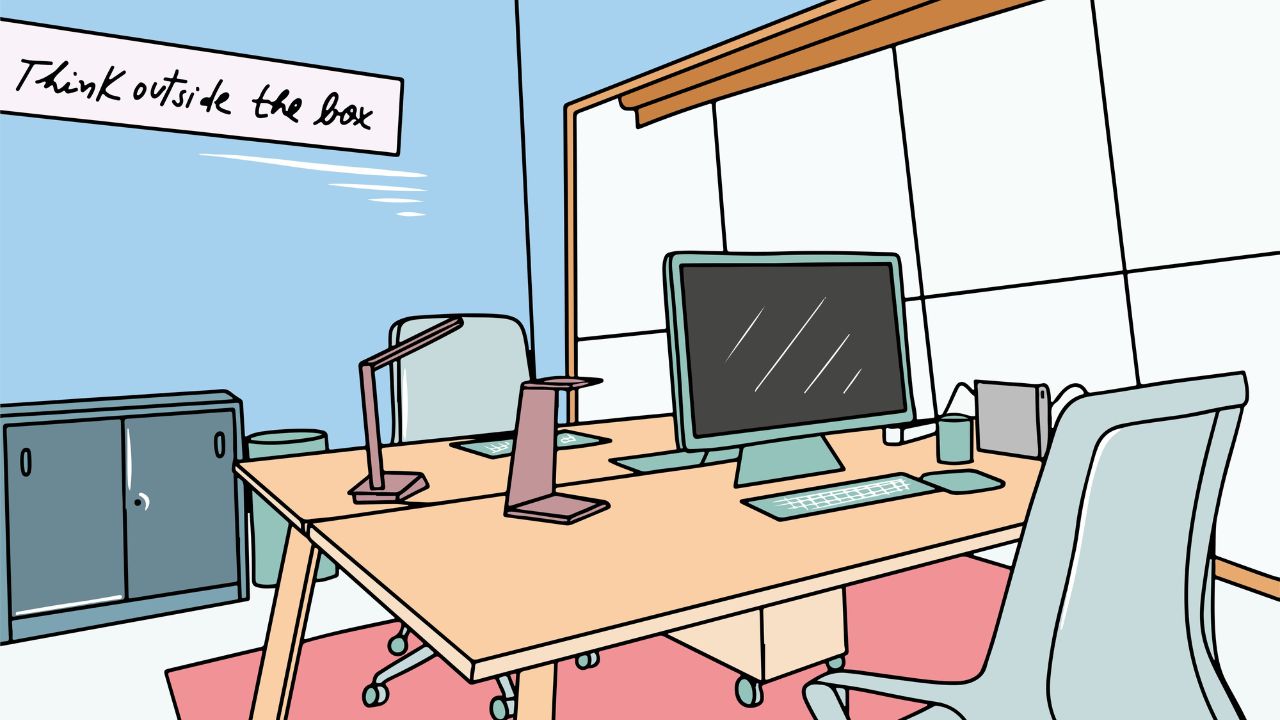
- Efficient offices use far less energy per person than home setups, thanks to shared systems and optimized design.
- Remote work often shifts, rather than reduces, carbon emissions due to scattered, inefficient home energy use.
- Modern office buildings are evolving into sustainability hubs, outperforming homes in energy savings and emissions cuts.
More than five years after the COVID-19 pandemic reshaped how and where we work, the debate over returning to the office still rages on. The best offices do more than provide a desk — they spark collaboration and mentorship, plus offer a variety of spaces that support focus, creativity, and connection.
At a time when workplace loneliness is on the rise, the value of in-person interaction has never been more important. But, there’s one more upside you might not expect beyond these human benefits: returning to a thoughtfully designed office is actually the more environmentally friendly choice.

On the surface, remote work appears to be an environmental win: fewer cars mean cleaner air, and working from home seems more energy efficient than powering a massive office. But a closer look reveals a more complex picture.
The carbon savings from skipping the commute can vanish when each home operates as a full-time luxury office, running separate heating, cooling, and lighting systems.

For the past three years, the Gensler Research Institute, in collaboration with MIT, has studied the carbon footprint of where we work, and our findings show that the average home office consumes energy across an entire household, upwards of 600-800 square feet per person.
Conversely, office spaces are designed and professionally operated for efficiency, with each worker occupying only 100-150 square feet. Offices maximize energy savings through centralized HVAC systems, shared lighting, and other efficiency-driven technologies.
To match office efficiency, home systems would need to be six to eight times more energy efficient. This is an unlikely feat, especially in older homes that tend to be far less efficient per square foot than office buildings.
Even with the commute eliminated, the energy demands of individual homes running at full capacity often outweigh the environmental impact of driving. For instance, in dense cities with sophisticated public transit systems like New York, emissions from commuting are already minimal.

In contrast, car-dependent cities like Houston and Los Angeles, where commutes tend to be longer, the overall environmental impact still favors shared office spaces, which benefit from centralized energy systems and greater operational efficiency.
While the source of emissions matters, the real issue is how efficiently space, and therefore energy, is used. A well-designed office consolidates resources by optimizing heating, cooling, and lighting, whereas remote work scatters energy consumption across thousands of homes, cafes, and other places. Sustainability efforts shouldn’t just shift emissions from one place to another; they should focus on maximizing overall carbon efficiency.
Office buildings also have a 50-year head start in energy efficiency, thanks to commercial building codes established in the 1970s and ’80s. These regulations covering air sealing, insulation, and efficient mechanical systems laid the groundwork for energy savings that have only accelerated over time.
The impact is undeniable: over the past 25 years, these codes have led to a 25–50% reduction in energy use intensity (EUI), according to our research, cutting office building energy consumption nearly in half since 2000.
And it’s not just building codes making a difference. The ENERGY STAR program has driven a 30% reduction in energy use across U.S. office buildings in just 17 years, according to the Environmental Protection Agency (EPA). Residential energy use has not improved at the same rate, relying more on rising utility costs to curtail usage, energy efficient appliances, and consumer-driven conservation efforts.
The real game-changer, one Gensler is proud to be a part of, is how modern office spaces are evolving into energy-efficient hubs. Many of our workplace projects focus on upgrading buildings with LED lighting, smart sensors, electrification, cutting-edge HVAC systems, and energy-reducing glass, all designed to slash energy consumption.
The office of the future will be a sustainability powerhouse that far outperforms the energy-hungry sprawl of individual home offices. By pooling resources in a single location, offices leverage shared infrastructure for maximum sustainability. Think of it as energy carpooling: one building, one system, one streamlined setup that outperforms thousands of scattered home offices running at maximum output.
So, is remote work really greener? No. The myth of the endlessly eco-friendly home office is starting to unravel as we dig deeper into the energy dynamics at play. While the absence of a commute might seem like an environmental win, the scattered energy use across countless homes often exceeds the emissions saved by reducing vehicular traffic.
The good news for those being called back to the office is that returning to well-designed office spaces, especially those built with sustainability in mind, offers a real way to reduce our collective carbon footprint. And that’s something we can all feel good about.