



Advertisements
Ergonofis
  • Marketplace
  • Resources
  • Business Directory
  • Events
  • Advertise
  • Publish a Press Release
  • Submit Your Story | Get Featured
  • Get the Newsletter
  • Contact
  • About Us
The FUTURE OF WORK® since 2003
Allwork.Space
No Result
View All Result
Subscribe
  • Submit Your StoryNew
  • More
    • Columnists
      • Dr. Gleb Tsipursky – The Office Whisperer
      • Nirit Cohen – WorkFutures
      • Angela Howard – Culture Expert
      • Drew Jones – Design & Innovation
      • Jonathan Price – CRE & Flex Expert
    • Get the Newsletter
    • Events
    • Advertise With Us
    • Publish a Press Release
    • Brand PulseNew
    • Partner Portal
  • Latest News
  • Business
  • Leadership
  • Work-life
  • Career Growth
  • Tech
  • Design
  • Workforce
  • Coworking
  • CRE
  • Podcast
  • Submit Your StoryNew
  • More
    • Columnists
      • Dr. Gleb Tsipursky – The Office Whisperer
      • Nirit Cohen – WorkFutures
      • Angela Howard – Culture Expert
      • Drew Jones – Design & Innovation
      • Jonathan Price – CRE & Flex Expert
    • Get the Newsletter
    • Events
    • Advertise With Us
    • Publish a Press Release
    • Brand PulseNew
    • Partner Portal
  • Latest News
  • Business
  • Leadership
  • Work-life
  • Career Growth
  • Tech
  • Design
  • Workforce
  • Coworking
  • CRE
  • Podcast
No Result
View All Result
Subscribe
Allwork.Space
No Result
View All Result
Advertisements
Nexudus - Is Your Space Performing?
Home News

US Tariffs Force Chinese Workers Out of Factories and Into Farming

Current tariff levels could trigger 4-6 million layoffs in China.

Allwork.Space News TeambyAllwork.Space News Team
May 16, 2025
in News
Reading Time: 4 mins read
A A
US Tariffs Force Chinese Workers Out of Factories and Into Farming

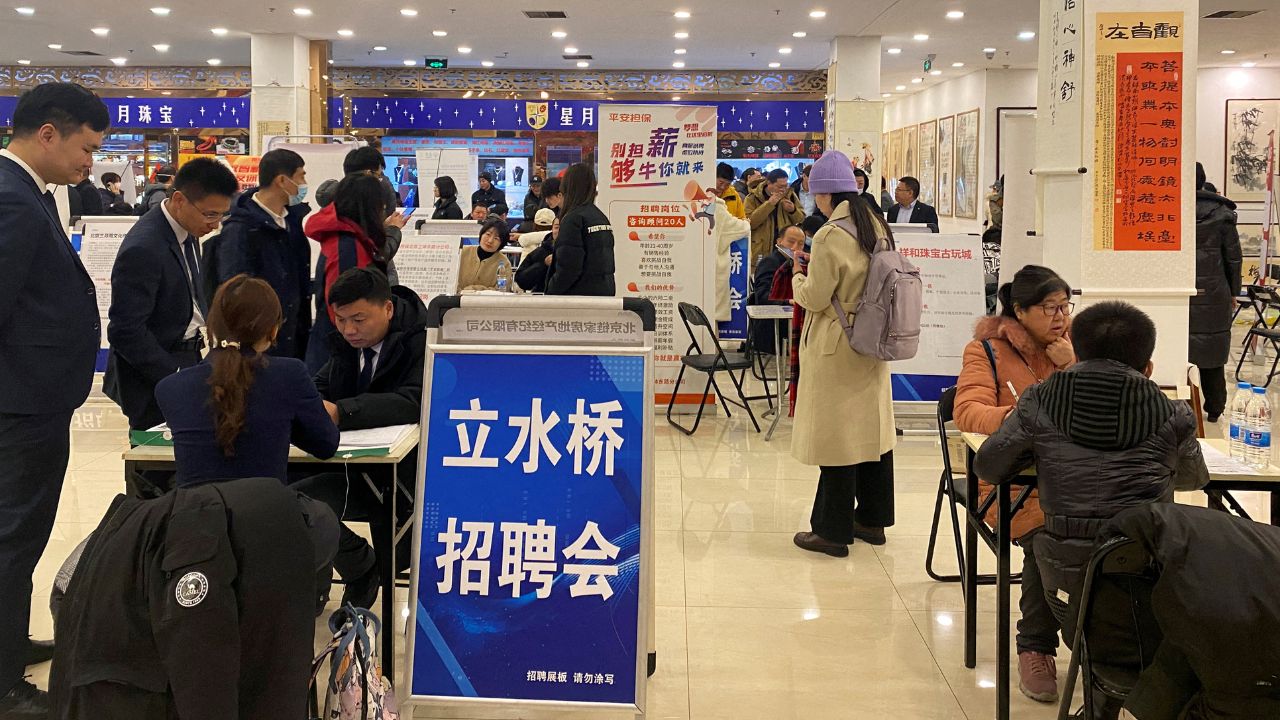
People attend a job fair following the Lunar New Year holiday, in Beijing, China, February 23, 2024. REUTERS/Ellen Zhang/File Photo

Chinese worker Liu Shengzun lost two jobs in just one month as U.S. import tariffs shot up to triple digits in April, forcing a Guangdong lighting products factory, and then a footwear maker, to reduce output.

Tariffs came down dramatically this week, but Liu has given up on factory jobs and is now back farming in his hometown in southern China.

Advertisements
Build Your AI - Disaster Avoidance

“It’s been extremely difficult this year to find steady employment,” said the 42-year-old, who used to earn 5,000 – 6,000 yuan ($693-$832) a month as a factory worker and now doesn’t have a steady source of income. “I can barely afford food.”

The rapid de-escalation in the U.S.-China trade war after the Geneva talks last weekend has helped Beijing avoid a nightmare scenario: mass job losses that could have endangered social stability — what the ruling Communist Party sees as its top-most priority, key to retaining its legitimacy and ultimately power.

Advertisements
Nexudus - Is Your Space Performing?

But this year’s U.S. tariff hikes of 145% left lasting economic damage and even after the Geneva talks remain high enough to continue to hurt the job market and slow Chinese growth, say economists and policy advisers.

“It was a win for China,” a policy adviser said of the talks, speaking on condition of anonymity due to the topic’s sensitivity. “Factories will be able to restart operations and there will be no mass layoffs, which will help maintain social stability.”

But China still faces challenging U.S. tariffs of 30% on top of duties already in place.

“It’s difficult to do business at 30%,” the adviser added. “Over time, it will be a burden on China’s economic development.”

Advertisements
Deel - Upgrade your global team management

Before the meeting in Switzerland, Beijing had grown increasingly alarmed about internal signals that Chinese firms were struggling to avoid bankruptcies, including in labour-intensive industries such as furniture and toys, Reuters reported last week.

Now there’s some relief.

Lu Zhe, chief economist at Soochow Securities, estimates the number of jobs at risk has fallen to less than 1 million from about 1.5-6.9 million before the tariff reduction.

Alicia Garcia-Herrero, chief Asia Pacific economist at Natixis, had estimated the triple-digit tariffs could cause 6-9 million job losses. Current tariff levels could trigger 4-6 million layoffs, while if tariffs drop by a further 20% some 1.5-2.5 million jobs could be lost, she said.

More stories for you

Ditch The Cult Of Productivity How Leaders Can Move Teams From Survival Mode To Quiet Thriving

Ditch The Cult Of Productivity: How Leaders Can Move Teams From Survival Mode To Quiet Thriving

12 hours ago
GM Invests $242M Over Five Years to Train Skilled Trades Amid Labor Shortage

GM Invests $242M Over Five Years to Train Skilled Trades Amid Labor Shortage

22 hours ago
U.S. Jobless Claims Fall to 224,000, Signaling Labor Market Stability in December

U.S. Jobless Claims Fall to 224,000, Signaling Labor Market Stability in December

23 hours ago
Overcoming Change Fatigue Why Leaders Struggle And How To Succeed

Overcoming Change Fatigue: Why Leaders Struggle And How To Succeed

2 days ago

China’s 2025 economic growth could slow by 0.7 percentage points in the most optimistic scenario, 1.6 points under the current tariffs, or 2.5 points if the conflict returns to April’s intensity, she estimated.

“When you increase the tariffs to such a high level, many companies decide to stop hiring and to start basically sending the workers back home,” Garcia-Herrero said.

“At 30%, I doubt they will say, okay, come back. Because it’s still high,” she added. “Maybe the Chinese government is saying, wow, this was amazing. But I think many companies are not sure that this is going to work.”

‘UNSTABLE’

Government advisers say China is trying to mitigate manufacturing job losses with higher state investment in labour-absorbing public projects and by using the central bank to channel financial resources where new jobs could be created.

Advertisements
Get more revenue. Do less work - Alliance Virtual Offices

The People’s Bank of China last week unveiled a new tool to provide cheap funds for services and elderly care, among other stimulus measures.

“On employment, the most important driver will come from increased government investment given that the enthusiasm for corporate investment has yet to rise,” said Jia Kang, founding president of the China Academy of New Supply-Side Economics.

Beijing will try to keep the budget deficit ratio at the roughly 4% level agreed in March, but a higher number “cannot be ruled out if a serious situation arises,” he said.

The exact impact of last month’s tariff spike on the job market is unknown. A factory activity survey predicted employment declined in April, but analysts believe Beijing was more concerned about a potential acceleration of job losses than the absolute numbers over the course of a month.

Advertisements
UltraSoftBIS Work Smarter, Not Harder

Exporters had already been paring back their workforce to stay competitive in what risks turning into a deflationary spiral.

“It’s hard to give a figure,” a second policy adviser said of job losses. “The economy is already weak and the tariff war is adding frost on top of snow, but it’s just frost.”

A major stumbling block to job creation is the perceived unpredictability of U.S. President Donald Trump’s tariff policies, which is keeping exporters cautious, analysts say.

Li Qiang was among a group of up to 20 people losing their jobs at a company that acted as an intermediary, exporting pneumatic cylinders, which are used in industrial machinery and were made by other Chinese firms.

Advertisements
Nexudus - Is Your Space Performing?

His company closed after losing U.S. orders and being outcompeted in Japan, where rivals rushed to replace the American market.

He now works as a ride-hailing driver in the southwestern city of Chengdu and has no plans to return to the export sector, even after the easing of U.S.-China tensions.

“Trump’s policies toward China could change at any time, which makes jobs in export-related industries unstable,” said Li. “I don’t plan to put any effort into working in the export sector anymore.”

($1 = 7.2109 Chinese yuan renminbi)

(Reporting by Liangping Gao, Kevin Yao and the Beijing newsroom; Additional reporting by Ellen Zhang in Beijing; Writing by Marius Zaharia; Editing by Lincoln Feast.)


Advertisements
Subscribe to the Future of Work Newsletter
Source: Reuters
Tags: Asia-PacificLeadershipWorkforce
Share10Tweet6Share2
Allwork.Space News Team

Allwork.Space News Team

The Allwork.Space News Team is a collective of experienced journalists, editors, and industry analysts dedicated to covering the ever-evolving world of work. We’re committed to delivering trusted, independent reporting on the topics that matter most to professionals navigating today’s changing workplace — including remote work, flexible offices, coworking, workplace wellness, sustainability, commercial real estate, technology, and more.

Other Stories Recommended For You

Ditch The Cult Of Productivity How Leaders Can Move Teams From Survival Mode To Quiet Thriving
Work-life

Ditch The Cult Of Productivity: How Leaders Can Move Teams From Survival Mode To Quiet Thriving

byFeatured Insights
12 hours ago

The cult of productivity is burning workers out and pushing workplaces into permanent survival mode.

Read more
GM Invests $242M Over Five Years to Train Skilled Trades Amid Labor Shortage

GM Invests $242M Over Five Years to Train Skilled Trades Amid Labor Shortage

22 hours ago
U.S. Jobless Claims Fall to 224,000, Signaling Labor Market Stability in December

U.S. Jobless Claims Fall to 224,000, Signaling Labor Market Stability in December

23 hours ago
Overcoming Change Fatigue Why Leaders Struggle And How To Succeed

Overcoming Change Fatigue: Why Leaders Struggle And How To Succeed

2 days ago
Advertisements
UltraSoftBIS Work Smarter, Not Harder
Advertisements
Ergonofis

Unlock your competitive edge in tomorrow's workplace.

Join a community of forward-thinking professionals who get exclusive access to the latest news, trends, and innovations that are shaping the future of work.

2025 Allwork.Space News Corporation. Exploring the Future Of Work® since 2003. All Rights Reserved

Advertise  Submit Your Story   Newsletters   Privacy Policy   Terms Of Use   About Us   Contact   Submit a Press Release   Brand Pulse   Podcast   Events   

No Result
View All Result
  • Home
  • Latest News
  • Topics
    • Business
    • Leadership
    • Work-life
    • Workforce
    • Career Growth
    • Design
    • Tech
    • Coworking
    • Marketing
    • CRE
  • Podcast
  • Events
  • About Us
  • Advertise | Media Kit
  • Submit Your Story
Subscribe

Welcome Back!

Login to your account below

Forgotten Password?

Retrieve your password

Please enter your username or email address to reset your password.

Log In
This website uses cookies. By continuing to use this website you are giving consent to cookies being used. Visit our Privacy and Cookie Policy.
-
00:00
00:00

Queue

Update Required Flash plugin
-
00:00
00:00