



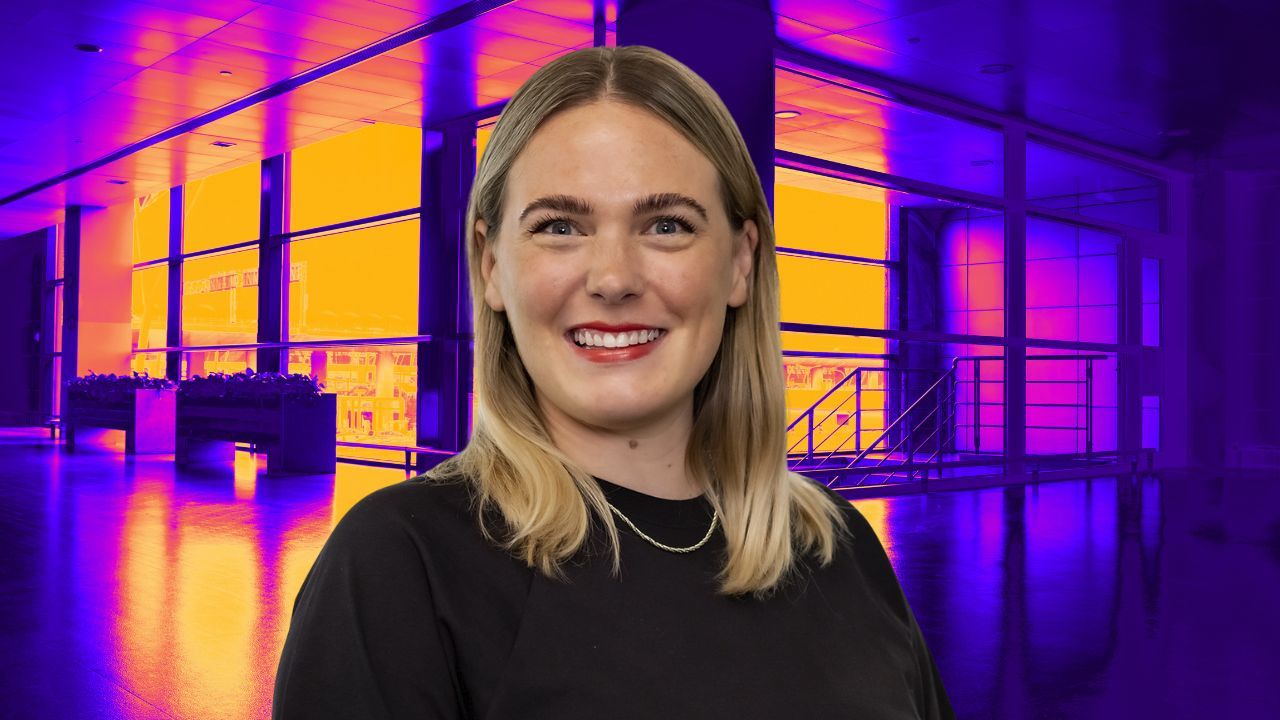
Today’s offices aren’t broken, but it seems they’re built for a world that no longer exists.
As the nature of work undergoes a transformation fueled by technological progress and changing employee expectations, the design of office environments must adapt accordingly.

In the most recent episode of The Future of Work® Podcast, Amber Wernick, acclaimed designer and Practice Development Leader at Perkins&Will, shared her deep expertise on how workplace interiors need to move beyond conventional productivity-centric models to become vibrant spaces of connection, inclusivity, and flexibility.
With over 15 years of experience designing environments across corporate, educational, and healthcare sectors, Wernick approaches spatial design through a strongly human-focused perspective.
Her insights challenge traditional office norms and provide practical guidance for leaders aiming to create spaces that genuinely support the modern workforce.
The Gap Between Contemporary Work Practices and Office Design
There is a crucial disconnect between how employees currently work and how office spaces are constructed. While remote work has brought attention to employee isolation, Wernick stresses that loneliness is not confined to those working remotely. Many individuals who physically enter office spaces still experience profound feelings of isolation.
She said that although the methods of working have transformed considerably over recent years, office interiors largely remain static and designed for outdated priorities focused mainly on individual output.
“We’ve dramatically changed the way we’ve worked in the last five years, but we haven’t seen as much of a dramatic shift in the design of our office interiors to really meet the change that’s happening in the way that we work,” she said during our podcast conversation.
Because of this disconnect, employees can feel alone even while physically present in the office. Wernick suggests that organizations should pivot from emphasizing productivity alone to intentionally cultivating relationships within the workplace, helping to combat the loneliness epidemic.
Designing Spaces That Encourage Interaction Through Thoughtful Obstacles
One of Wernick’s most compelling concepts is what she calls “functional inconvenience.” This approach involves deliberately inserting minor obstacles within a workspace to encourage people to engage with each other rather than isolate themselves.
For example, instead of scattering kitchenettes or coffee stations throughout an office for maximum convenience, Wernick advocates consolidating these amenities into a single, central communal area. This design requires people to leave their immediate work zones, encouraging spontaneous encounters across departments.
“People get really siloed in their area of the office… when you get rid of those dispersed kitchenettes and you create a big central hub, a communal hub… that really creates that interaction between departments and between people,” she said.
This strategy reduces workplace silos and nurtures a stronger sense of community and collaboration.
Planning for Uncertainty: Flexible Spaces for a Technology-Driven Future
With the swift advancement of artificial intelligence, hybrid work models, and new leasing practices, offices must be designed with adaptability in mind. Wernick describes workplace design as “designing for the unknown” and stresses that flexibility should be a foundational principle.
She shares examples of clients who have planned portions of their office space from the outset to be easily subleased or transformed, allowing the organization to adjust its space requirements without costly renovations.
One client created a ground-floor coworking space that employees could use immediately and into which the company could expand later.
Wernick also points to infrastructure innovations such as raised access flooring, which allows utilities to be routed beneath the floor for rapid reconfiguration. Though common in Europe and Canada, this approach remains underused in the U.S.
Such forward-thinking design enables companies to respond nimbly to workforce needs and technology changes while optimizing their real estate investments.
Downsizing Headquarters and Expanding Satellite Offices
Wernick identifies a continuing trend of large corporate headquarters becoming smaller while satellite or regional offices increase in number. This “hub-and-spoke” model allows companies to be closer to employees’ homes and offers greater convenience.
“I do think that corporate headquarters are going to shrink. We’re already seeing generally a reduction in square footage,” she told us during the podcast conversation.
This approach showcases changing priorities such as reducing commute times and tapping into talent across different locations. Wernick describes a remote-first client that has consolidated its real estate into a single headquarters designed less as a traditional office and more as a cultural and training center.
The facility includes spaces for onboarding, town halls, and even film studios for virtual training content, offering an environment that supports a predominantly remote workforce.
Drawing Inspiration From Hospitality and Retail to Create Engaging Workplaces
Finally, Wernick discussed how coworking spaces, hospitality, and retail environments have inspired new approaches to workplace design. The focus has pivoted away from rigid, individual desks toward “third place” environments — spaces where people work independently but feel part of a collective community.
She compares these spaces to coffee shops, hotel lobbies, and university libraries where individuals are “alone together,” surrounded by ambient activity that supports a sense of belonging without distraction.
This change also responds to budget considerations. Organizations are reducing the number of expensive private offices and focusing instead on flexible, open workpoints with varying technological capabilities. Wernick said that designers now think more in terms of “work points” rather than square footage per employee.
She also champions sustainable, modular furniture and millwork that can be easily relocated, reused, or recycled at the end of leases, minimizing waste.