



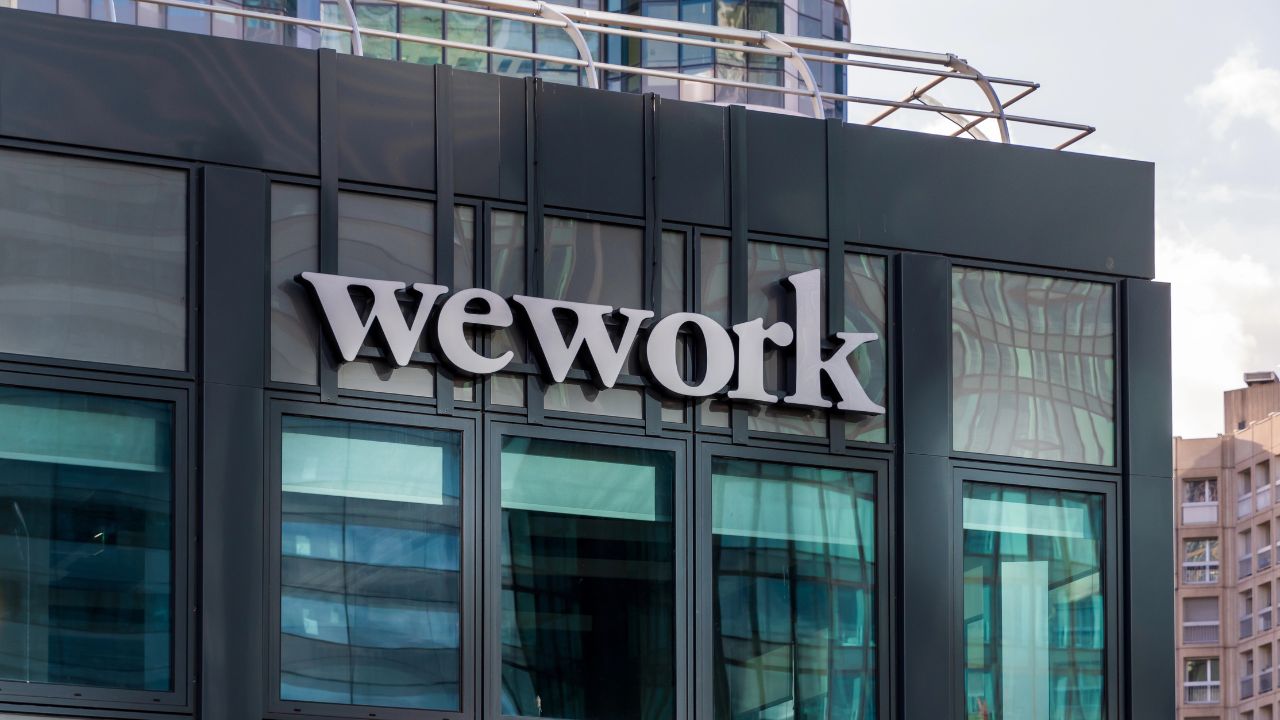
“WeWork for Business establishes a fresh blueprint designed to resonate across its broad audiences”…….[and] “creates a new narrative that clearly demonstrates WeWork’s evolution.” Evolution from the train wreck that it was after its messianic founder drove it full speed into the buffers before being ejected, that is.
The campaign seems to be timed to mark the first anniversary of the takeover of WeWork by technology group Yardi, which brought to the company not only a much needed infusion of new capital but a new style of management, calm and focussed, after the chaos of the Neumann era.

The campaign claims that WeWork is disrupting the category once again with a “new vision,” though that is the last thing I would have thought that the company needed having had a surfeit of “vision,” including changing the world’s consciousness, and too little reality under the previous management.
The Chief Marketing and Communications Officer describes the launch of the campaign as a pivotal moment, which it might well be, as the company is now profitable on some measures for the first time in its life, and says that it aims to reach an audience of two million in its first month.

Could this ambitious campaign work and what does it mean for the flexible workspace industry if it does?
The answer to the first question is a clear “yes,” in my view. With a sensible business oriented management in place there is every reason why WeWork should succeed.
It has the necessary scale with its 600 locations, many of them in attractive buildings, and a critical mass of existing customers or “members” as it calls them. WeWork’s buildings tend to be newer than average and to be well fitted out, both of which help attract new clients in a market where occupiers are being more picky than ever before.
Now the company has a capable, well-grounded management, focused on the usual business KPIs, it should be a formidable competitor for other coworking companies and for landlords.

What does this mean for the coworking industry? Should other operators be worried? I don’t think they should worry, as I view a campaign like this to be good for the industry as a whole.
Back in the 20th century so few people understood what flexible office space was that those in the industry explained their jobs by reference to IWG’s Regus brand. Regus’ advertising was recognised as benefitting every operator in raising awareness of the existence of the product, much to Mark Dixon’s chagrin.
These days that battle has largely been won and awareness of the advantages of flexible, serviced or managed space is much greater than it was 30 years ago. Having said that, new entrants into the business world arrive from university every year needing to be educated about how to use space efficiently for the future of work, and — strange though it may seem to those of us who watched Adam Neumann’s antics, mouths open in amazement, for what seemed like years — some of these young business people may never have heard of WeWork.
Like all businesses that want to succeed, it needs to advertise.
The vast majority of operators in the coworking sector are small and cannot afford to advertise widely, nor would there be much benefit in them doing so, compared to targeted local advertising, which many do to good effect.
Advertising the flexible space sector as a whole thus falls to trade associations like the Flexible Space Association in the U.K., events organisers like GCUC and most importantly the big international operators like IWG, WeWork and Servcorp. The latter have sufficient budgets to make an impact in the business world if they get their message across in the right way.
I have only had a chance to watch the WeWork for Business launch video so far, but it seems to me to strike the right notes and I wish the company well with its campaign.