





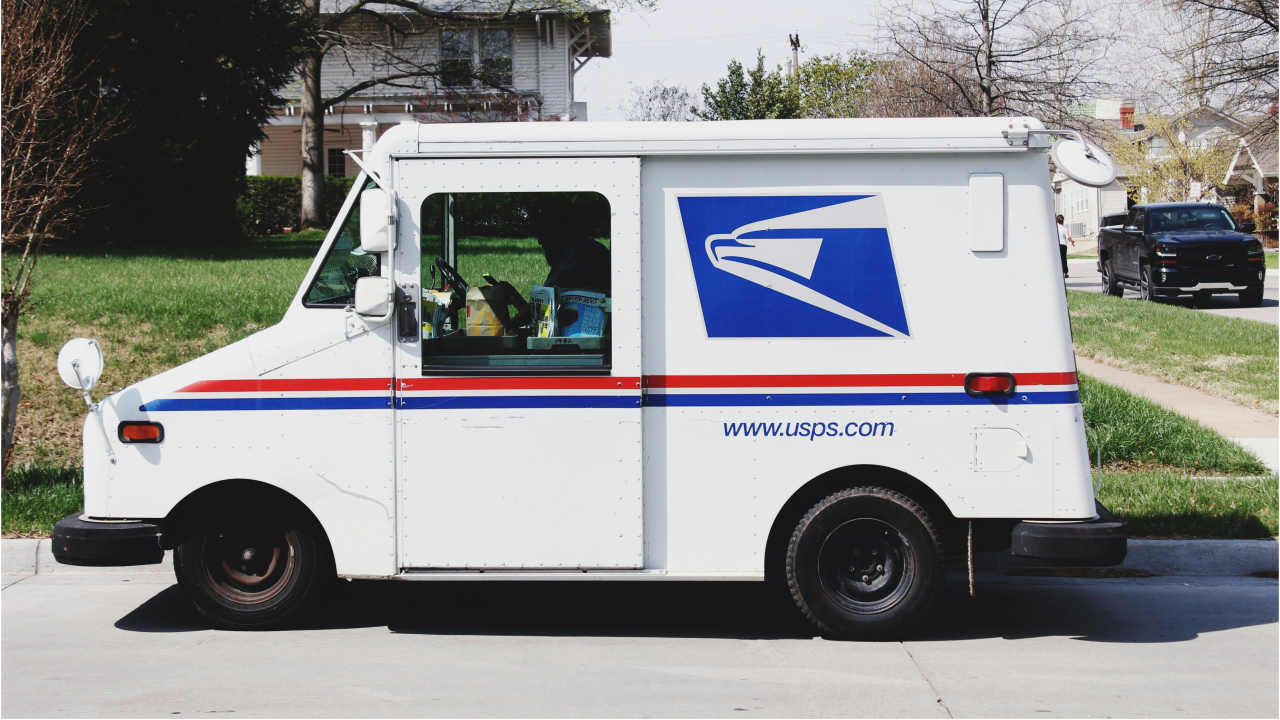
- Any coworking or virtual office provider that receives mail on behalf of clients must comply with USPS regulations.
- As more professionals turn to virtual offices and coworking, they’ll look for providers that offer compliance, credibility and peace of mind.
- From filling out 1583 forms to secure client record storage, discover how to keep your mail handling secure, legal, and efficient.
Accepting client mail? You’re doing more than delivering convenience – you’re stepping into a legally regulated role.
If you’re running a coworking space or offering virtual office services, getting mail handling right is critical to protect your business, prevent fraud, and create a secure, professional environment for your clients.

Mail compliance isn’t optional. And when it’s overlooked, the consequences can be serious. But the good news? It’s easier than you think – especially when you have the right systems in place.
At Alliance Virtual Offices, we’ve guided thousands of workspace operators and clients through the compliance process. In this guide, we’ll break down what you need to know to keep your mail handling secure, legal, and efficient.

Why Mail Handling Compliance Matters
Any coworking or virtual office provider in the U.S. that receives mail on behalf of clients must comply with USPS regulations.
This includes becoming a Commercial Mail Receiving Agency (CMRA) and collecting proper authorization and identification from each client.
If you’re offering mail services in the U.S., here’s what you’ll need to do:
- Register your location as a CMRA by submitting USPS Form 1583-A to your local postmaster.
- Collect USPS Form 1583 from each client, which authorizes your center to receive mail on their behalf.
- Verify and record two forms of valid ID from each client (at least one must include a photo).
- Ensure the client’s Form 1583 is notarized, either in person or via an approved online notary.
- Assign a Private Mailbox (PMB) number to each client for secure and trackable mail management.
Each of these steps must be completed before mail can be legally accepted and processed for a coworking or virtual office client.

Some operators start offering virtual office services without realizing that mail handling is a regulated activity. Others may know the rules but underestimate the effort required to stay compliant – especially when managing multiple clients and locations.
Even small oversights can cause delays or open the door to legal complications. That’s why having a clear, consistent system is essential.
If you partner with a virtual office wholesaler, compliance should be built into their onboarding process.
That means every client who signs up to your service through their platform should be fully compliant, complete with a notarized and ID-verified 1583 form.
Best Practices for Operators
When you acquire new clients directly, you’ll need to take care of CMRA compliance yourself.
If you’re new to this process, we recommend contacting your local postmaster to understand CMRA compliance requirements specific to your location.
Local postmasters are responsible for overseeing CMRA registration in their area, and they can explain the process. Plus, enforcement and interpretation can vary slightly by location. That’s why speaking directly with your local postmaster is often the best first step – they can confirm what’s required in your area and help you avoid missteps before you begin accepting mail.
When contacting your local postmaster for guidance, make sure to specify that you’ll be receiving mail for third-party businesses.

We also recommend speaking with other compliant coworking operators and reputable virtual office wholesalers. At Alliance, we take care of compliance for every new client but we’re also happy to spend time helping center partners get to grips with the process, ready for onboarding your own direct clients.
Once you and your staff are familiar with the proper ID/documentation procedures for mail compliance, best practices include:
- Storing client records securely and maintaining easy access for audits or USPS checks.
- Assigning and labelling PMB numbers clearly to prevent mail mix-ups.
- Regularly reviewing your compliance workflow to ensure no steps are being skipped as your business grows.
Clients rely on you to safeguard their mail and business identity, and a secure, well-run mail system builds trust.
Final Thoughts
Mail handling compliance isn’t just a requirement – it’s an opportunity to stand out. As more professionals embrace virtual offices, they’ll look for providers that offer not just convenience, but credibility and peace of mind.

We get that it’s time-consuming, which is why we’re extending the compliance support we already offer to our center partners.
Currently, we provide built-in tools and in-house support to ensure every client completes the CMRA process, including ID verification and notarization.
We’re streamlining client onboarding and compliance with the launch of Verified – a powerful tool that simplifies CMRA paperwork, reduces errors, and gives your center clear visibility into active client names, business names, and DBAs.
Verified helps you start off on the right foot with every client, keeping your records accurate and aligned with USPS requirements – so your center can operate with greater confidence and efficiency.
Our goal is to make mail handling compliance something that doesn’t slow you down but supports your growth.
As ever, contact us for advice at any time. Our virtual door is always open!