



This article was written by Peter Miscovich for Work Design Magazine.
Systemic integration of workplace leading practices ensures greater hybrid success.

For many global organizations, hybrid work has now become a permanent feature that requires thoughtful and systemic execution of innovative leading practices in order to become successful. Work-life balance expectations are also continually evolving for both employees and their employers, further shaping the evolving world of work.
Organizations that adopt integrated hybrid-leading practices will fully realize enhanced employee engagement and greater employee commitment, which will result in improved organizational and workforce performance combined with superior business outcomes.
Hybrid work success requires developing an integrated systemic approach to hybrid work policies and hybrid workplace practices – including offering greater employee time flexibility, investing in workplace technologies and designing high-quality office work environments.
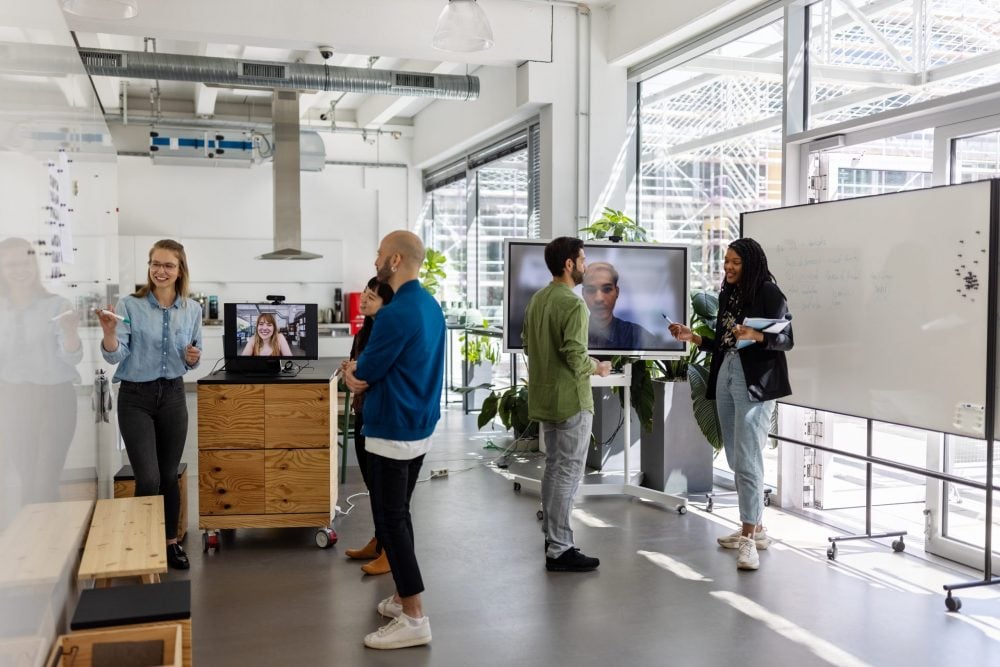
Future hybrid workplace investments should include innovative workplace technologies and systems that fully support the changing and dynamic needs for the behavioral profiles of diverse employee cohorts.
The leading practice hybrid workplace investments like generation workplace technologies combined with high-quality well-designed office work environments and greater employee time flexibility will ensure that the office remains an attractive, desirable and preferred work location for the workers of today and for the workforce of tomorrow.
Uncovering Employee Preferences
Today companies are requiring 12% more time in the office today than in early 2024, according to data on policies for 9,000 employers detailed in workplace think tank Work Forward’s The Flex Index Report, Q3 2025. Yet, recent Gallup workplace data reveals a more nuanced picture. Per Gallup the percentage of remote-capable U.S. employees working in a hybrid work model decreased from 55% to 51% during the first half of 2025, but the percentage of fully on-site workers and fully remote workers each increased by two percentage points. In fact, Gallup data shows that work location trends and remote work statistics have remained fairly stable since early 2022. As per Gallup, hybrid workers now spend 46% of their workweek in the office, or the equivalent of 2.3 days, up from 42% in 2022.
JLL’s 2025 Workforce Preference Barometer research Beyond2 Mandates: The Future of Hybrid Work surveyed 8,700 office workers across 31 countries who are employed in organizations with more than 1,000 staff in a variety of sectors, including finance, technology, manufacturing and public services. The research reveals that 70% of employees globally report growing positive sentiments about their employer’s hybrid policies and practices; however, positive sentiment does not always equal high in-office attendance. The data also shows that employees with a positive view of the office tend to work in organizations with high-quality work environments that balance business needs with employee wellbeing; provide an empowering managerial culture; and offer opportunities for learning and development.
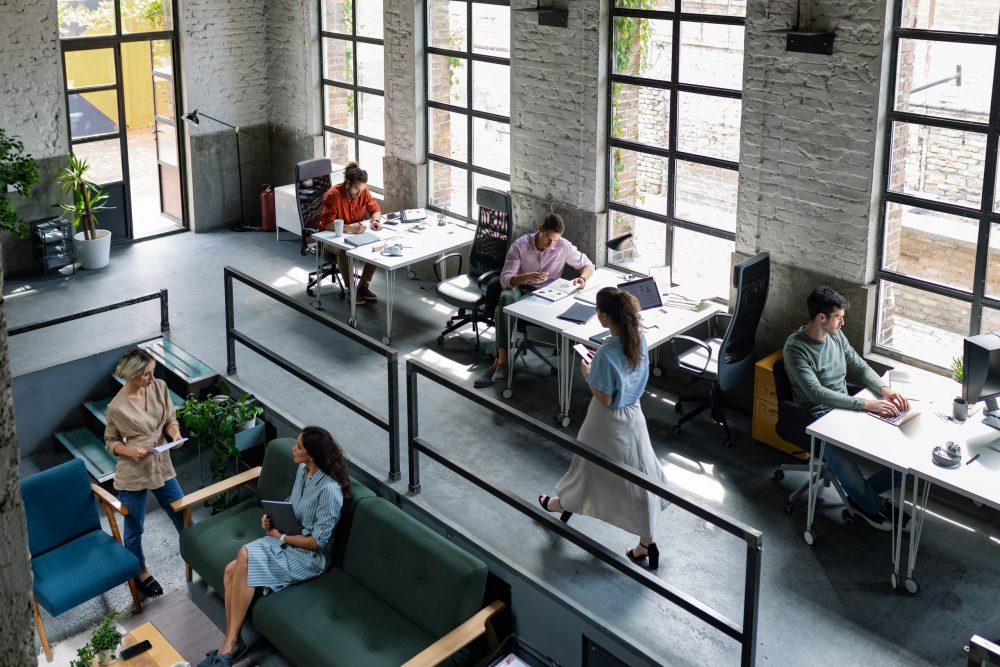
More than 70% of these employees say that their company is a great place to work and report high satisfaction with superior office design, integrative wellbeing services and with strong social infrastructure and mobility support. As JLL’s research shows, employee retention now hinges upon how well organizations respond to the full context of their employees’ lives in terms of improving work-life integration and by providing greater worker flexibility including increased time autonomy to mitigate burn-out risks.
Employers today can use the physical workplace to serve as an integral platform for creating a genuine sense of culture and belonging for employees. An integrated hybrid workplace program will yield superior human performance through enhanced employee engagement, stronger commitment, with greater enthusiasm and energy to help the organization succeed.
Holistic Workplace Integration is Essential
Per JLL research, great office environments do matter, but they must be part of a comprehensive and integrated hybrid work strategic framework that addresses the deeper employee personalization needs as well as the individual development requirements of employees.
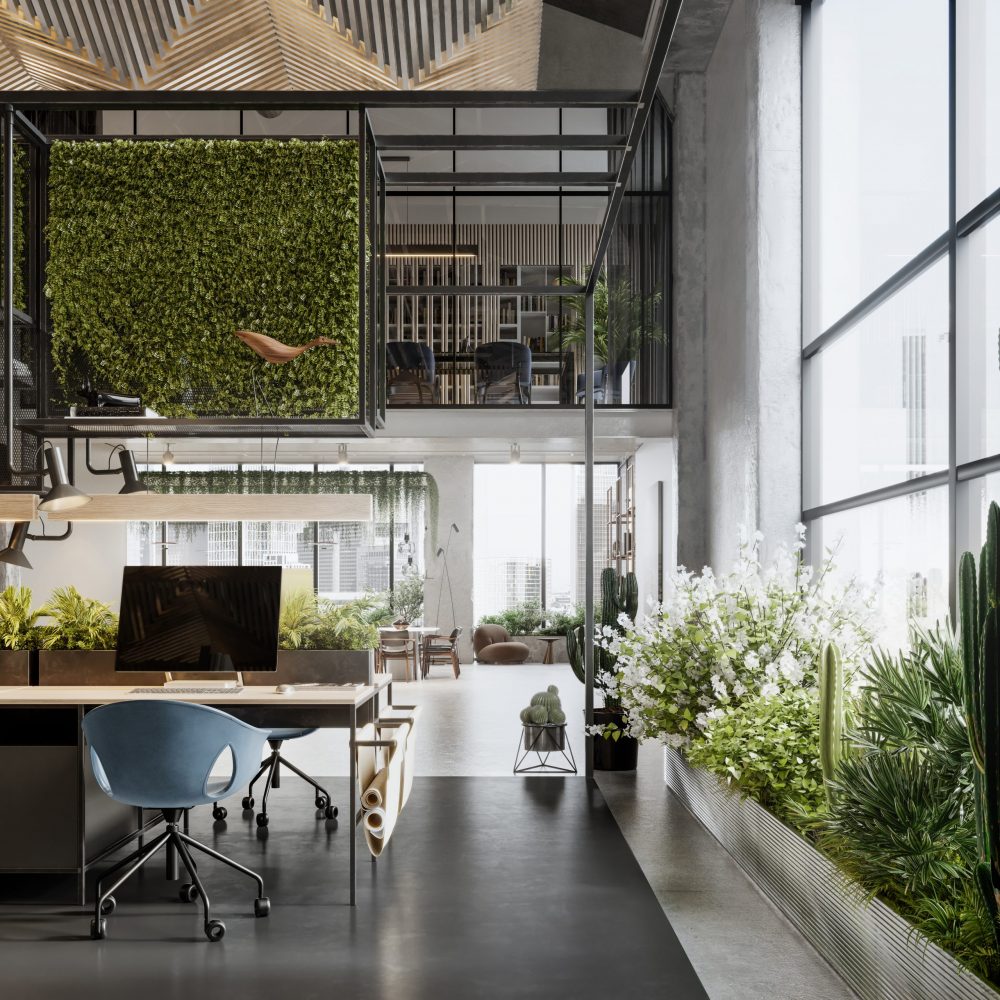
Employees today expect employers to acknowledge their personal circumstances to meet their high expectations for office environments. Work-life integration is now a growing universal employee requirement, outweighing salary for the first time since JLL Research began tracking and surveying global employee sentiment concerning overall workplace behaviors, performance and work-life balance. Employees increasingly desire to have greater “time autonomy” over their working time relative to daily work schedules and how they integrate work and life.
“Flexible time management and time autonomy is becoming a growing priority for all employees across all sectors and geographies.”
While salary and flexibility remain fundamental, employers that focus solely on these factors risk overlooking the emotional dimensions of work—staying energized, having a sense purpose and receiving recognition for their work efforts – all of these factors are critical to sustaining long-term performance and employee retention.
A greater focus upon employee wellbeing can help mitigate the risk of burn-out, which is a persistent threat to employee satisfaction, commitment, performance and long-term talent retention.
Seven Keys to Boosting Hybrid Work Performance Success
Given the investment constraints facing many corporate real estate leadership teams, organizations will need to prioritize those key workplace investments that will deliver positive organization results and achieve key business objectives. JLL’s research reveals seven key leading practices that when integrated together in a systemic manner will create successful and high-performing Hybrid workplace outcomes:
- Make the office meaningful and valuable for employees. Focus upon meaningful in-person experiences and provide compelling reasons to make the commute. Provide tools to help managers coordinate in-office attendance, with neighborhood seating to ensure opportunities to collaborate, strengthen culture, spend time with colleagues or engage in informal learning. In addition to offering a productive place in which to work, the office also can provide opportunities for recognition, community, networking and mentorship. These activities will help draw employees to the office, strengthening company organizational culture and fostering professional growth.
- Create well-designed high-quality work environments. Provide a distinctive workplace with high-quality fit-outs, personalized amenities, nutritious food options and modern social spaces for networking and leadership connection. Allocating seating by neighborhoods for teams or departments can create opportunities for dynamic space management, enabling shared workspaces and providing flexibility for employees to work across different spaces and offices. Adopting real-time occupancy planning, based on forecasted occupants and individual work styles, will reduce the costs of space provision and optimize occupancy rates while improving the employee experience.

- Leverage workplace technologies that enable human performance. Create a technology roadmap to selectively implement tools to support collaboration, make the office more accessible and streamline the office experience. Integrated collaboration ecosystems, augmented by AI agents and robust conference meeting room capabilities, will enable richer real-time interactions across distributed teams in and out of the office. Digital security protocols can be adjusted to allow extended access hours, while smart lighting, HVAC and workplace management systems can be deployed to support changing hybrid flexible work patterns.
- Tailor the workplace value proposition to diverse employee segments. A successful workplace is a journey, rather than a destination, which is why leading practice is to continuously gather employee feedback to inform workplace policies. Then, tailor strategies for different employee segments, whether based on career stage, life stage, demographics, roles, tenure or regions, with relevant amenities and flexibility options. For instance, new parents, senior employees and long-tenured staff have different needs and motivations. Track outcomes and employee contribution, not just attendance.
- Expand flexible working policies and workplace practices. Nearly 60% of employees say flexible working hours would improve their quality of life, but only 49% currently have access to that benefit. Emphasize employee control over working hours, support short-notice leave, and tailor options for the work rhythms of distinct employee groups. For example, allowing some flexibility concerning on-site workday start and departure times can help overcome employee stress about commute times or family care responsibilities. Consider creating pathways for high performers to remain engaged without strict attendance mandates.
- Support holistic physical and emotional and mental wellbeing. Go beyond physical perks to address wellbeing, work-life integration and burn-out prevention. Holistic programs and policies that address both physical and mental wellbeing can help mitigate the risk of burn-out, isolation and disengagement. Attention to wellbeing is especially important for managers, employees who also are caregivers at home and other groups at high risk of stress and burn-out.
- Continuously invest in manager training and development. Managers in the hybrid workplace require deep soft skills to have nuanced conversations about employee’s individual circumstances affecting office attendance. In a Korn-Ferry study, for instance, 77% of frontline workers say that senior leadership does not understand what is happening in the workplace on a day-to-day basis. Managers may require training focused on emotional intelligence, leading remote teams effectively, and awareness of team pressures that can lead to burn-out and dissatisfaction.
Intentional Design Closes the Gap
Now that hybrid work is the workplace standard at many, if not most, companies, organizations must provide a superior workplace value proposal for all essential stakeholders including employees, managers, senior leadership as well as shareholders.
JLL’s research finds that, when the physical office design and associated hybrid work policies are orchestrated with systemic integrated leading practices – focused upon individual employee needs and work preferences – then employees will enjoy coming to the office with far greater levels of enthusiasm, energy and commitment.
Successful organizations can seize this moment by intentionally designing high-performance workplaces that will earn their employees’ trust. These leading practice hybrid work environments will not only become highly desirable talent magnets but these work environments will exceed organizational performance thresholds and deliver superior business results.