


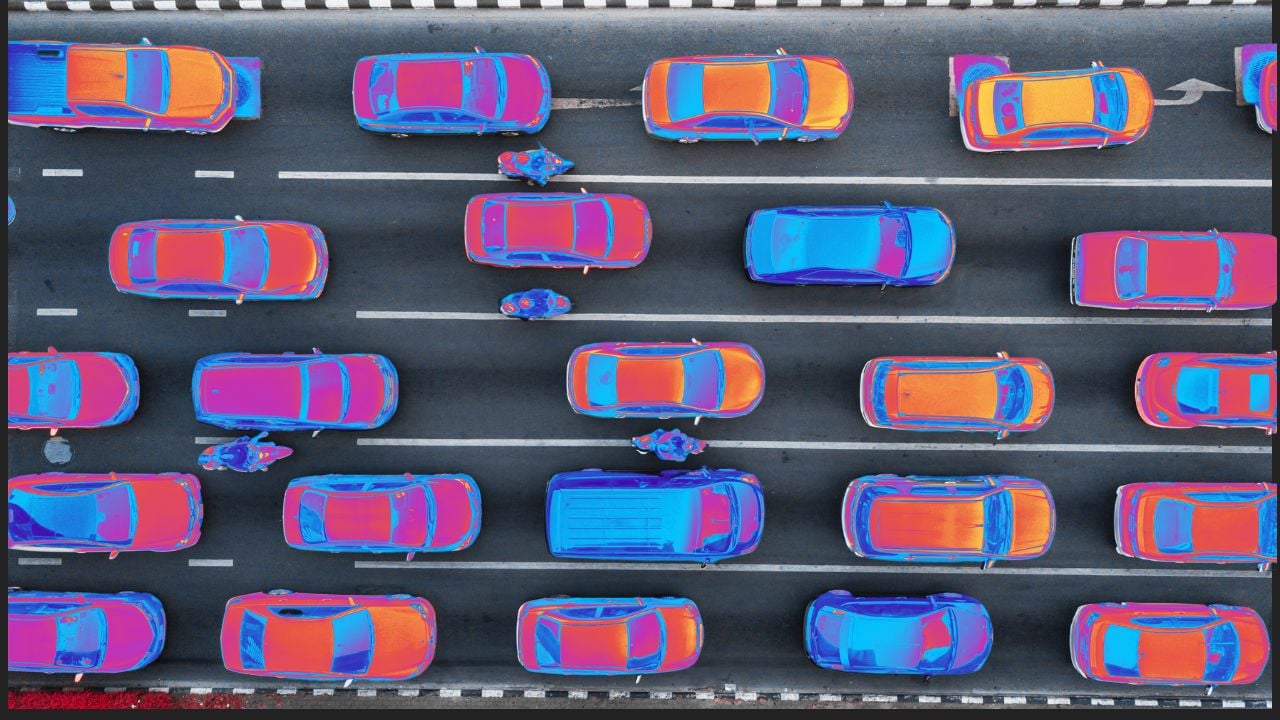
The daily commute has always been a reflection of how we structure our lives around our jobs. And as we edge toward 2026, traffic data reveals more than just congestion — it offers insights into how flexible and hybrid work models are transforming our schedules.
Arity’s latest Driving Behavior Report suggests that we’re not simply reverting to pre-pandemic routines; instead, we’re reshaping when and how we engage with work.

Morning Rush, Evolving Evenings
Mornings are starting to feel familiar again. Rush hour traffic has surged to levels we haven’t seen since 2021, largely due to return-to-office (RTO) initiatives that have brought employees back — at least for part of the week.
Commute patterns now reflect not only work start times but also life logistics, like school drop-offs, that synchronize with the morning flow.

But the way we end the workday tells a different story. The once-standard evening rush is now stretched out over several hours. This shift shows that while companies are dictating arrival times, many workers still have control over when they leave, creating a more flexible afternoon and evening dynamic.
Midweek Magnetism and Flexible Finishes
According to Arity, the majority of commuting is concentrated midweek — Tuesday through Thursday — while Mondays and Fridays see a noticeable drop. This pattern reinforces what many already sense: hybrid schedules often revolve around a central in-office period used for collaboration. Offices are evolving into purposeful gathering spaces, not daily obligations.
This trend echoes findings from Microsoft’s Work Trend Index, which found Tuesdays to be the most meeting-heavy day and Fridays the lightest. The shift shows that employees aren’t rejecting office work; they’re redefining its purpose — favoring intense, strategic in-person collaboration over rigid daily attendance.
As for the journey home, it’s no longer a mass exodus. Workers are customizing their departure times to fit personal needs — whether it’s family responsibilities, errands, or simply personal preference.

While mornings have returned to collective routines, afternoons have become more individualized.
Microsoft has also documented a shift in how people work throughout the day, highlighting the emergence of the “triple-peak day.” In this model, people work in the morning, again in the afternoon, and then log back in for a third session post-dinner.
Arity’s data reflects this evolving rhythm — where the commute marks a pause, not a conclusion. Leaving the office earlier doesn’t mean the workday is over; it just continues in a more flexible format.
Longer Drives, Lifestyle Tradeoffs
Nationwide, both commute lengths and times are increasing. People are traveling farther and spending more time getting to work — likely a result of pandemic-era moves to suburban or rural areas.
Even as companies bring employees back to physical offices, many workers are unwilling to give up the homes and lifestyles they gained during remote work.
Still, local variations exist. For instance, Arity’s data on Microsoft’s Redmond campus shows commute distances have dropped by 18%, and trip durations have fallen 7%, while the number of commutes has jumped more than 20%.
This indicates some employees may have relocated closer to the office due to stricter RTO mandates, opting for shorter but more frequent commutes.
So while many workers are holding on to the lifestyle gains of remote work, localized office policies can still influence where people choose to live.
Redefining the Work-Life Agreement
The broader message is clear: we’re not going back to the rigid 9-to-5, five-days-a-week office culture. Instead, a more fluid social contract is emerging — one that respects employee autonomy and values output over presence.
For employers, the challenge is not to resist this shift, but to embrace it. Office time should focus on what it does best: fostering collaboration, building relationships, and solving problems together. At the same time, organizations need to support asynchronous workflows that allow productivity regardless of time or location. It’s no longer about showing up — it’s about showing results.
Commute patterns may measure cars on the road, but they also map the power dynamics of the modern workplace. The future of work isn’t about dragging workers back into old routines; it’s about enabling them to do their best work within new rhythms they’ve already begun to create.