

About This Episode
In this episode of The Future of Work® Podcast, Frank Cottle sits down with Robert Schogger — Joint Chief Executive and Co-Founder of MetSpace — to explore how the managed workspace model is reshaping the future of commercial real estate. As a pioneer in the U.K.’s flexible office space sector since 1996, Robert shares hard-earned insights on redefining the client-landlord relationship, improving sustainability, and creating value through self-contained, service-first workspaces.
Together, they break down the industry’s most misused buzzwords, challenge outdated leasing norms, and uncover how flexibility is shifting power from landlords to occupiers. From practical design innovations to the deeper economic and environmental impact of managed offices, this episode is packed with strategic takeaways for property owners, investors, and business leaders navigating a fast-changing work landscape.

About Robert Schogger
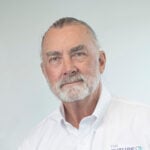
Robert Schogger is Joint Chief Executive and Co-Founder of MetSpace, a specialist in managed offices across central London. A pioneer of the U.K.’s first managed offices back in 1996, Robert now leads MetSpace in creating self-contained, thoughtfully designed workspaces, built on strong partnerships and a service-first approach.
What You’ll Learn
- Why managed workspaces are the foundation — not just a trend — in flexible real estate
- How shifting from “landlord” to “service partner” is changing tenant expectations
- The hidden sustainability advantage of managed office models
- What flexible space really means for occupiers and property owners
- How commercial leasing must adapt in an age of rapid change and uncertainty
Transcript
Robert Schogger
[ 00:00:00,000 ]The power shift is that the landlord is no longer in control. The occupier is in control, and it’s not really a surprise because there are millions more occupiers than there are landlords.
Frank Cottle
[ 00:00:11,620 ] Robert, welcome to the Future of Work podcast. Great to have you today, and I hope it’s a beautiful fall day in London today.
Robert Schogger
[ 00:00:19,760 ] Yeah, thank you very much for having me on your show. Very flattered and honored. And it is raining, as typically it would be. That’s a beautiful day in London. It’s a beautiful day in London, yeah.
Robert Schogger
[ 00:00:34,120 ] Absolutely. Well, it’s just stopped pouring down, but it’s pretty wet outside.
Frank Cottle
[ 00:00:39,390 ] Well, you know, I’m in Fort Worth, Texas, and I’ll give you a little known fact. London has about 28, 29 inches of rainfall a year, mostly light rain. Fort Worth, Texas, where you think of dry and dusty, has 37.
Frank Cottle
[ 00:00:56,710 ] Wow. So we have a ton of water. We in Texas here have big giant forests all around us, just like you do in the UK. And it’s something that most people don’t think of. is it concentrated in specific uh periods of time or is it uh throughout throughout the whole year throughout the whole year it’s interesting uh interesting anyway it’s interesting to me because i live here So we’re here to talk about flexible workspace. Yep. The changes going on within the flexible workspace and the commercial workspace between occupiers, users, or what we call travelers. Overall, you’ve been in the sector for about 30 years. I’ve been in the sector for about 45 years. So between us, we have not just experience, but sage wisdom.
Frank Cottle
[ 00:01:45,910 ] So let’s share a little bit of that. When we talk about flexibility in the workspace, or flexibility, flexible workspace overall.
Frank Cottle
[ 00:01:56,350 ] A lot of people are confused by some branding of different sectors. Yeah. I’m going to take a quick stab at defining the industry so that we have a common position with our audience overall.
Frank Cottle
[ 00:02:13,770 ] And tell me if you disagree with any of this, but I’m going to define the flexible workspace industry as consisting of all providers that combine people, place, and technology into a single bundled product.
Frank Cottle
[ 00:02:32,670 ] delivered with a highly flexible service agreement.
Frank Cottle
[ 00:02:37,330 ] And I’m going to break that down further and say there are different brands within the industry. Flexible workspace includes serviced offices or business centers. co-working centers, incubators, accelerators, a managed workspace, etc. And each of those brands has a different brand promise.
Frank Cottle
[ 00:03:01,550 ] Serviced offices and business centers might be um people placing technology with professional image and services clerical secretarial administrative support etc co-working might be people placing technology but with the promise of business growth through a collaborative community. An incubator might add mentoring, an accelerator might add access to capital to an incubator. And your specialization, managed workspace, combines those three with an emphasis on…
Frank Cottle
[ 00:03:40,960 ] serving the customer through the people, place and technology.
Frank Cottle
[ 00:03:45,810 ] But tell us what the brand promise is for a managed workspace by comparison to the others.
Robert Schogger
[ 00:03:52,670 ] Can I go back to the beginning about defining sector? Because we talk about it a lot in the office.
Robert Schogger
[ 00:04:04,580 ] And it feels like, you know, we talked just off the recording that we’re in the middle of a revolution in the sector, that there’s so much change going on. A lot is happening. And I’ve mentioned it previously.
Robert Schogger
[ 00:04:18,430 ] in other conversations where it feels like this hot trending topic at the moment, if there was a league table, the word managed and flex is at the top of trending topics on how to define the sector. And I think everybody wants to be able to define it. And I’m not sure they want to define it necessarily for the end user that I think is the most relevant person in all of this, the occupier. But they’re trying to define it because they’re possibly trying to establish, put themselves into a particular box that might end up being the most relevant box.
Robert Schogger
[ 00:04:53,280 ] When I say go back to the beginning, when we started out in this, we wanted to try and, we didn’t try to be different when we set up a company called Reflex Managed Offices. We tried to break down exactly what. managed meant and i and i think that possibly or there’s a topic around managed is the term that just the that defines what all offices are because it’s a an office that is looked after by a third party that’s what managed means in the literal sense if you go up so agreed a traditional office that is
Robert Schogger
[ 00:05:34,700 ] run by a you know you take a 20-year lease here in the uk and you have a managing agent that will run it through a service charge well that traditional lease is managed via in a particular way through a service charge and a managing agent so that is a managed office as well it’s just how is it yeah the degree the degree to which it’s managed yeah correct so i i think any office unless it’s a freehold building owned by a company and they manage it themselves i guess it’s still managed correct So, so I think that I, I think that the way from us, possibly the confusion could be is maybe we just need to flip some terms and just say managed refers to the, the, the.
Robert Schogger
[ 00:06:20,140 ] All offices, because they’re looked after. And then it’s how are they managed? Well, you’re managed through a service charge. You’re managed through a met space managed product. And then you’ve got, or serviced, or a co-working. That’s how these companies manage the space. for the occupier um and then flex i’ve i’ve struggled with the word flex because i i don’t know what it depends what i think for the occupier coming out from their perspective if you said to somebody you’re going into a flex arrangement, they might think that the license, the occupier contractual obligation is flexible. When I think of flex, I think of it’s a monthly agreement or a three-monthly agreement.
Frank Cottle
[ 00:07:08,230 ] for met space it could even be like a retail lease that’s participative or a restaurant lease which is oftentimes participative relative to the revenue of the company that’s making the space Yeah, so I think from the Occupy, I think Flex is a little bit misleading when it talks from the Occupy’s perspective because, so Metspace, a Metspace managed floor.
Robert Schogger
[ 00:07:32,140 ] is a self-contained space that all the amenities are inside the space, the breakout area, the kitchen facilities, the booths, the meeting rooms. It’s in a self-contained area. All the services are packaged up and they are sold to the occupier, who pays a single fee. That is a MetSpace managed floor.
Robert Schogger
[ 00:07:54,160 ] There are other people who manage products that might bolt on services after an occupier has come in.
Robert Schogger
[ 00:08:01,490 ] I guess what I’m getting at is, from a definition point of view, I think it’s probably for us. We feel ‘managed’ sits overarching at the top of the tree. And then it’s everything else that’s about how that stuff is delivered. And then, what part of it is flexible? Is it the least arrangement?
Frank Cottle
[ 00:08:17,580 ] Okay. If we accept that, which I’ll accept that, instead of the top of the tree, I’m going to put managed space at the foundation level.
Robert Schogger
[ 00:08:28,180 ] Okay.
Frank Cottle
[ 00:08:29,390 ] Okay, because what you’re talking about is the core basic upon which many other models actually are built. Yeah. When you service office, they may add this or they may add that on top of managed. And I would have a tendency to agree with that, by the way, having watched managed space evolve over the last 30, 40 years, different tweaks to the model because everything is. You know, everybody says I’m unique. No, you’re not. Everybody else is unique. I have… I don’t know.
Robert Schogger
[ 00:09:04,590 ] Yeah, we do. We do. We have orange chairs in our meeting room and we do exactly that.
Frank Cottle
[ 00:09:10,030 ] Uh, I think it’s the foundational level. There are even brokerage firms within the industry that offer managed workspace, where they are taking the occupier, as you call them, on a short-term basis, and the provider, who isn’t actually the landlord, but in many cases is a sub-letter. Has two years left, three years left on fully furnished, fully kitted out, fully demised space. And they’re managing that process between those two parties. And they refer to that as managed space.
Robert Schogger
[ 00:09:45,470 ] Yeah.
Frank Cottle
[ 00:09:47,230 ] So that’s a specialty brokerage item now that we see.
Robert Schogger
[ 00:09:50,530 ] Yeah, yeah, yeah. They have that here as well. It’s like the bolt-on services.
Robert Schogger
[ 00:09:54,560 ] I think the occupier wants the pressure taken off of them so that they can run their business. Short-term, especially.
Frank Cottle
[ 00:10:02,680 ] A lot of times, what you call an occupier, by the way, we don’t think there are occupiers anymore. They’re clients. We refer to them, everybody today.
Frank Cottle
[ 00:10:13,960 ] And we have been doing this since about 2015 or 16, we refer to everybody as travelers.
Robert Schogger
[ 00:10:20,060 ] Okay.
Frank Cottle
[ 00:10:20,940 ] Because of the short-term nature of the flexible workspace sector overall and the reality that everybody today, and I’ll use yourself as an example. I don’t know this, but I’m going to surmise that you work from two or three different places during the day or during the week. A different facility, a different type of facility, etc. So you are moving around constantly in your work.
Frank Cottle
[ 00:10:52,290 ] and have for for many years so i think of the arm the the customer or the client the end user is so migratory today that really how how often and how long does everybody actually sit at their desk Big companies are saying it’s about 40, 42% of the time. The rest of the time, they’re somewhere else.
Frank Cottle
[ 00:11:15,820 ] So that’s, again, another element to throw into all of this that you have to manage.
Robert Schogger
[ 00:11:23,520 ] it’s part of the process correct yeah and i think it’s and it’s it’s as you say everyone wants to claim to be the the do something differently be the pioneer be the first one to do this but i’m not sure how relevant that is to us as a company. It’s just about doing what we do as best we can.
Frank Cottle
[ 00:11:46,320 ] I think the quality of the execution is much more important than the…
Frank Cottle
[ 00:11:52,870 ] Being first, you know, pioneers uh get stuck full of arrows. It’s the guys that put the railroad to make all the money and all the different so— you’re right.
Robert Schogger
[ 00:12:04,116 ] So, interestingly, you know, you’ve talked about pioneers. I think we said that Thomas Edison, I think I read that you know, is credited everyone knows who he is— the man that invented the everlasting light bulb, but not the everlasting one you know, the commercial light. But you know, Humphrey Davy, Joseph Swan, I think was Bowman, Lindsay or Lindsay Bowman.
Robert Schogger
[ 00:12:26,860 ] They were at it 75 years before him and contributed to him being credited with being the pioneer. So, I don’t, you know, I’m not sure being a pioneer is necessarily the be-all and end-all. I think it’s…
Frank Cottle
[ 00:12:42,030 ] And I think Thomas Edison, while he’s famous for, because he brought it out into the public more aggressively, his own quote is, ‘I didn’t invent anything. I just learned how to fail a thousand times before.’
Frank Cottle
[ 00:12:55,380 ] So that’s a lot of times what pioneers do. They experiment, they explore, they determine new ways to do things. But it includes a very exciting path sometimes.
Frank Cottle
[ 00:13:12,680 ] That’s not always a success. Uh, each time, you know, you do.
Robert Schogger
[ 00:13:18,560 ] You’re—you’re—you—you. So you—you— you now sort of represent the client side of things. The occupier, the traveler, the client. That’s your.
Frank Cottle
[ 00:13:28,870 ] We have two primary companies. One, AllWork . space, where we’re speaking from today, which is a digital media company that in many ways is the voice of the industry. We have millions of readers and listeners.
Frank Cottle
[ 00:13:46,330 ] Yeah, we’re able to get a lot of messaging out. The other company we have, Alliance Virtual Office, represents the customer. We are the customer ourselves. And think of that company as being you and I in the industry. That company is, I’m more like a…
Frank Cottle
[ 00:14:07,620 ] You actually have the space and the, et cetera, and I have the customer. We service that customer jointly in our model, which is, again, unique. We established that model as pioneers back in the late 90s, early 2000s.
Robert Schogger
[ 00:14:25,290 ] Right.
Robert Schogger
[ 00:14:26,750 ] Yeah, I mean, it’s interesting, is it? Because we talk a lot. I mean, it’s when you’ve been doing business for as long as we have, and there are people out there that have been doing it longer. But I think the themes are the same, that recognizing for us at MetSpace, it’s…
Robert Schogger
[ 00:14:45,690 ] recognizing who our customers are and clients, should I say, customers or clients, and we consider landlords who we partner with. As our clients, we consider the occupier as a client. We consider the supplier as a client. And the balance is about the relationships involved in.
Robert Schogger
[ 00:15:08,310 ] In all of that, because that’s what you’ve got to consider.
Frank Cottle
[ 00:15:11,390 ] Well, yeah, it takes everybody. And really, the primary role that we all play is coordinating with the other parties in order to successfully deliver the service on a comprehensive basis. And I think the changes that you mentioned that are going on, 20 years ago, if you and I started a company, we’d need a good product and access to capital so we could scale it. Today, we want to build that same company. We need a good product, access to capital. But our business model has to be much more flexible than it was 20, 30 years ago. And that’s where the contribution that you’re making comes to play on the entire industry. You at a foundational level, you start giving customers.
Frank Cottle
[ 00:16:06,730 ] the capacity to have more flexibility and therefore more access to capital because they have a reduced debt on their balance sheet, as an example, through differences in terms.
Robert Schogger
[ 00:16:18,810 ] Yeah, I mean, but the power shift, I guess. has changed. I mean, if you look at what everything has happened in life. From a consumer perspective, how consumers buy stuff, you know, the mobile contracts, people aren’t fixed in for years and years. This is only just, and this is now mirroring and echoing what’s happening in that. So businesses…
Robert Schogger
[ 00:16:45,280 ] The power shift is that the landlord is no longer in control. The occupier is in control. And it’s not really a surprise because there are millions more occupiers than there are landlords. There’s a finite amount of property and there’s a… An infinite number of new companies starting up all the time, always looking to grow, change, and evolve, at different speeds. Contract, subtract, you know— it’s…
Robert Schogger
[ 00:17:17,260 ] It’s interesting. It’s just fascinating to be in the middle of it and watch it happening.
Frank Cottle
[ 00:17:21,200 ] Well, I think you’re right when you say the landlords are changing.
Frank Cottle
[ 00:17:26,800 ] And I would say that, in my observation throughout the industry, the property companies have always been fairly flexible. They like making deals. They like doing new things because they’re very yield-focused, and flexibility creates a higher yield for them in many cases. However, the financial institutions that support them have been very slow to change. they’re always required a stronger covenant and more concerned with covenant and stability than they are with yield yeah and so i think that that element of the property side of the business has now made the recognition and change as well. And that is allowing the property companies to be more flexible. or to be more creative. And all you have to do is look at the number of property companies that have directly entered the flexible workspace sector themselves directly without a third party.
Frank Cottle
[ 00:18:31,480 ] And that tells you right there that the move is on. The change is definitely going forward.
Robert Schogger
[ 00:18:39,090 ] Well, maybe it’s the risk, isn’t it? They saw it as risky and now they’ve accepted that maybe it’s not so risky. It’s actually quite good to diversify your portfolio to more. You know, 10 occupiers instead of one occupier.
Frank Cottle
[ 00:18:56,070 ] Yes, absolutely. In fact, I go back into the, when was it? It was the mid-90s, mid-early 90s even. I was in a meeting with… three of the largest property companies in the US. And I would just fly on the wall. I was a young guy at the back of the room. And one of those fellows who owned a company called Equity Office Properties, which is now owned by Blackstone, a fellow by the name of Sam Zell. The other two gentlemen looked at him and said, ‘Well, Sam, what do you do with this flex stuff? You’ve got this thing called Smart Suites.’ What is that? He basically was building at 58 flex centers, serviced office centers in various buildings that he owned around the country. And he said, well, it’s real simple.
Frank Cottle
[ 00:19:43,470 ] I want to be able to service the entire life cycle of the customer. Yeah, which makes sense. Oh, that’s not… Old guys with even more gray hair than Sam had at the time. But that’s the reality of it. Property companies have…
Frank Cottle
[ 00:20:02,500 ] You had to change buildings so many times to upgrade, to do this and that. And today, the property companies do want to service the entire life cycle of the customer, and they’re using the flexible workspace sector. Managed space, such as you do, is a great entry spot. on through the business center serviced office co
Robert Schogger
[ 00:20:22,770 ]-working incubators accelerators even common kitchens that are out there now um media centers um who address the the customer base the way they work rather than just based on the space that they have and that’s a fundamental change that i think is is going on yeah and i think and i think i think you’re absolutely right and i think the the challenge is that what seems to be happening especially in the last few years is the industry has woken up to it the i’m going to call it the traditional model of agents and owners have woken up to it And they’re not quite sure. And now everyone’s got their version of it. And people like you and I are sitting there going, it’s not like we’ve been doing it for a while. So you need to do what we say. But it’s almost like…
Robert Schogger
[ 00:21:19,970 ] we deserve to be listened to because of the experience that we’ve got because we’ve been doing something for 30 odd years and there is a right way to do it to make sure that all the customers involved in the in the industry and what we’re doing is happy. And that’s what it’s about, getting the balance in the relationship between all the parties and making sure everyone’s happy.
Frank Cottle
[ 00:21:45,420 ] Yeah, in many respects, you’re talking about industry stability. And if you look at the classic property companies… um or the the marketplace city by city economy by economy it’s very much been a boom and bust industry yeah uh and when you add flexibility as a provided element to the customer, to the occupier, as you say, you flatten out that curve, those boom and bust. Absolutely. Yeah. So you actually achieve more stability, even though you’re short term or a different kind of business cycle that you’re dealing with.
Robert Schogger
[ 00:22:27,720 ] Yeah, absolutely. You provide a bit of a cushion. I mean, nothing goes up forever. Nothing goes down. If you work on the basis that there is a market, there is a market somewhere and it’s not terrible. I mean, we talked in the prequel about the sort of the…
Robert Schogger
[ 00:22:45,620 ] bad times that we’ve had over the years, you know, Twin Towers, you know, 2001, 9-11, 2007, you know, there were periods when things were bad, but they didn’t, they weren’t, there was no activity for a short period of time. But when the activity started, if you’ve got the flexibility and the ability to be Uh. to not be intransigent with your product. You can weather those storms and benefit when it starts to take off as well because…
Frank Cottle
[ 00:23:16,310 ] Yeah. And just take any national economy for just a second and say there’s two sets of rules. In the first case, the set of rules is… um, all companies all occupiers— you say— must sign 10-year leases. Does that accelerate or even slow down the actual economy, versus an economy next door, which says, ‘All companies that want to grow, that want to take space, may take space from one month to one year to three years to 10 years.’ Which economy is going to grow faster? Forget the property companies. The entire economy grows faster when it’s allowed to move without excess debt, without excess commitment? Because, you know, who knows what’s going to happen tomorrow? Nobody. So to ask someone to invest 20 years out on how much space they need? Well, what if AI is going to replace half their employees?
Frank Cottle
[ 00:24:20,450 ] How much space does that take? What if we run into an entirely new industry that’s going to rapidly expand, but on a huge geographic basis instead of concentrated in a city center? What if something like a pandemic is going to come along and say, ‘We don’t want a community anymore; we want to be in the suburbs or the secondary markets, not the city center.’
Frank Cottle
[ 00:24:44,650 ] The traditional model doesn’t work for all those changes. And we have to admit we’re in an accelerating world.
Robert Schogger
[ 00:24:52,580 ] Yeah, and I think for us, the education for our landlord clients who we partner with on these hotel-style operator agreements is that don’t be frightened of the change, embrace it, because we… We are experts. We’ve got experience in this sector and the occupier client will pay more money because you’re…
Robert Schogger
[ 00:25:22,000 ] packaging up and dealing with the things that they don’t want to deal with. People are prepared to pay a premium for something they don’t want to deal with. So do it the right way. You can take advantage of it financially because there is…
Robert Schogger
[ 00:25:35,650 ] there’s value in it. And if you treat the Occupy in the right way, they’ll actually stay for as long a period of time as you might have got if you’d assigned them conventionally. And you would have…
Frank Cottle
[ 00:25:47,390 ] benefited from the service revenue if you like the the managed service revenue absolutely true over on the virtual office side of things which is is sort of the entry-level port uh for all flexible work um we have many clients that have been with us for 10 12 years wow so i think that speaks for itself to show you that what you suggested is true.
Frank Cottle
[ 00:26:10,950 ] Let’s go to a little bit different direction.
Frank Cottle
[ 00:26:14,030 ] What do you think the sustainability is a huge topic today?
Frank Cottle
[ 00:26:20,590 ] Inability is a huge topic. How does the managed space solution? Contribute to a higher level of overall business sustainability, not just operationally, but in terms of the environment through the differences in the way build out is done and the different things that are being done right now.
Robert Schogger
[ 00:26:44,270 ] Well, I mean, we will always use, we’ll always upcycle and recycle. So, you know, if we’ve got to build meeting rooms, we’ll try and reuse all the existing products that are there in terms of the lighting, improve the lighting, flooring, to make them more efficient from a heat, you know, from a protection of…
Robert Schogger
[ 00:27:05,220 ] um um for the offices and for but but i think the biggest thing is probably from the occupiers and the landlord’s point of view is they’ve got these things called epcs energy performance certificates And London, the UK, that’s London specifically because that’s our market. They’ve got an issue because a lot of buildings, these old buildings… of failing the energy performance so i mean by by making some small changes like improving the quality of the lighting and the flooring and upgrading you know to removing the old gas boilers and radiators you can make the space better um but It’s difficult. I mean, sustainability is, again, is probably second to managed on the trending topic charts at the moment. And I don’t.
Robert Schogger
[ 00:28:02,260 ] I don’t think anybody actually knows what will be sustainable. You know, you’ve got offsetting carbon and all that sort of stuff, but it’s very difficult to know where it’s all going to head.
Frank Cottle
[ 00:28:14,620 ] Well, you know, I think one interesting fact, though, is if…
Frank Cottle
[ 00:28:20,790 ] I’ll use the United States rather than London and the UK as an example and I’ll use Los Angeles in Los Angeles. It’s very easy for me to get a one-year conventional lease.
Frank Cottle
[ 00:28:36,300 ] Most common lease would be a three-to five-year lease. A ten-year lease is if I’m going to take large tracts of space. But every time someone moves in and out of a five-year space, certainly a ten-year space, they completely gut it and reorganize the space.
Frank Cottle
[ 00:28:56,610 ] all that stuff goes into the dump right and all new stuff goes in in the flexible workspace model i look at facilities that have been built 10 15 20 years ago with a lot of clients coming and going continually where the space itself, which was very intelligently designed, maybe 10% of it has been redeveloped during that time period instead of 100% twice. And so the business model itself, we might… Again, I know we’re sort of a thrifty industry. We generally get good value for money, though, in terms of buying quality. So we might buy Herman Miller furnishings, hot ends, et cetera. But every three years, five years, instead of…
Frank Cottle
[ 00:29:52,940 ] use their refurbishment program, yeah.
Robert Schogger
[ 00:29:55,460 ] No, I think that’s a good observation.
Frank Cottle
[ 00:29:57,700 ] These little elements come into play that a flexible workspace, whether it be managed or co-working, one end or the other, really is a more sustainable use of the space and the resources itself than most conventional space is.
Frank Cottle
[ 00:30:20,690 ] And I think that that’s an important contribution that we make from the flex side as well.
Robert Schogger
[ 00:30:25,750 ] I think that’s a really good observation. I guess I was thinking about it just from a, but you’re right. I mean, we don’t, I mean, we’re seven, eight years in, we’ve never changed our furniture.
Frank Cottle
[ 00:30:37,190 ] We’ve never needed to change it because we buy high-quality items at the beginning because you know it’s going to get used yeah uh sort of thing and you know that’s important and and there are materials too when you buy that you can specify, anybody, not just our industry, that come from a more sustainable structure and all of that. But I do think the business model is more focused on evolution than revolution, and we don’t throw things out and replace them. We keep things for a little longer cycle, and then we refurbish as opposed to toss it out the door.
Robert Schogger
[ 00:31:22,000 ] yeah i think that that that’s something and do you your virtual just come back to your sorry to go back to something you mentioned your virtual office clients have been with you for 10 12 years do you is there like a percentage of virtual office clients that might start as virtual office clients that then become, you know, we want to take an office. Let’s then go to coworking because we don’t want to commit. We want a monthly membership. And then, you know, that, that natural sort of progression that a business would take when they’re starting out. Did you see a lot of that?
Frank Cottle
[ 00:31:58,400 ] Before we were running the Alliance Virtual Company, which is, as I said, is more of a SaaS-type company.
Frank Cottle
[ 00:32:08,110 ] manages the process. But we built buildings that were run as executive suites or business centers. And then we also took lease spaces and managed space such as you do. And in our experience, what we found is the formula was fairly simple. Every year we had about a third of our space churn.
Frank Cottle
[ 00:32:34,150 ] Okay. And of that third, about half the customers just disappeared.
Frank Cottle
[ 00:32:41,060 ] They died. They got bought by somebody. They moved to another country. They just disappeared. But the other half of the customers took an amount of new space from their growth equal to the total amount of space that we had.
Frank Cottle
[ 00:32:58,080 ] right okay track we track them through a brokerage relationship that we had um and so that incubation capacity whether they came in as a virtual or as a office tenant or as a space tenant of some sort a user of some was a tremendous incubation factor and 90 of the time what was their choice to stay in the building where we They’d move out of our space and up two floors and take their own space. And the reason they liked to do that was twofold. First, they didn’t have to change their address. That was nice. Second, they could still rely on some element of the service space. They knew when they built upstairs, and this goes to sustainability— they could have a smaller footprint. They didn’t need a reception area. Their clients would come into our space and redirect it. They didn’t need two conference rooms. They only needed one small one.
Frank Cottle
[ 00:33:58,400 ] They had a boardroom downstairs. So the effect of redesign was 10–15% more efficient, which reduced their cost and also made higher use of the space overall. So it was a more efficient space.
Frank Cottle
[ 00:34:15,580 ] These are the numbers that we had after 20 some years of operating facilities. The incubation number on the virtual office clients is a little higher.
Frank Cottle
[ 00:34:28,210 ] at the front end, but we don’t track them after they’ve taken the space.
Robert Schogger
[ 00:34:32,050 ] Yeah, of course.
Frank Cottle
[ 00:34:33,330 ] I’ll just assume it’s the same. But there is a high incubation factor. And you hope that it’s… You hope that you provide a platform that people… can use its efficiency to help grow their business?
Robert Schogger
[ 00:34:51,830 ] I think it’s undoubtedly a platform. I mean, I think it’s impossible to measure. because you don’t know the effects unless you have some kind of controlled experiment, but the businesses that you… have helped grow by taking the pressure off them of having to worry about everything other than growing their business and there is you know the pressures of of having to find a space find a lawyer find a surveyor manage manage the cleaning manage the all the other stuff the broadband that that’s that’s something to do and if you are and and and you know i i run a business so i am a I have a business, I know I run a managed space business, but I know what the pressures of running a business do. So if you’ve then got to worry about all the things outside of the specific thing that you do and how you make money.
Robert Schogger
[ 00:35:54,220 ] It’s a horrible thing. And as you know, it’s no straight line business. It goes up and down. Good days, bad days, good months, bad months. And you want to be focusing on how to flatten out that period as a business owner.
Frank Cottle
[ 00:36:07,000 ] Well, no, I think that’s right. And capital tries to be extremely efficient.
Frank Cottle
[ 00:36:14,000 ] as it invests in companies. And use the example, and I’ve used this before, but I’ll use it right now, is that you’re going to start a company and I’m going to start a company. And so I go in and we’re both going to go to a VC and we both need a million dollars.
Frank Cottle
[ 00:36:29,400 ] I go to the VC and… You know, the first question they ask, what are you going to do with this money? Oh, well, I’m going to get an office space and I’m going to hire a receptionist. And I got to get out the space and get some imaging equipment. And then I’m going to hire a couple of engineers who are going to build our software.
Frank Cottle
[ 00:36:49,090 ] And you walk in.
Frank Cottle
[ 00:36:51,690 ] And say, what are you going to do with that money? He says, oh, let’s see. I’m going to move into a managed workspace, hire some engineers.
Frank Cottle
[ 00:36:59,070 ] Yeah. Who’s going to get the capital? You are. You’re going to get the capital. And so if you think of it as a place to grow your business, it starts with the business model itself being more efficient to the capital investment that’s being made. It’s not just more efficient to the convenience of running it. It’s more convenient.
Robert Schogger
[ 00:37:21,970 ] convenient and more efficient from day one yeah and then and then if you overlay that with the experience that you have gathered over the years of how to how to get you you’ve persuaded the client to take the space but then you’ve you’ve had the experience to know how to get that client to stay in the space by providing them with the the best possible service you can provide them without compromising your boundaries. And that’s the key. Just letting them know you are there to support them.
Robert Schogger
[ 00:38:00,700 ] in the best possible way for them to run their business and they’ll stay. They’re not going to leave you unless you’re a bad landlord or they’ve outgrown the space. They’re just going to continue.
Frank Cottle
[ 00:38:11,710 ] Well, you you hope you help them to outgrow the space, yeah yeah. Overall, that was one one of the goals. Is there any particular thing that you’d like to comment on or make as a as a comment as we start to close down?
Robert Schogger
[ 00:38:28,700 ] It’s nice to talk about it. It’s quite refreshing to talk about it with someone as experienced as yourself.
Frank Cottle
[ 00:38:34,120 ] Well, trust me, you don’t want my gray hair or lack thereof.
Frank Cottle
[ 00:38:39,980 ] But, you know, one thing I will basically say is that. Our whole sector, and I think managed workspace, as an entry point, in particular, for a lot of different profiles of companies, is not just flexible, but it’s the best value for money. That you can possibly get if you’re starting a company or running a company or moving a company or exploring a new marketplace. All of those elements that have to do with growth that the managed workspace model really works for that. And I thank you for sharing it with us.
Robert Schogger
[ 00:39:16,150 ] Thanks very much for having me on. It’s good to talk about what it is we do without having to try and persuade the person listening that we know what we’re talking about.
Frank Cottle
[ 00:39:32,870 ] Well, after 30 years, I think you know what you’re talking about.
Robert Schogger
[ 00:39:36,250 ] Thank you. No, thank you very much for having me on. I really appreciate it.
Frank Cottle
[ 00:39:40,310 ] My pleasure.