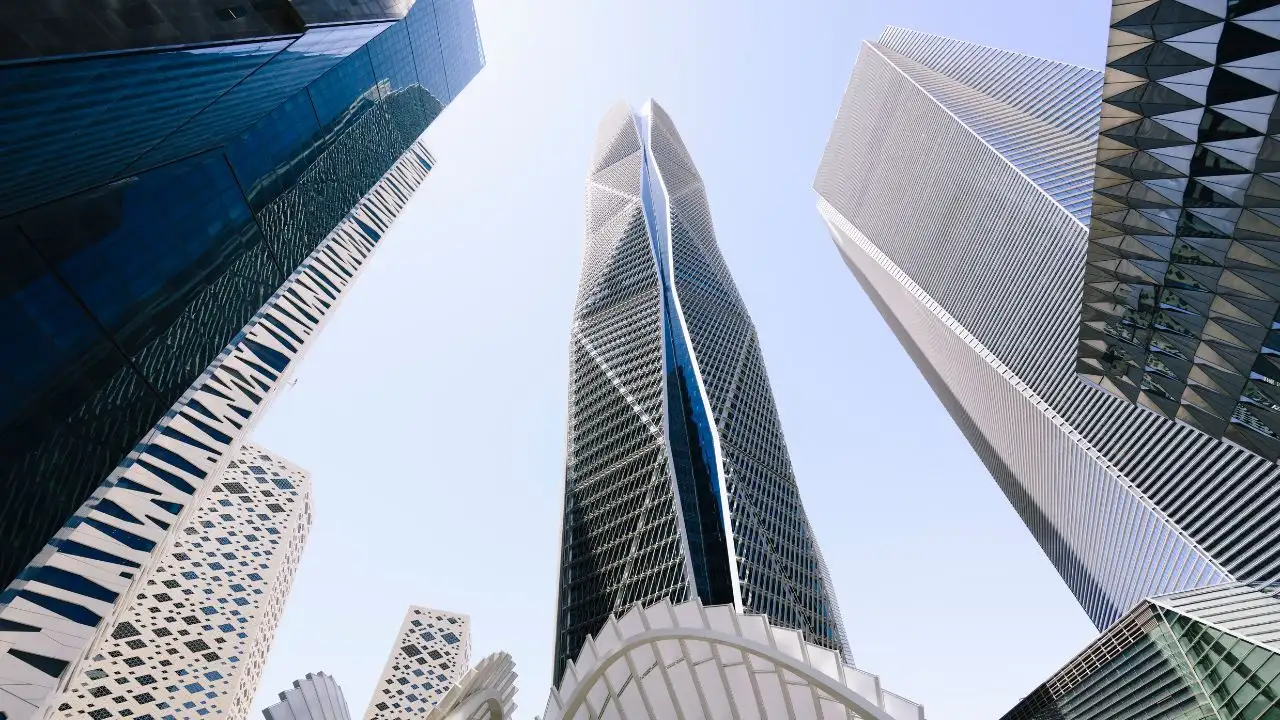
Saudi Arabia’s ambitious city-sized project, The Line, promised a radical reimagining of work, living, and entertainment. Conceived as a linear megacity running over 100 miles and designed to house 9 million people, The Line aimed to integrate offices, residences, entertainment, and essential services within minutes of one another.
Its developers envisioned a future where “remote work” would take on a new meaning: living and working in the same high-tech, sustainable environment, with no cars, zero carbon emissions, and nearly all daily needs within walking distance.

Vertical office floors, digital infrastructure, and high-speed transport were all meant to support a workforce that could live, work, and socialize in one continuous ecosystem — creating an unprecedented model for urban work-life integration.
From Bold Experiment to Precarious Prospects
A recent report from Morning Brew suggests that The Line’s role in shaping the future of work is now far from guaranteed. Neom, the $1.5 trillion development under Saudi Arabia’s Public Investment Fund, is being scaled back amid massive cost overruns. Construction of key projects — including luxury hotels, the Trojena ski resort, and other lifestyle infrastructure — has been paused or postponed indefinitely.
The Line itself may shift its focus toward data centers rather than a full city-scale live-work-play environment, raising questions about how much it will actually transform how people work.
The project’s original ambition — to create a self-sustaining, hyper-integrated workplace community — now faces a more precarious future. Plans to host hundreds of thousands of workers within a single building complex, with seamless access to services and leisure, may be replaced with a narrower focus that prioritizes digital infrastructure over physical community.
Why Live-Work-Play Communities Struggle to Take Off
The challenges facing The Line are not unique. Attempts to combine work, living, and play under a single roof or in a single community have repeatedly stumbled. Projects like Arcosanti in Arizona, envisioned in the 1970s as a self-sustaining experimental town, now house a fraction of the planned population and serve more as tourist attractions than functioning urban communities.
Key hurdles include:
- Economic viability: Creating enough jobs for residents across professions — especially non-desk roles — remains difficult.
- Social dynamics: High-density, self-contained communities must balance hierarchy, equity, and inclusivity, which is challenging in practice.
- Lifestyle appeal: Sustaining a full spectrum of services, leisure, and social infrastructure in one location often proves more expensive and logistically complex than planners anticipate.
The pattern is clear: while the idea of integrated live-work-play environments captures the imagination, sustaining them over time and at scale has proven remarkably hard.
For The Line, the gap between futuristic ambition and practical implementation is widening. Its role as a beacon for the future of work now seems uncertain, highlighting how even the most technologically advanced urban experiments struggle to reconcile vision with reality.