




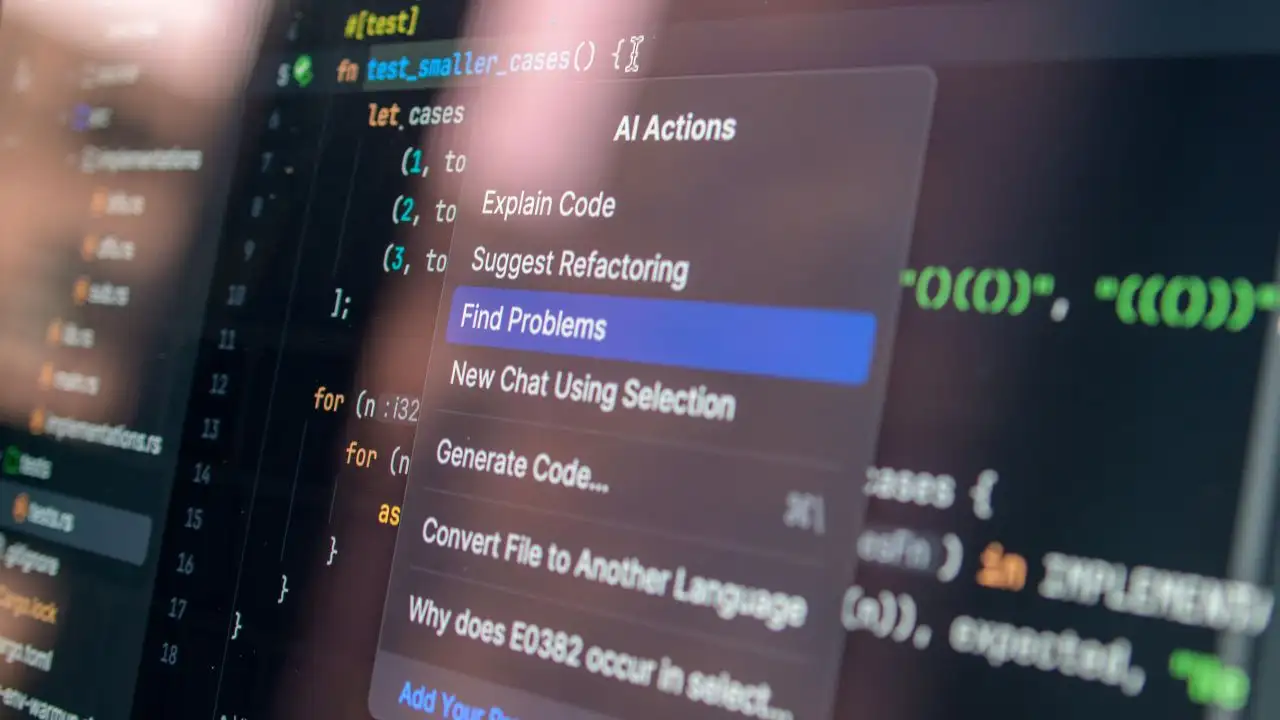
Artificial intelligence is now embedded in the daily workflow of most engineers in the United States, yet deep skepticism remains about its reliability.
An Omni Calculator survey of over 400 engineering professionals and students found that 86% are using AI tools in their work or studies. But only 6% say they trust AI-generated results without hesitation.

Nearly nine in ten verify outputs before relying on them, and 5% say they do not trust the results at all.
The findings highlight a profession embracing AI for speed while maintaining strict human oversight in areas where errors can carry legal, financial, and safety consequences.

Productivity Drives Adoption
Engineers are primarily turning to AI to improve efficiency rather than technical precision.
Seventy-one percent say AI saves time and reduces routine workload. Only 9% believe it improves accuracy.
The data suggests AI is viewed as a productivity assistant, not a substitute for core engineering judgment.
More than half of respondents, 52%, report performing quick manual calculations to check AI outputs. Another 29% cross-reference textbooks or industry manuals. Verification remains standard practice.

Trust Remains the Barrier
The survey found that 14% of engineers trust AI’s reasoning process itself, even though only 6% trust results without verification. That distinction points to a core concern: AI can generate logical-sounding explanations that are technically flawed.
Accuracy and reliability top the list of concerns, cited by 85% of respondents. Data privacy follows at 59%, and ethical or safety risks at 53%.
In a field where small errors can lead to structural failure, financial loss, or liability exposure, AI’s “black box” nature remains a critical obstacle to full confidence.
A Collaborative Model Emerges
Rather than resisting AI, most engineers envision a collaborative model. AI is expected to handle repetitive, data-intensive, and exploratory tasks, while humans retain authority over safety, compliance, and final design decisions.
The generational outlook varies. Fifty-nine percent of Gen Z respondents express optimism about AI’s role in engineering. Millennials appear more cautious, with nearly half anticipating significant transformation in the profession.
The Future of Engineering Work
The survey suggests that AI’s role in engineering is expanding, but not replacing human expertise. The profession is integrating AI carefully, building verification into daily workflows instead of removing it.
For now, AI is accelerating engineering processes. Trust, however, is still earned calculation by calculation.