



About This Episode
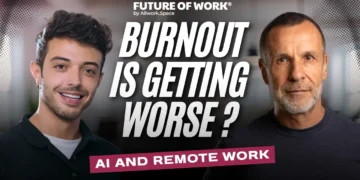
In this forward‑thinking episode of The Future of Work® Podcast, we explore one of the most critical shifts in today’s work ecosystem — the transformation of flexible workspaces and commercial real estate. Joined by three world‑class experts, we unpack how hybrid work patterns, decentralization, and employee choice are reshaping physical workspace design, real estate strategy, and organizational performance. Together, they reveal how flexibility isn’t a fleeting trend — it’s a structural shift affecting people, productivity, cities, and companies worldwide.
About Mark Dixon
Founder and CEO of IWG, Mark pioneered the flexible workspace movement with the creation of Regus in 1989. Under his leadership, IWG has grown into the largest flexible workspace network worldwide with 5,000+ locations spanning brands such as Spaces, Regus, Signature and HQ, serving businesses from startups to Fortune 500s in over 120 countries. Recognized as one of Europe’s most innovative entrepreneurs, Mark’s vision has fundamentally reshaped how organizations view and use workspace.

About Cali Williams Yost
CEO of the Flex+Strategy Group, Cali is a globally recognized authority on high‑performance work flexibility. A strategist, author, and futurist, she has spent nearly three decades helping organizations unlock peak performance by redefining how, when, and where work gets done. She blends research, strategic frameworks, and leadership principles to help teams integrate flexibility in ways that elevate engagement, performance, and innovation.
About Andrea Pirrotti‑Dranchak
As Head of Real Estate, Americas at infinitSpace, Andrea brings 25+ years of experience leading flexible workspace expansion and innovation across 65+ countries. A respected voice in commercial real estate reinvention, she helps organizations unlock asset value and create user‑first work environments. Andrea’s work bridges strategy, real estate performance, and the evolving dynamics of worker choice and experience.
What You’ll Learn
- Why traditional commercial real estate demand is shrinking and what that means for future workplace strategy
- How hybrid and remote work patterns are driving decentralization, community‑centered work models, and workspace choice
- Why flexible work fails when it lacks strategy, shared expectations, and purpose
- How performance‑oriented flexibility elevates engagement, innovation, and outcomes
- Why workspace must evolve into an experience, not just a location
- The role of worker choice and empowerment in reshaping real estate value
- How AI and workforce demographics intersect with workspace planning
- What organizations need to rethink to align real estate, work design, and employee experience
Transcript
Host AI
[ 00:00:00,650 ]Welcome to the Future of Work podcast, where we explore what’s next in work, workplace, and the human experience. I’m Nova. Your AI host. Today, you’re listening to a Future of Work Expert Insights. A special format where we bring together the most thought-provoking insights from our top guests around a single topic shaping the future of work.
Host AI
[ 00:00:23,890 ] In this episode, the topic is flexible workspaces and commercial real estate. Exploring how shifting work patterns, decentralization, and hybrid models are reshaping the places we work. From rethinking office portfolios to prioritizing employee choice and experience, our guests examine the evolving role of real estate in a world where flexibility drives performance, purpose, and profit. Our guests, Mark Dixon, Callie Williams-Jost, and Andrea Perotti-Dranczak, bring a sharp lens on flexible workspace strategy. From operational models and workplace behavior to decentralization and the economic realities behind CRE.
Host AI
[ 00:01:03,010 ] each offering unique insights and shaping the future of work. Let’s begin.
Host AI
[ 00:01:09,540 ] As organizations reevaluate how much space they need, and where some see crisis. Mark Dixon sees clarity.
Host AI
[ 00:01:17,810 ] Mark Dixon, CEO of IWG, pioneer of the flexible workspace movement with more than 5,000 locations globally. He shares why the future of CRE is experience-led, AI disrupted, and powered by decentralization.
Host AI
[ 00:01:33,260 ] What is the biggest misconception about the future of office space? And what’s actually happening.
Mark Dixon
[ 00:01:38,210 ] If you take a look at the future of Real Estate Present, it will be less and better quality. So when people [i] sort of want to bring folks in it better be good because those are not going to come in right so it becomes much more of experience an experience—an experience-based product. So number one, number two, the future of real estate is: there will be a lot less [and] really this sort of nonsense talk about you know, sort of working from home or RT— it’s not a thing. Really, people have been working from home for the last 10 years. I know I have! I know I’m very unproductive doing it, but I work remotely. In a hybrid way all the time. The future of real estate is: is very clearly there will be less requirement [and] really the elephant in the room is not you know, people working from home, it’s AI.
Mark Dixon
[ 00:02:31,890 ] That’s going to disrupt far more than anything else. What I can tell you very clearly is an AI robot doesn’t need an office. They need the dates to send it. So that is the elephant in the room in terms of coming back to the office.
Mark Dixon
[ 00:02:46,209 ] It’s not about inflation. It’s not about economies growing, anything. It’s about population. And the real question is, how many office workers, knowledge workers, will there be in five or ten years’ time? Now, the key thing there, apart from AI, is that populations generally, knowledge workers are dropping.
Mark Dixon
[ 00:03:06,210 ] Okay, because of birth rates. So less real estate. Plus, companies want to be efficient. You know, if work can be done effectively from another location.
Mark Dixon
[ 00:03:18,260 ] And I can tell you that the biggest change isn’t with front office people, it’s all back office people. If you go around suburban America, rural America, those massive call centers— 50 of them— are gone, and the other 50 percent are going. That’s a picture.
Host AI
[ 00:03:36,500 ] The office isn’t going away, but it’s becoming smaller, smarter, and far more intentional.
Host AI
[ 00:03:42,690 ] As we rethink physical space, we also need to reimagine how flexible work gets done and why. Because if the model isn’t clear, the performance won’t follow. That’s where Callie Williams-Yost comes in.
Host AI
[ 00:03:55,500 ] Callie Williams-Yost, CEO of FlexPlus Strategy Group, future of work strategist and flexibility pioneer. We talk a lot about flexibility, but not enough about how to make it work. Callie challenges us to think deeper.
Host AI
[ 00:04:11,370 ] Why do so many flexible work models fall short? And how can we design them for performance, not just convenience?
Cali Williams Yost
[ 00:04:18,149 ] Because to me, the next level question really is how do we make flexible work models high performing. Okay, how do we reimagine? the way work is done so that we can use that flexibility to fuel performance, engagement, innovation.
Cali Williams Yost
[ 00:04:35,210 ] And so part of that— or the main part of that— is getting everybody on the same page about where, when, and how work is done. And right now we are not. To your point. Um. You talk to Nick. He told you data around the fact that you need now on our next round of mandates.
Cali Williams Yost
[ 00:04:52,790 ] and let’s say you are mandated to come in five days, you’re coming in on average three to four.
Cali Williams Yost
[ 00:04:58,650 ] Let’s say you’re mandated to come in two to three days a week. you’re maybe coming into.
Cali Williams Yost
[ 00:05:04,370 ] And the reason for that is: People just don’t know why they’re there. You haven’t gotten them. you haven’t created a shared understanding for the need to be in person and what you’re going to do then. And then what you’re going to do when you’re not in person. So you’re not on the same page. It’s inefficient. This is not a new thing. You and I both know this and. I think the hard part right now. is we seem to be grasping. right, trying to get back to this traditional work model. That we believe existed before COVID.
Cali Williams Yost
[ 00:05:34,580 ] And it didn’t. And so that’s holding us up. From now stepping forward and saying, ‘Okay, let’s now assess.’ Where we are. Let’s admit. We’re not going back. So now, how do we move forward? Because the model we have now in many cases was executed under a crisis circumstance, right? Like you and I would go in before COVID. And do a thoughtful execution and be strategic. And there were leaders that saw this new flexible work reality happening.
Host AI
[ 00:06:02,760 ] Flexibility works best when it’s strategic, shared and designed to fuel real performance.
Host AI
[ 00:06:08,710 ] From hybrid schedules to city planning, the ripple effects of flexible work are everywhere. Our next guest shares what happens when every worker becomes a decision maker in real estate.
Host AI
[ 00:06:20,190 ] Andrea Perotti-Dranczak, Head of Real Estate, Americas at Infinite Space. Expert in CRE reinvention and workspace value strategy. Behind every real estate disruption is a user who won’t settle. Andre reminds us, if the office isn’t compelling, people will walk.
Host AI
[ 00:06:37,740 ] How is the power dynamic shifting between workers and landlords? And what does that mean for the future of real estate?
Andrea Pirrotti-Dranchack
[ 00:06:44,070 ] I think you’re right. Having that more holistic mix of live work. Um, Bye. Play, if you will, within a within a certain radius makes a whole bunch of sense. It makes. A more vibrant community.
Andrea Pirrotti-Dranchack
[ 00:07:02,190 ] When I think of the writing on the wall with all the classical change drivers that are compelling this change, right? Compelling. In terms of where, when, how people work, who’s going to work. All of that stuff. But then I think of all the friction that’s on the other side of enabling and supporting this change. It’s very challenging, which is why I say that this has to be, number one, we have to be informed by other categories, right? When you look at the evolution of Blockbuster. And then to Netflix home delivery, and then to Netflix streaming. Or if you look at the evolution of the record industry, where it used to be that record companies had complete control over the content that was being distributed. And then you had Napster, which ultimately went out or just having revitalization. And then you had music going streaming, music going directly to the end user, putting the power in the hands of the end user.
Andrea Pirrotti-Dranchack
[ 00:08:04,460 ] Our category is the same. It used to be that less than 1% of knowledge workers could make a workspace-related decision. That fact has changed. Every single person who reports to the office has the ability to make a workspace-related decision as to where they’re going to go. And regardless of whether there’s that return to office mandate, if going into an office is not compelling, it’s not going to happen, and they’re going to leave and they’re going to go work someplace else.
Host AI
[ 00:08:30,860 ] As today’s conversation revealed. Flexible work isn’t just a perk. It’s a lever for transforming how we use space, lead people, and shape cities. Mark spotlighted the structural shifts in real estate, Kali reframed flexibility as a performance strategy, and Andrea showed us how CRE is being reshaped from the ground up. The future of work isn’t shrinking the office. It’s reimagining where, how, and why we gather at all.
Host AI
[ 00:08:59,350 ] Thanks for listening to this Expert Insights episode of the Future of Work podcast. If you found it insightful, share it with a colleague, leave us a review, or check out our show notes for links to each guest’s full interview. Until next time, keep asking not just where we work, but how we work better together.