



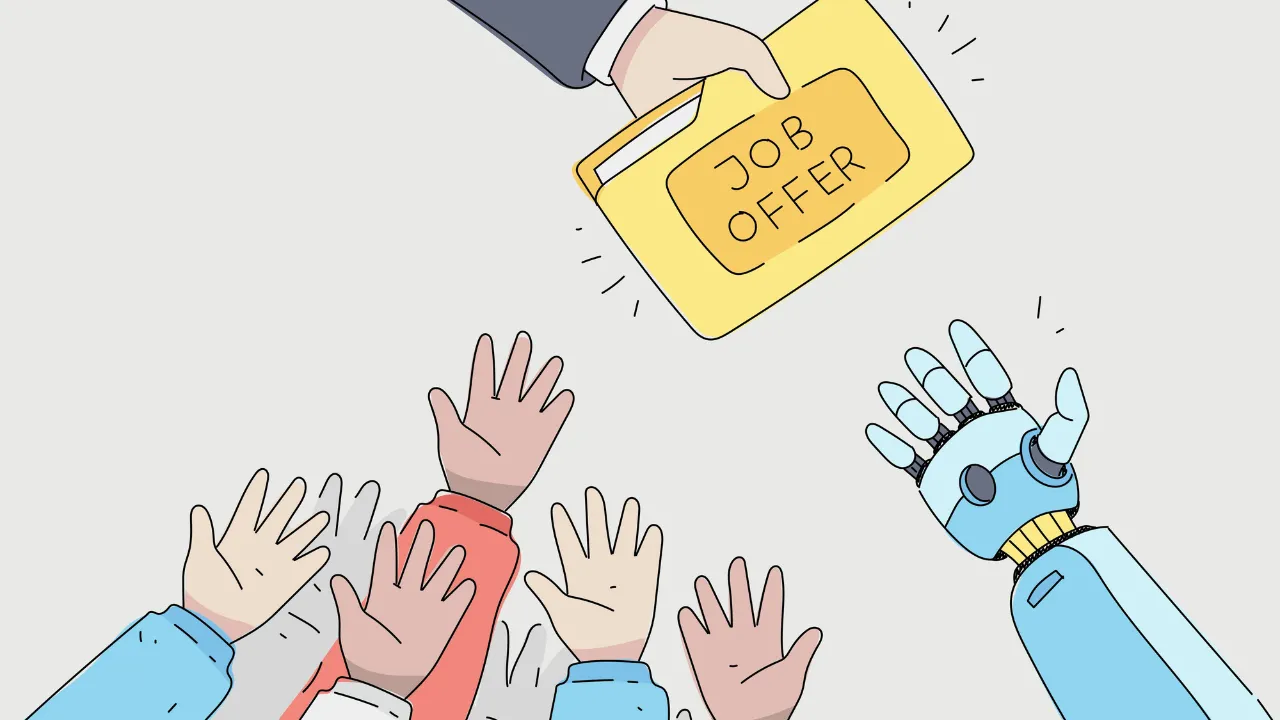
More than 1.17 million U.S. jobs were cut in 2025 — the most since the pandemic hit. Now, AI is rebuilding what was torn down, and it’s not building the same thing.
To navigate the dust and noise of this rebuild, it helps to study the blueprint taking shape: Automated job applications, AI-powered digital twins, lifelong career copilots – and, critically, how to wield powerful AI systems without surrendering the cognitive advantages that make human work indispensable.

Living near an active construction site often feels like an embodiment of chaos. It’s loud, dusty, disorienting, and permanently in flux. And that’s the most precise metaphor of what’s happening now to the global labor market.
The pre-Covid structures were torn down by a tide of mass layoffs. In 2025, the U.S. alone had 1.17 million jobs cut. Now, new AI-powered frameworks are rising in their place. This transformation is happening fast, and we all are trying to adapt to it on the go.

How AI Crashed the Old Labor Model
HRs remember Covid-19 for its aggressive recruitment. The tech surge, caused by the sharp need for digital services, seemed limitless, and companies staffed up like never before to outrun competitors. Within two years, this human resources bubble burst, with thousands of those newly hired being laid off.
Analysts painted a gloomy picture of the future of work, that promised hiring freezes and cost-cutting strategies. But almost as quickly as the contraction began, AI entered the enterprise mainstream. The foundations of the previous labor model were already weakened, so instead of reinforcing old systems, AI simply crashed them and began building new ones
So here we are, in the midst of a global work construction site, with no hard hats on. Many job seekers today feel stuck in limbo, with previous playbooks outdated and new rules being written in real time through trial and error and experimentation with AI automation. To break through this vicious circle, we all need to learn to make use of best practices without hurting ourselves in the process.
The Real Level of AI Integration
Strip away the headlines, and the real story of AI in the workplace appears less about transformation and more about expectation. While some bold optimistic slogans encourage “stop hiring humans”, measurable impact of AI inside organizations remains limited – according to Gartner, only one in 50 AI investments delivers transformational value.
This AI optimism is one of the main drivers of the job-market transformations. Corporate leaders are restructuring teams and redesigning hiring workflows based on what AI is expected to do. For job-seekers, that distinction matters as organizational commitment to AI is already reshaping skill demand. McKinsey reports a sevenfold rise in the AI fluency requirements among applicants in the last two years.
Career strategy today must include the ongoing building of this AI fluency: Familiarity with AI services, stronger prompting skills, active implementation of AI in everyday work processes and the ability to showcase both qualitative and quantitative gains. All of this should already be part of an applicant’s professional story, transmitted through social networks, résumés, cover letters and real-world use cases.
Your AI Twin Will Apply Before You Do
Hiring is already shifting toward an environment where AI personas of applicants and employers “meet” before humans do. And this is not hypothetical. Engineer Charlie Cheng has already created a digital twin open for recruiters to talk to.
Besides AI doppelgangers, recruiters will make their own “AI portraits” of potential employees. Here’s how it works: Automated tools scan digital profiles, LinkedIn histories, portfolios and broader web traces to evaluate candidates long before a recruiter reads a résumé. This is why highlighting certifications, AI literacy and use cases should already be actively highlighted.
But visibility cuts both ways. The same systems mapping professional strengths also surface negative digital traces, like hateful comments to a biting social media post, reputational risks, negative reviews at job-search platforms, which will be considered by recruiters and their personal algorithms.
AI tools may be making workers less capable of the thinking that AI can’t replicate
By 2027, most hiring processes are expected to include certifications or assessments measuring workplace AI proficiency – not just the ability to use generative tools, but also critical thinking, creativity, communication and subject-matter expertise. While not yet mandatory, there already exist certification programs that would strengthen a CV, like AWS Certified AI Practitioner or MIT’s Professional Certificate Program in Machine Learning and Artificial Intelligence.
This necessity surged from the latest findings on Gen AI influence on workers’ cognitive offloading. As people actively rely on algorithms to write, analyze, summarize and ideate, they risk outsourcing core thinking processes. Over time, this can erode memory, problem-solving endurance and creative synthesis – the very cognitive advantages that differentiate humans from machines.
While organizations are focused on AI integration and predicting performance advancements, there’s far less effort into understanding how people themselves will change as they integrate these tools into daily workflows. Yearly professional AI upskilling will become part of the human resource corporate education. Until then – it’s the responsibility of workers to keep the cognitive load balanced.
Your Career Copilot is Coming
The next shift is how workers navigate their own careers. The near future points to hyper-personalized AI career assistants – always-on agents that understand not just your résumé and certifications, but your goals, struggles, ambitions and growth trajectory.
These copilots will track skills, recommend learning paths, flag market opportunities and guide decisions from job searches to career pivots. This is all in addition to basic AI opportunities like tailoring applications and interview prep. Feeling afraid to negotiate a salary rise? A personal career coach will help build a data-based scenario, offering realistic rise expectations and what objections there may arise.
AI companies are already developing such deeply personalized career agents designed to align individual potential with market needs. This way, career management is shifting from reactive guesswork to continuous, AI-guided strategy.
How Humans Stay Afloat
In this environment, open-mindedness and careful observation are the major survival skills. The old job-search routines may lead to recruiters’ silence. Not because of people but Applicant Tracking Systems, declining 75% of resumes. This transition is still unfolding, and its final shape is far from fixed.
There is, however, a more-or-less visible direction. Those who learn to balance automation with human judgment, efficiency with authenticity, and speed with depth will remain valuable regardless of how the tools evolve.
Because even as AI redraws workflows and entire professions, the core of work remains human. Meaning, responsibility, trust – these are not lines of code. And for those willing to keep learning, observing, and adjusting, the construction site of today is not just a place of disruption, but of opportunity.
Written by Alex Chepovoi for Fortune as “75% of resumes never reach a human: the new rules of job searching in the AI era” and republished with permission. Alex Chepovoi is CEO and co-founder of Global Work AI.