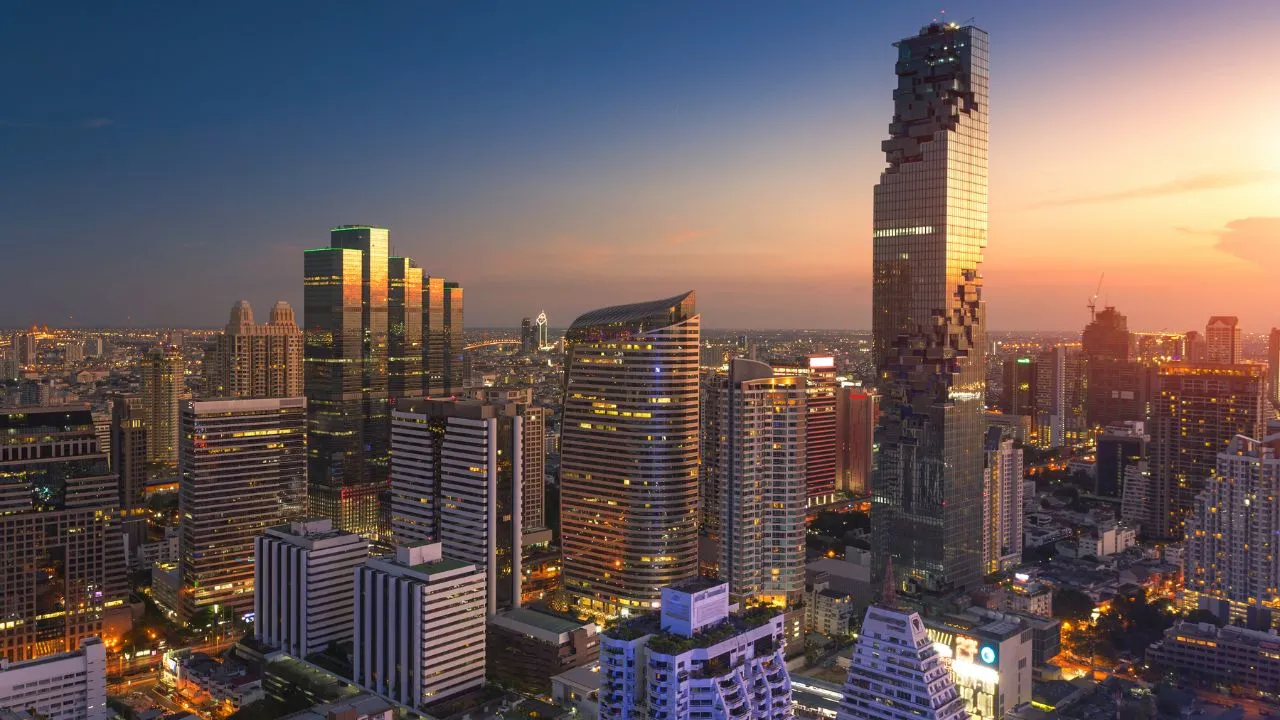
Bangkok’s prime office vacancy rate climbed above 30% for the first time in more than two decades as a wave of new developments added pressure to the market.
According to JLL, prime vacancy in Bangkok’s central business district reached 31.8% in the first quarter of 2026, the highest level recorded since 2000.

New Supply Pushes Vacancy Higher
The increase was driven largely by the completion of One Bangkok Tower 5, which added roughly 99,000 square meters of office space to the market. Total prime office inventory in Bangkok’s CBD has now reached 1.76 million square meters.
Most of the new supply has been concentrated in Central Bangkok, particularly along Rama IV Road. Meanwhile, the Central East submarket has not seen a major office completion since mid-2024.

JLL reported negative net absorption of 2,500 square meters during the quarter as large occupiers moved out of older buildings, offsetting leasing gains in newer developments.
Tenants Continue “Flight To Quality”
Despite weaker overall demand, companies are still relocating into newer premium office buildings.
Tenant activity remained focused on high-end developments in Central Bangkok as occupiers sought upgraded office environments and newer amenities. The ongoing “flight-to-quality” trend has continued to benefit recently completed towers while older assets face mounting competition.
Prime gross rents in Bangkok’s CBD rose 1.1% quarter over quarter to THB 1,023 per square meter per month, supported by premium new developments. However, many landlords continued offering discounts, incentives, and renewal packages to maintain occupancy levels.
More Supply Still Coming
Investor sentiment remained cautious as vacancy levels climbed and leasing activity softened. Prime office yields held steady at 5.6% during the quarter.
Additional supply is still on the way. One Bangkok Tower 2 is expected to add another 73,000 square meters of premium office space in the third quarter of 2026.
JLL expects vacancy rates to remain near 31% in the near term as leasing demand stays subdued as macroeconomic uncertainty weighs on markets.