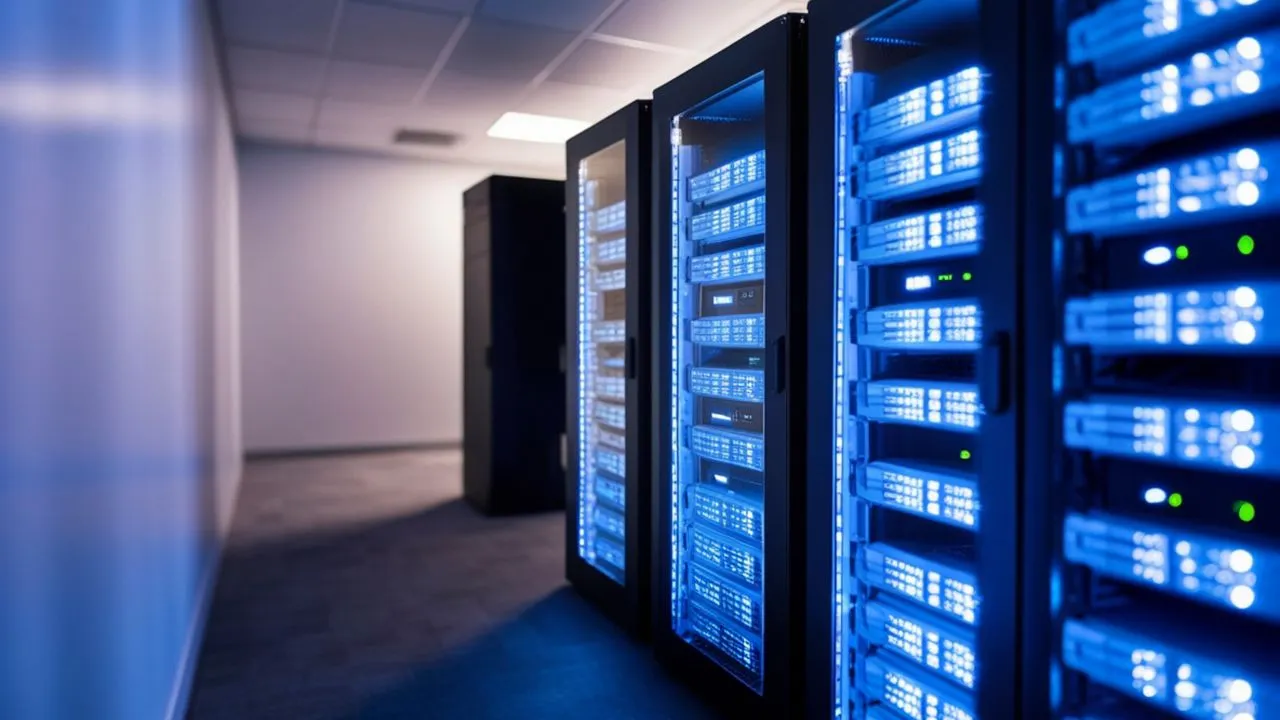
Tech companies are pouring record amounts of money into AI infrastructure, but a growing number of data center projects are running into delays tied to power shortages, permitting challenges, and supply-chain constraints, according to The Wall Street Journal.
The issue has raised questions about whether the hundreds of billions of dollars being committed to AI can be deployed as quickly as companies hope.

AI Spending Continues to Surge
Major technology firms are dramatically increasing capital expenditures as they race to expand AI capabilities.
Collectively, Alphabet, Microsoft, Meta, and Amazon spent roughly $410 billion on capital investments last year and are expected to exceed $670 billion this year.

Alphabet recently announced plans to raise as much as $85 billion in equity capital, underscoring the scale of investment required to support AI growth.
Data Center Delays Are Growing
Despite the influx of capital, construction timelines are slipping.
A recent analysis by JPMorgan found that more than 60% of data center capacity targeted for completion in 2027 has not yet entered construction, while an additional 7% of projects have already been delayed.
Industry experts point to a combination of factors, including lengthy permitting processes, shortages of key equipment, and growing competition for electricity.

The power challenge has become especially significant as modern AI data centers consume enormous amounts of energy, with some facilities requiring as much electricity as a midsize city.
Google Bets on Energy Control
Rather than relying solely on traditional utility connections, Google is pursuing a strategy that includes securing energy resources directly.
Earlier this year, Alphabet acquired renewable energy developer Intersect Power, giving the company access to large-scale wind and solar projects that could support future data center operations.
The company has also invested in programs designed to shift computing workloads and reduce power consumption during periods of grid stress, potentially allowing facilities to connect to the grid more quickly and operate more flexibly.
Power Is Becoming a Competitive Advantage
As AI infrastructure expands, access to electricity is emerging as a critical differentiator.
Several technology companies are exploring on-site power generation, including natural gas and nuclear energy, to reduce dependence on congested electrical grids.
Companies such as xAI, OpenAI, and Meta have proposed or developed projects that pair data centers with dedicated energy sources.
Meanwhile, Microsoft has backed plans to restart a reactor at the historic Three Mile Island Nuclear Generating Station as part of its long-term energy strategy.
The Next Bottleneck in the AI Race
The AI race is increasingly becoming a race for power rather than capital.
While investors remain willing to fund large-scale infrastructure projects, companies are discovering that securing electricity, grid connections, and construction resources may be more difficult than raising money.
As demand for AI computing continues to climb, the ability to build and power new data centers could determine which companies are able to turn record investment plans into operational capacity.