What is the impact of sport on the world of work?
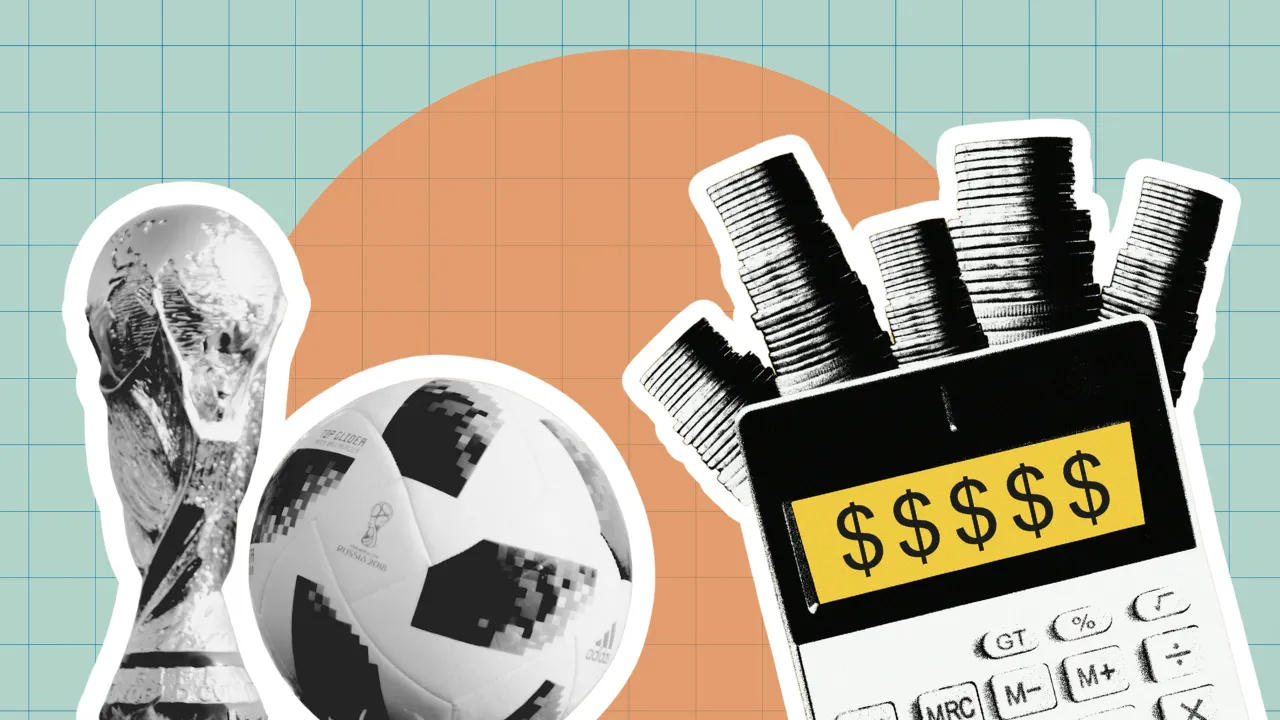
The afterglow of the World Cup seems like the right time to think about the impact of sporting tournaments on the economy and the world of work. The analysis of the effect of a major tournament requires us to look from two different perspectives — that of the country/city hosting the tournament and that of the countries participating in the tournament.

Does Hosting Major Sporting Events Actually Return A Profit?
For countries seeking to make a profit from holding an event, the results have on the whole been disappointing with only one event having made a clear profit, the Los Angeles Olympic Games of 1984. The City of Angels is an outlier having also made a profit the previous time it hosted the Olympic Game in 1932. Ignoring the earlier success, when events were very different to today’s, the recipe for success seems to have been its ability to dictate the terms it wanted with the International Olympic Committee in the absence of any other city competing to host the Games.
This combined with the fact that the city already had all the required infrastructure in place with enough stadiums, hotels and road space, made it easier to keep costs down and to make a profit. Cost overruns have bedevilled most Olympic Games with the 1976 Montreal Games and the Sochi 2014 Winter Olympics being outstanding examples. In the latter, the $10 billion budget ballooned to $51 billion, making it the most expensive Games ever held in Winter or Summer.

The cost of the infrastructure necessary to host the Games is not always included in the cost calculation, allowing the organizers to claim that Beijing 2008 and London 2012 were profitable at an operating level, ignoring the fact that the governments spent $40 billion and $18 billion respectively on infrastructure to make those Games possible.
For 2012, the London Organizing Committee of the Olympic and Paralympic Games acquired and remediated a huge area of former industrial land in the East of the city which was too contaminated for private real estate businesses to consider using. No doubt the Government would argue that the money invested produced a long term benefit for the city in that a former wasteland now contains a large public park with well-used sports facilities including a football stadium as well as two new residential areas and shops and offices which might never have been built without the Games.
The re-use of Olympic facilities after the Games have finished has been a key criterion of success or failure for host countries. The prime examples of failure were Athens 2004 and Rio 2016 Games where many of the facilities were allowed to decay through neglect and were of no benefit to the city inhabitants who had paid for them through their taxes.
Why World Cup Hosts Struggle To See A Return
Analysis of World Cup tournaments presents a different picture because of the presence of FIFA as organiser. FIFA captures most of the revenues through its ownership of broadcast rights, sponsorship and global ticketing, leaving the host cities to pay for stadiums, security and transport. So profit, even at the operating level, only happens when a host can use existing infrastructure.

As with the Olympics there is one oft-quoted example of a World Cup tournament that was profitable for the host country: the 2006 event in Germany, made possible by the use of existing football infrastructure and the construction of lasting transport links. In 1994, the organizers of the tournament in the USA managed to make a profit but neither the host cities nor the country itself benefited as the expected $4 billion boost to the economy failed to arrive. This then seems to be the pattern, with the host cities investing billions but receiving revenues of only millions.
National Pride Can Translate Into Real Economic Gains
Let’s now turn to consider the second perspective, which you might call the ‘feelgood’ factor which is the increase in national happiness caused by hosting, winning or even simply making it to a major tournament. For an example of the last, you only have to consider the case of Cape Verde, whose inaugural qualification at the World Cup produced a massive wave of national enthusiasm and excitement, undimmed by the fact that the team lost all of its games and exited at the first stage.
A similar effect was observed in Scotland, which participates in the tournament in its own right, and which also exited after the group stage despite winning its first match. The fact of qualifying for the tournament for the first time in 28 years was a significant achievement for a small nation and generated a lot of national pride.
This increase in happiness is measurable, not anecdotal, and leads to concrete economic effects for the country concerned. One of the clearest examples was the statistically significant link found by researchers between the performance of the England national team and the returns on the London Stock Exchange.
The feel-good factor encourages consumer spending both during and after the tournament and when accompanied by good weather, as this year, the effect on certain industries, like hospitality, can be significant. Pubs and bars have been full to bursting, both in the U.S. cities hosting the games and in all the competing countries.
The Romans certainly understood this phenomenon, their bread and circuses. In recent years the U.K.’s success in sports has been boosted by the use of funds generated through the National Lottery for supporting Olympic athletes and other sports. If that really does raise the level of national happiness and cause stock prices to rise, who can argue?
How Sport Creates Jobs, Business Opportunities And Local Economic Growth
How does all of this affect the world of work? First and most obviously, sport is big business these days and vast sums are invested in major teams all over the world, so much so that accusations are regularly made that billionaires are trying to buy something that should belong to the people, i.e. the fans. The economic activity created by sport creates a huge value chain network of suppliers.
Take the English city of Manchester as an example. Manchester has two Premier League football teams, Manchester United and Manchester City. Manchester United was the most supported sports team in the world for many decades owing to a massive fan base in Asia, though its status as the most popular is now being threatened by Manchester City and by Arsenal (both more successful on the pitch), and in Arsenal’s case with a very large number of fans in Africa.
It is not just the major teams, favored by billionaires, that have an economic effect, however. Local sports teams can be equally important in smaller towns and cities. Bearing in mind that coworking is very much a community business, a number of coworking operators have chosen to sponsor a local sports team as a good way of creating awareness among potential customers. If a local team is successful in competition, particularly against a bigger and better funded club in a World Cup-style knockout competition, this can create a significant sense of wellbeing and can draw new businesses to a location.
The English and Scottish FA Cups both work in this way and every year a smaller team can come out as a ‘giant killer’, by knocking out a much bigger and more famous club thereby boosting the local economy. When a large international tournament takes place, hordes of organizers and media staff tend to descend on the locations, buying up all the hotel rooms and restaurant reservations for miles around, providing a very direct, though short-lived boost. The organizers would also tend to need flex office space for the duration of the tournament and in some locations for months beforehand.