
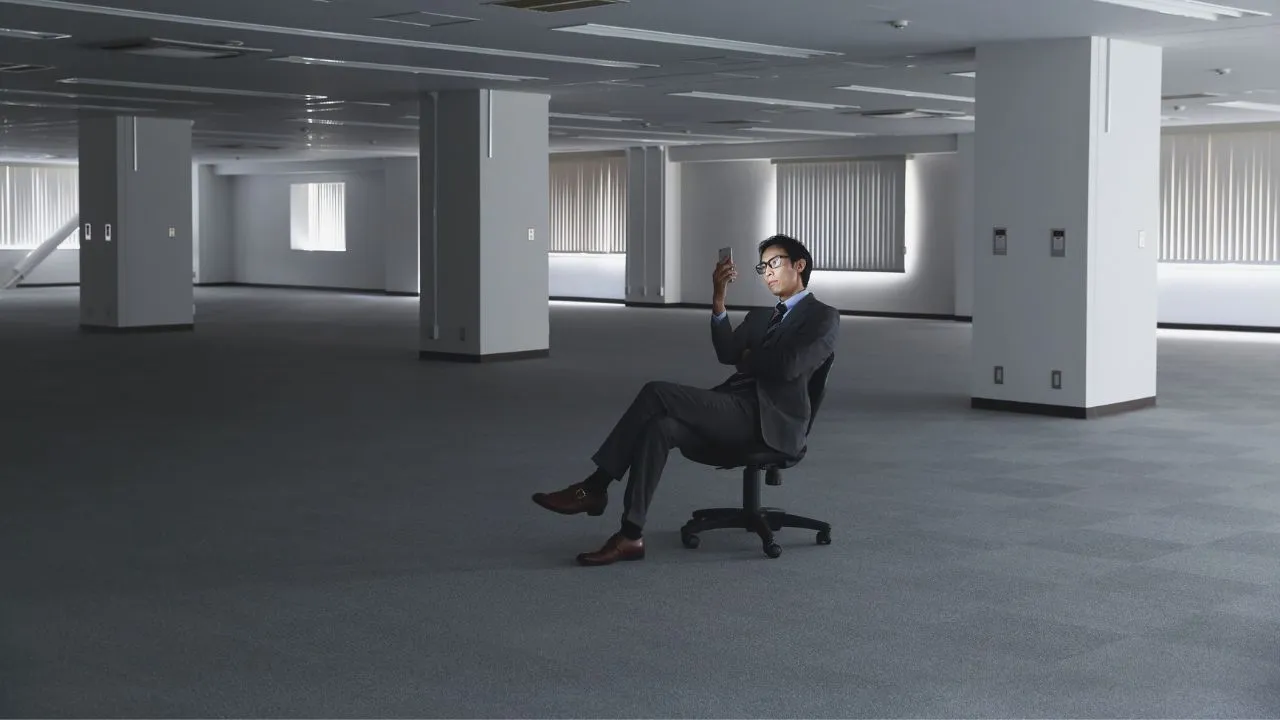
Companies across the Americas are asking employees to spend more time in the office, but many have yet to make the workplace compelling enough to close the attendance gap, according to CBRE’s 2026 Americas Office Occupier Sentiment Survey.
Three Days Becomes The New Standard
Nearly nine in 10 employers now expect staff to be in the office at least three days a week, up from 78% in 2025. However, actual attendance still trails expectations, averaging 2.9 days per week compared with the 3.2 days employers want.

CBRE found that colleague interaction remains the biggest reason employees come into the office, while inconvenient locations and a lack of amenities are the biggest barriers.
Most Companies Are Making Small Changes, Not Big Ones
Although organizations increasingly see the office as important, few are making major investments to improve it.

Nearly half of respondents rated their workplace experience as average or below average compared with peers. More than half said they are making only incremental improvements, while just 14% are pursuing significant workplace transformation. Many companies are instead balancing employee experience against pressure to improve space efficiency and control costs.
AI Is Beginning To Influence Office Decisions
Artificial intelligence is starting to influence real estate strategies, though its impact varies.
Twenty-three percent of organizations said AI is already affecting space planning, while another 30% expect it to do so within two years. Rather than simply reducing office footprints, many expect AI to increase demand for flexible, multipurpose spaces and specialized environments such as innovation labs and training areas.
More than one-third also expect AI to increase demand for higher-quality office amenities as companies compete for talent.

Office Portfolios Continue To Stabilize
The survey suggests occupiers have largely moved beyond pandemic-era uncertainty.
For the third consecutive survey, two-thirds of organizations said they plan to maintain or expand their office portfolios over the next three years. Technology companies are leading that trend, with 64% planning to expand their space, up from 41% a year earlier.
Large organizations are still reducing office footprints, but at a much slower pace than in 2025, indicating that much of the initial hybrid-work rightsizing has already taken place.
Flexibility Becomes A Core Strategy
Organizations are increasingly building flexibility into their real estate decisions rather than relying solely on long-term leases.
Only 16% of respondents said they do not have a flex workspace strategy, down from 24% last year. Many companies are using flexible space, expansion rights, contraction rights, and lease-break clauses to manage uncertainty while adapting to changing workforce needs.