




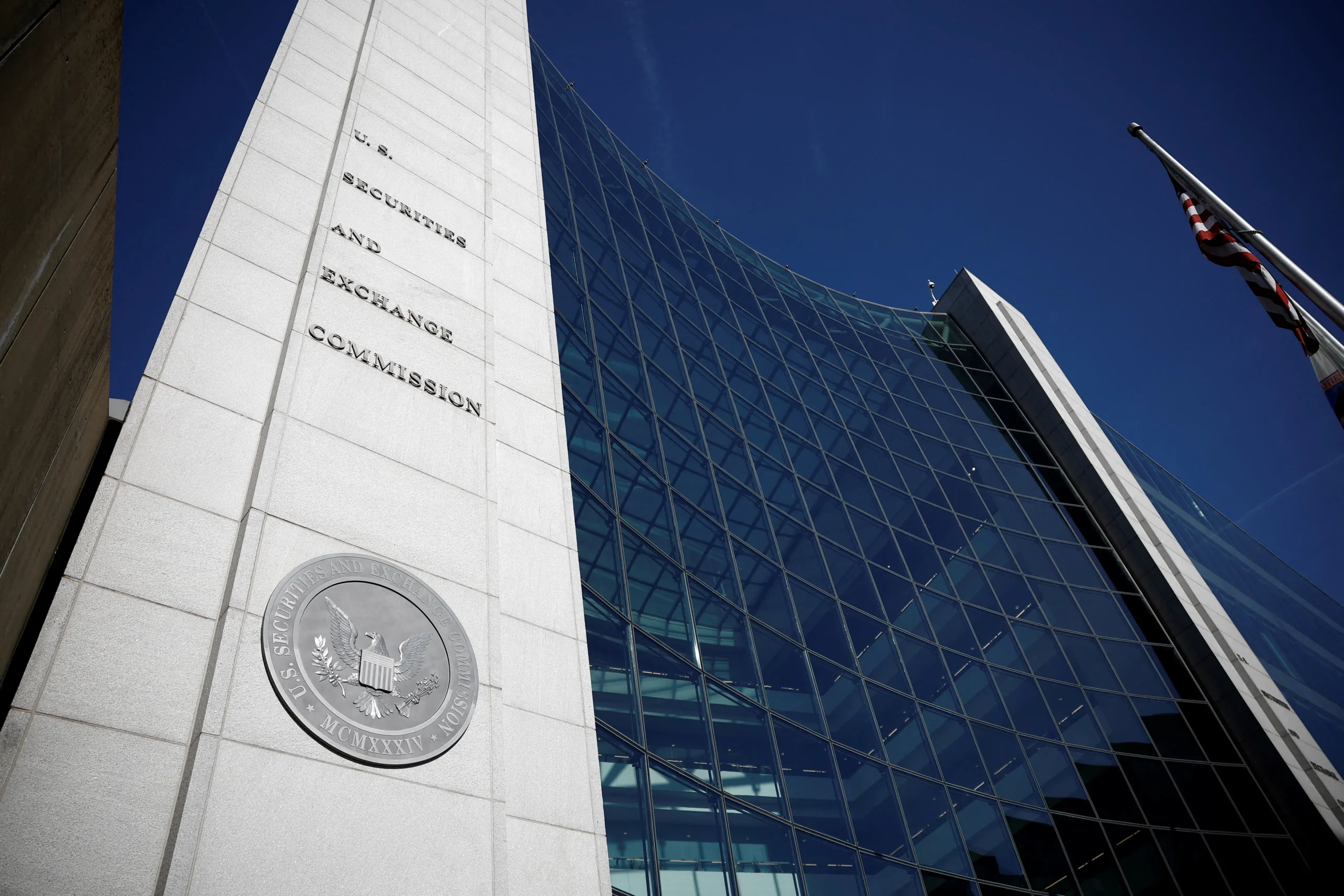
Wall Street’s top regulator on Friday proposed scaling back requirements for publicly traded companies to disclose detailed information about compensation for executives and board members, saying it would help to unburden companies of complex requirements that do little to enlighten investors.
The changes would let companies decide themselves whether benefits such as club memberships and personal use of company property count as executive perks that must be disclosed. Investors could end up with less visibility into how much executives are paid as a result.

The US Securities and Exchange Commission has made a number of recent moves that tilt the balance of power from investors back toward companies.
The latest proposal aims to turn back some of what agency officials say has been a creeping accumulation over time of requirements for detailed investor information that analyzes the ways companies’ chief executives are paid.

Paul Atkins, chair of the US Securities and Exchange Commission, said in a statement that the new rules would help to limit such disclosures to what investors actually need to know.
Investor advocates and lawmakers have pointed to soaring compensation, with pay for C-suite figures growing in recent decades far faster than that of the workers they employ. Some Democratic candidates cited these disparities during the runup to midterm elections earlier this month.
Under the proposal unveiled on Friday, covered companies would have to disclose information about pay packages in most cases for only two executives — the principal executive and financial officers — instead of the usual five, and would raise the threshold for reporting workplace perks to $150,000 from $10,000.
The rules would also cut personal security for an executive’s home or travel from listed examples of benefits that require disclosure as perquisites.
In addition, the new rules would cut the number of disclosure tables provided to investors during proxy votes and shrink the population of workers used to determine the “median employee” whose compensation is compared with that of top executives.
Ben Schiffrin, head of securities policy at Better Markets, an advocacy organization that calls for tougher oversight of Wall Street, said in a statement that research has shown CEO pay rose 54% between 2019 and 2025, while global worker pay fell 12%.
Shareholders need to know how the companies they own are paying management, he added.
“It’s not surprising companies would want to shield how much their executives earn from investors. It is surprising that the SEC, supposedly the investors’ advocate, would help them do so,” Schiffrin said.
The proposal will be subject to a 60-day public comment period prior to any decision on amending or adopting it.
(Reporting by Douglas Gillison in Washington; Editing by Kirsten Donovan and Edmund Klamann)