



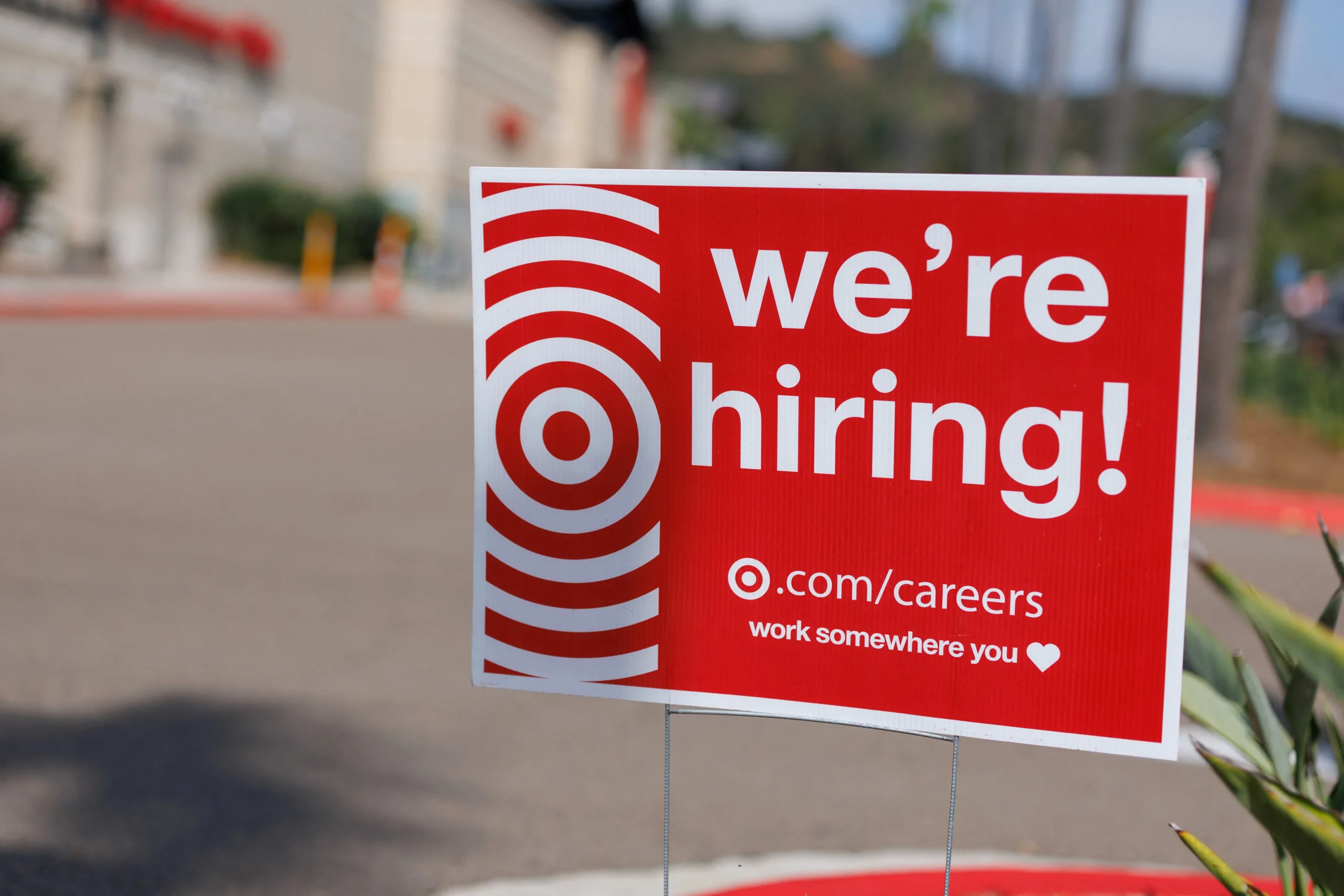
The number of Americans filing new claims for unemployment benefits increased slightly last week, suggesting that labor market conditions remained stable, though some laid-off workers are struggling to find new opportunities.
Labor market resilience gives the Federal Reserve greater scope to focus on stamping out inflation, which is being fueled by the ongoing US-Israeli war with Iran.

“It’s a ‘medium-hire, low-fire’ job market right now,” said Heather Long, chief economist at Navy Federal Credit Union. “It’s still tough for young Americans trying to get onto the career ladder, but it’s easier than it was a year ago.”
Initial claims for state unemployment benefits rose 1,000 to a seasonally adjusted 203,000 for the week ended November 14, the Labor Department said. Economists polled by Reuters had forecast 197,000 claims for the latest week. Claims had hovered at or below 200,000 since mid-September.

Four states, including Texas and California, reported declines in unadjusted applications of more than 1,000 last week. But filings in Michigan surged by 6,095, more than reversing the prior week’s decline. Economists said Michigan’s launch last week of a new online platform for filing unemployment claims could account for the increase.
The four-week moving average of claims, which irons out week-to-week volatility, increased 2,000 to 197,750.
Economists said strong growth in profits amid robust domestic demand and a smaller workforce resulting from retirements and an immigration crackdown by the Trump administration were shielding workers from layoffs.
The unemployment rate dropped from 4.5% in November 2025 to 4.1% in October this year, raising the possibility that the labor market could be tightening, though moderate wage growth suggests otherwise.

Minutes of the US central bank’s October 27-28 policy meeting, published on Wednesday, showed officials saw a growing risk last month that they might need to intensify their efforts to control inflation. The minutes also noted that “many pointed to signs of modest tightening in the labor market,” adding that policymakers “generally expected labor market conditions to remain stable in the near term and viewed upside and downside risks to the labor market as broadly balanced.”
More Aggressive Response
Stocks on Wall Street were trading mostly lower. The dollar was steady against a basket of currencies. US Treasury yields rose.
Fed Governor Christopher Waller said on Wednesday the central bank needs to get more aggressive in its response to inflation that he fears is changing public psychology about prices, and either approve a half-percentage-point interest rate hike at its December 8-9 meeting or communicate a faster pace of hikes in 2027.
The central bank left its benchmark overnight interest rate in the 3.75%-4.00% range at a meeting last month. Financial markets have priced in a 25-basis-point increase at the Fed’s meeting next month and anticipate another increase in borrowing costs in January, CME Group’s FedWatch tool showed.
The claims report covered the period during which the government surveyed businesses for the nonfarm payrolls component of November’s employment report.
The four-week average of claims was little changed between the October and November survey periods. Nonfarm payrolls increased by 165,000 jobs in October.
Despite the increase in payrolls, employers remain reluctant to boost head counts, with economists saying some businesses were probably uncertain about their staffing needs as they incorporate AI into their operations. Economists also view the drawn-out Middle East conflict as hampering hiring.
The claims report showed the number of people receiving unemployment benefits after an initial week of aid, a proxy for hiring, increased by 70,000 to a seasonally adjusted 1.763 million during the week ended November 7. The jump pushed so-called continuing claims to their highest level since the end of August and suggested that some people who have lost their jobs are experiencing long bouts of unemployment.
Unadjusted continuing claims in Michigan increased by 39,343, accounting for the lion’s share of the national increase that week. Continuing claims in Michigan had dropped considerably in the prior week.
“Averaging the last two weeks likely provides a more accurate signal than focusing on either report individually,” said Veronica Clark, an economist at Citigroup. “Even after smoothing through that volatility, the data may point to a modest uptick in continuing claims over the last couple of weeks. If sustained, that could suggest job finding is becoming slightly more difficult even as layoffs remain low.”
The median duration of unemployment surged to 11.9 weeks in October, the longest since November 2021, from 11.5 weeks in September.
(Reporting by Lucia Mutikani; Editing by Chizu Nomiyama and Paul Simao)