




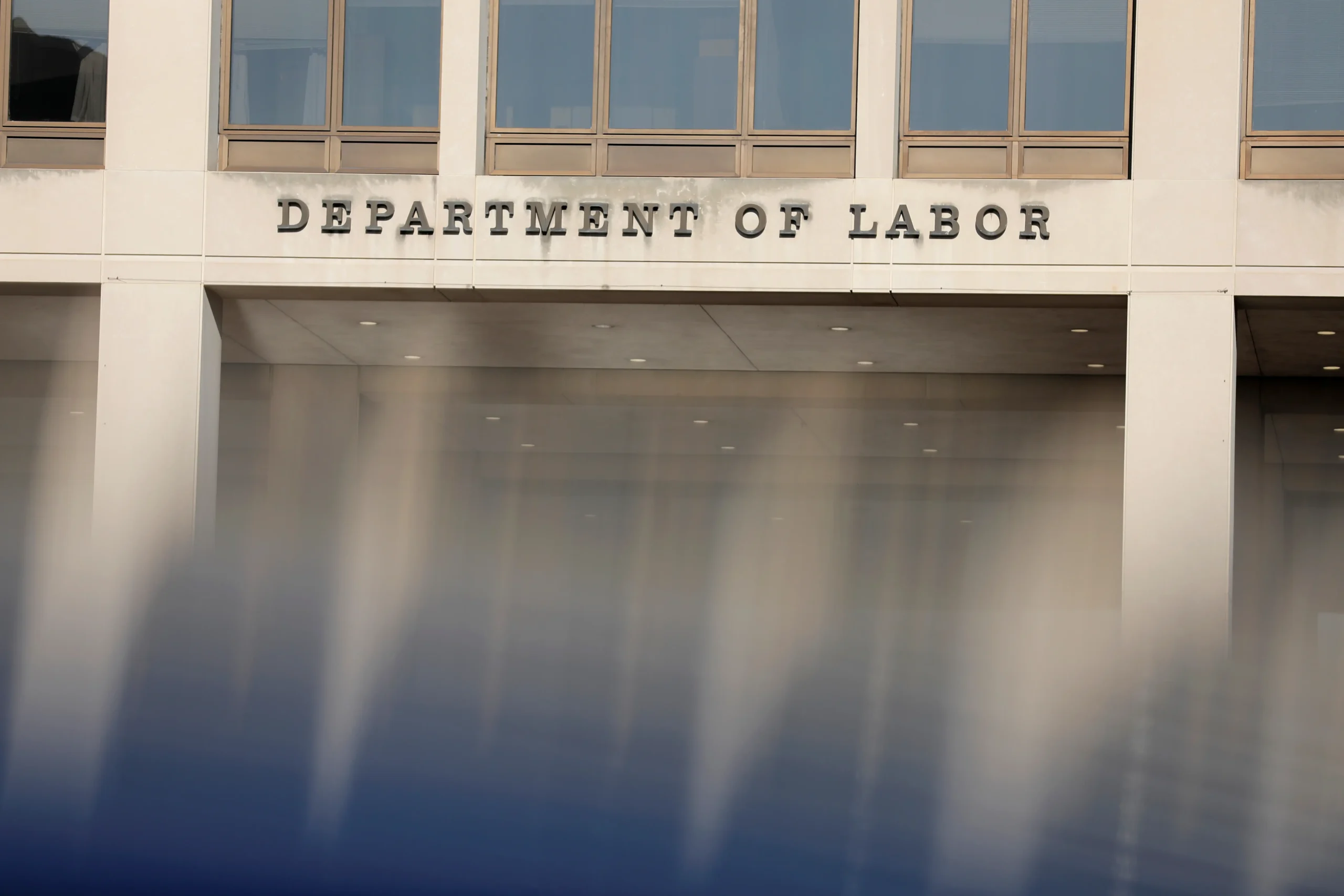
President Donald Trump’s administration on Thursday moved to scrap a rule long opposed by business groups that made it harder to classify workers as independent contractors rather than employees, who can cost a company more.
The U.S. Department of Labor released a proposal to repeal the 2024 rule, which it said was legally flawed, and replace it with a standard that focuses on the amount of control companies exert over workers.

“Generally, if a worker is in business for him or herself and isn’t dependent on an employer for work, the worker is an independent contractor,” Andrew Rogers, the administrator of the Labor Department’s Wage and Hour Division, said during a call with reporters.
The Biden-era rule had established a set of factors for determining the proper classification of a worker, any one of which could tip the scales in favor of finding an employment relationship.

The rule proposed on Thursday would instead focus on whether workers are under the control of a company or have more opportunity to profit from investing their money and time.
Trucking, Retail Sales Among Industries to Benefit
The proposal could lower costs for companies in a range of industries, including trucking, healthcare, retail sales and app-based transportation and delivery services such as Uber and Instacart, which rely heavily on contractors and have been accused in scores of lawsuits of misclassifying workers to save money.
Employees can cost businesses up to 30% more, according to several surveys, because they are entitled to the minimum wage, overtime pay, unemployment insurance, reimbursements for expenses and other protections not afforded to contractors.
Worker classification has been one of the most contentious employment-related issues over the last decade, and trade groups lobbied heavily to repeal the 2024 rule after an effort by Republicans in Congress to block it stalled.
The Biden-era rule had replaced a regulation adopted during Trump’s first term that said workers who own their own businesses or have the ability to work for competing companies – such as a driver who works for Uber and Lyft – can be treated as contractors. The proposal announced on Thursday would largely revive that standard.
The proposal will be formally published on Friday, kicking off a 60-day period for public comment.
The move drew immediate praise from trade groups including Flex, which represents app-based services including Uber, Lyft and Instacart. Kristin Sharp, the group’s CEO, said the proposal recognizes the realities of modern work.
“The millions of Americans who earn through app-based platforms do so because they value the flexibility to choose when, where, and how to work,” Sharp said in a statement.
Supporters of the Biden-era rule have said that misclassification of workers is rampant in some industries, and that repealing the rule would open the door to workers being stripped of basic legal protections.
“This is a devastating consequence for working families who are already struggling in the Trump-Vance economy,” Representative Robert Scott, a Democrat from Virginia, said in a statement.
The Biden-era rule had been expected to trigger a flood of new lawsuits alleging that workers had been misclassified as independent contractors. But that litigation never materialized, likely due to the limited amount of time the rule was in effect before the Labor Department last year signaled that it would be repealed.
The rule was challenged in at least five lawsuits by freelance workers, employers and business groups, and those cases have either been dismissed or paused pending further rulemaking by the department.

(Reporting by Daniel Wiessner in Albany, New YorkEditing by Alexia Garamfalvi, Rod Nickel, Peter Graff)