
Advertise
No Result
View All Result
Allwork.Space
Future of Work
Newsletters
  • Latest News
  • Leadership
  • Work-life
  • Coworking
  • Design
  • Career Growth
  • Tech
  • Workforce
  • CRE
  • Business
  • 🗣️Expert Voices
  • 🛒Product Reviews
  • 🌎Coworking Spotlights
  • 🎙️The Future Of Work Podcast
  • 🔎The Future of Work Urban Dictionary
Allwork.Space logo
Future of Work
No Result
View All Result
Newsletters
Allwork.Space
  • Home
  • News
  • Leadership
  • Work-life
  • Coworking
  • Design
  • Workforce
  • Tech
  • CRE
  • Business
  • Podcast
  • Career Growth
  • Newsletters
Advertisements
Home Design

AI Is Expanding Job Roles — And What People Need From Workplace Designs

AI is making work heavier and more intense, so offices must give people space to reset and reconnect.

Amanda KendallbyAmanda Kendall
March 31, 2026
in Design
Reading Time: 4 mins read
A A
AI Is Expanding Job Roles — And What People Need From Workplace Designs

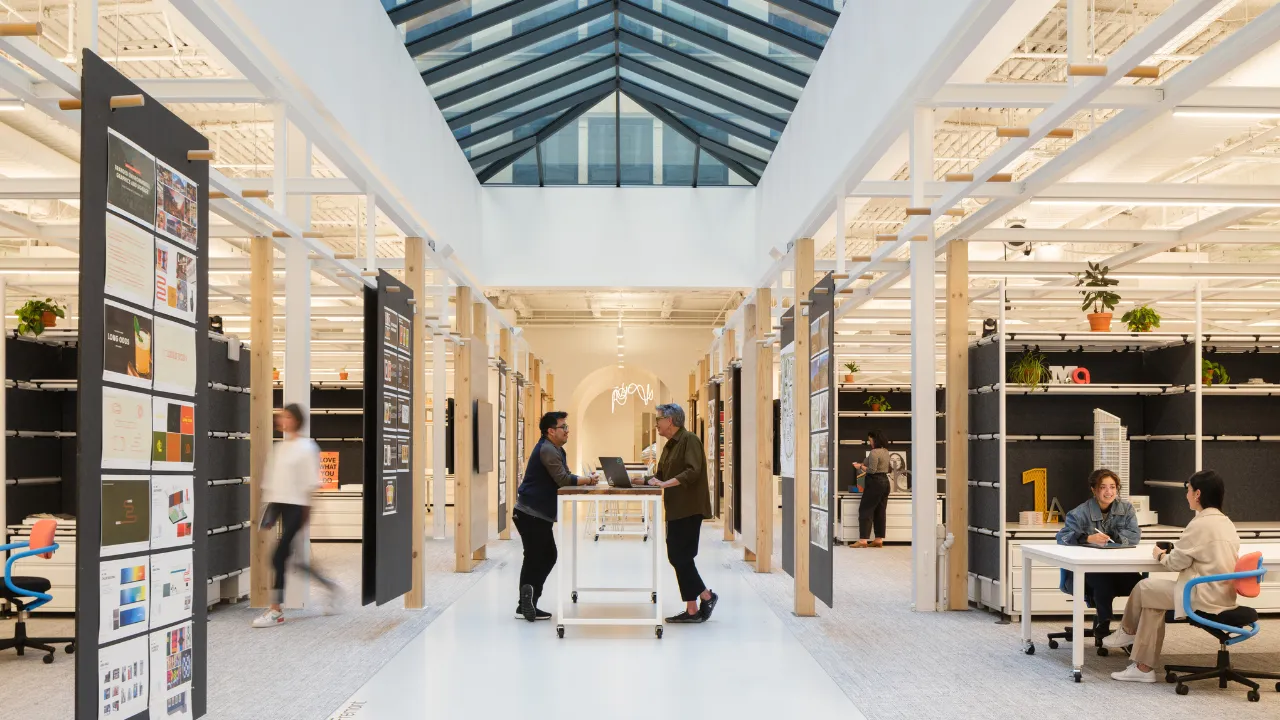
Offices built for static roles are breaking as AI expands how people work, forcing design to prioritize flexibility, movement, and real moments of escape throughout the day. Photograph by Jason O'Rear

A recent article in the Harvard Business Review explored how AI is modifying job tasks, not by eliminating them for employees but how it can expand them. 

AI has pushed users beyond the tasks they once would have outsourced, allowing them to explore new responsibilities and experiment with new roles. Despite what you may think, this did not result in less work, but overtime employees took on more, driven by curiosity and self-direction rather than company mandate. 

Advertisements

This could have a major impact on workplace design and the spaces we design to support work. 

If AI enables employees to stretch into new tasks, new collaborations, and new work modes, then the physical work environment needs to catch up. Past research and experience have shown it is essential to offer a variety of settings, but it now has become even more critical to support restorative balance to our workday.

Advertisements

Many of our clients already recognize the importance of offering a variety of experiences for their users. They view the comprehensive workplace as more than just a place to work, it is a compelling destination that provides a blend of experiences for employees to be alone, collaborate with others, and to build relationships. 

Entering a new world where AI accelerates intellectual strain and expands responsibilities, the workplace must now also work to counterbalance that intensity with choice, energy, tranquility, and human interaction. 

Our team was recently asked to revisit a project where we had created a multitude of these types of experiential spaces. The workplace was intentionally placed a floor away from the mainstream workplace activity and was intended to be a vibrant, multi-functional hub: a bright, welcoming area filled with natural light from full-height glass windows. An engaging reception experience for clients, and a mix of lounge settings and work touchdown spots, complete with zones for all-hands meetings, and gaming areas, and private seating for individual focus were incorporated.

Over time, that separation reduced use and diluted the intended impact. What we learned is that these moments must feel natural, must be accessible within five minutes, and must genuinely entice employees to step away for critical downtime between tasks. 

Advertisements

Proximity, connection, and intuitive placement matter just as much as the design itself. With the implication of an AI focused workforce this rings true with how we must think about energy and engagement in these types of spaces, but with convenience in mind. 

In Gensler’s Global Workplace Survey 2026 the data shows the top five reasons to come to work are:  

  • focus on work
  • technology
  • socializing with colleagues
  • schedule in person meetings 
  • sit with their teams    

With the new AI era and increased technology, we immediately make the jump that if we are more into AI and technology, why do we need more spaces for connection? 

Gensler’s research shows that employees who utilize AI the most are more likely to be the employees that are eager to learn, team builders and emphasize a new path for the workplace of the future. One that is more connected and engaging on multiple levels.

In the last few weeks, we completed a project that embraces this philosophy by intentionally designing meaningful experiences throughout every floor. The approach began with maximizing the window line — utilizing every glass moment for offices and workspaces, even if it meant reorienting the user to capture more light and connection to the outdoors. 

The design includes an interactive outdoor garden and an art-focused serenity balcony overlooking the city, offering restorative spaces that employees can step into throughout the day. 

Zoom rooms and technology-heavy spaces were kept on the interior to prioritize daylight for people. Hospitality-inspired cafés were placed on every floor, so they immediately engage and entice employees just by walking by. 

We introduced booths instead of individual tables to encourage choice and comfort and even incorporated a spa where employees can get their hair or nails done.

Advertisements

While the space does not include a speakeasy, though that is about all its missing, it delivers a traditional approach to individual work with an elevated twist. None of the components themselves are entirely new, but the intention behind them is. 

The design prioritizes thoughtful, immersive moments, unique settings, and indoor-outdoor opportunities across every level, ensuring employees can engage in all types of work throughout the day. 

The key to the future workplace is energy — creating moments that activate people when needed, and balancing them with tranquil, focused environments that provide peace when it is time to reset.

Advertisements
Tags: AICREExpert VoicesWorkplace Design
Share5Tweet3Share1
Amanda Kendall

Amanda Kendall

For more than 30 years, Amanda Kendall has crafted distinctive interior design solutions for clients, consistently delivering outstanding results and establishing herself as a trusted interior designer, furniture expert, and design manager.  Her experience and meticulous attention to detail have enhanced brands, transformed spaces, and successfully completed complex projects. Amanda’s portfolio showcases her ability to manage work of all sizes for a diverse range of clients, from financial services to senior living, hotels to law firms. She is a careful listener and a strong advocate for her clients, providing guidance and developing plans to efficiently meet their goals. As an interior designer and furniture expert, she excels at designing and implementing comprehensive furniture layouts that blend functionality with aesthetics. Currently, as a design manager and studio director, she leads and mentors a talented staff of technical and interior designers while staying focused on the daily tasks that nurture and grow client relationships. Her leadership goes beyond Gensler. As a member of the Board of Advisors at Oklahoma State University’s College of Education and Human Sciences, she offers her expertise and support to both administrators and students in the classroom.

Other Stories Recommended For You

AI’s Biggest Workplace Winners Are The Workers Who Were Already Ahead
News

AI’s Biggest Workplace Winners Are The Workers Who Were Already Ahead

byAllwork.Space News Team
1 hour ago

AI is boosting productivity, but its biggest benefits remain concentrated among advantaged workers.

Read more
AI Companies Are Hiring “Members Of Technical Staff” For Jobs That Don’t Fit One Job Description

AI Companies Are Hiring “Members Of Technical Staff” For Jobs That Don’t Fit One Job Description

1 day ago
AI Is Making Workplace Writing Easier, But Writers Are Paying The Price

AI Is Making Workplace Writing Easier, But Writers Are Paying The Price

1 day ago
McKinsey Estimates 11 Million U.S. Workers May Need To Switch Occupations By 2035

McKinsey Estimates 11 Million U.S. Workers May Need To Switch Occupations By 2035

1 day ago
Advertisements
Advertisements

The Future of Work® Newsletter helps you understand how work is changing — without the noise.

Choose daily or weekly updates to stay current, and monthly editions to explore worklife, work environments, and leadership in depth.

Trusted by 22,000+ leaders and professionals.

2026 Allwork.Space News Corporation. Exploring the Future Of Work® since 2003. All Rights Reserved

Advertise   Submit Your Story   Newsletters   Privacy Policy   Terms Of Use   About Us   Contact   Podcast 

No Result
View All Result
  • Home
  • Latest News
  • Topics
    • Business
    • Leadership
    • Work-life
    • Workforce
    • Career Growth
    • Design
    • Tech
    • Coworking
    • Marketing
    • CRE
  • Podcast
  • Urban Dictionary
  • About Us
  • Advertise | Media Kit
  • Submit Your Story
Newsletters

Welcome Back!

Login to your account below

Forgotten Password?

Retrieve your password

Please enter your username or email address to reset your password.

Log In
This website uses cookies. By continuing to use this website you are giving consent to cookies being used. Visit our Privacy and Cookie Policy.
-
00:00
00:00

Queue

Update Required Flash plugin
-
00:00
00:00