


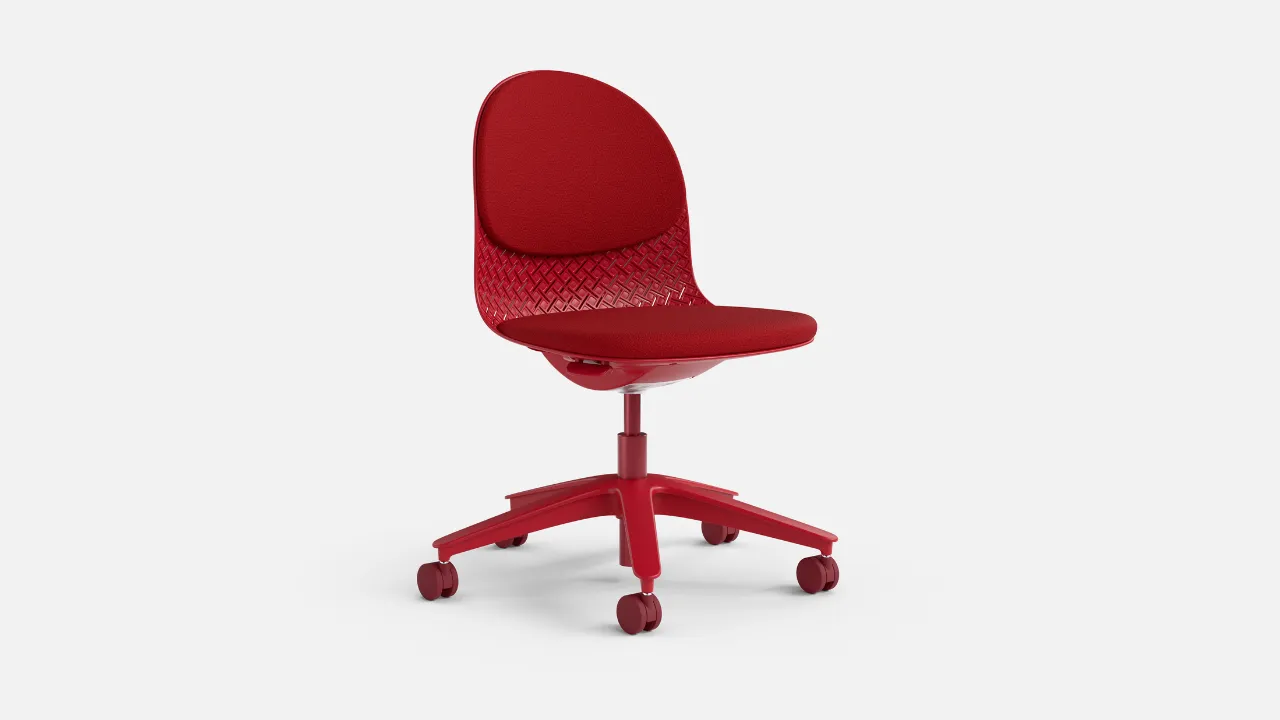
Together with the team at Whitney Architects, we worked from Blink assessing the office chair’s performance across body support and comfort, design and aesthetics, ease of use, and sustainability.
Here’s what stood out.
Meet Blink
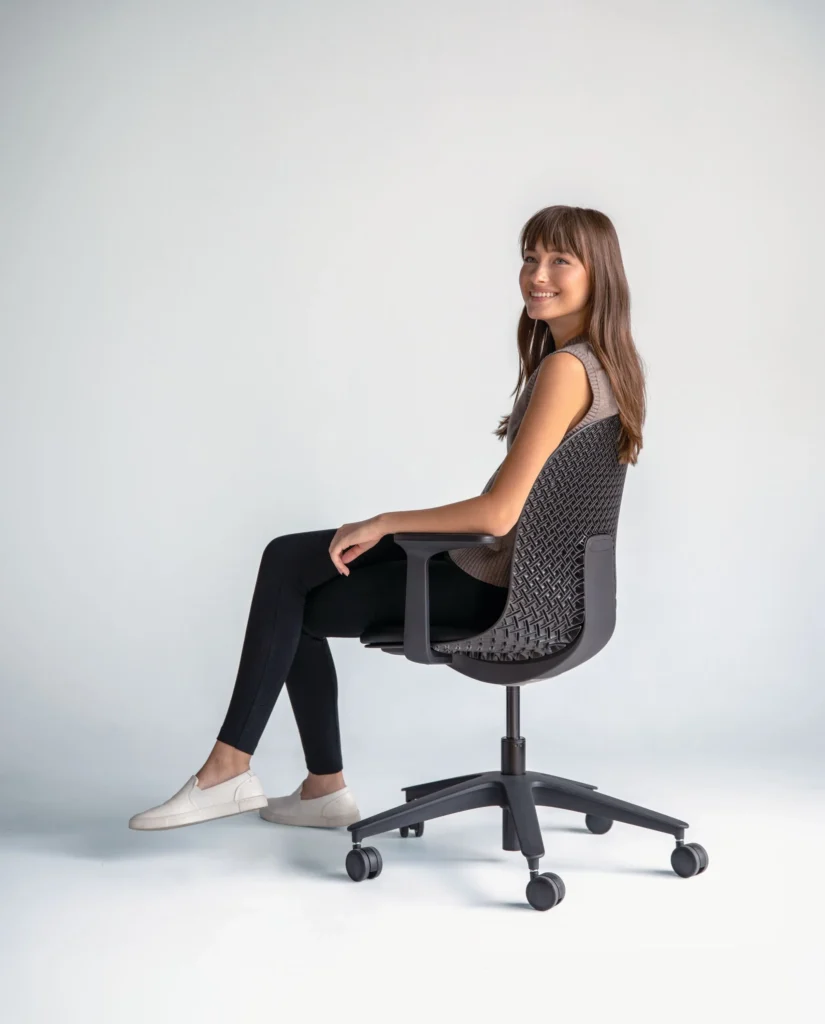 Developed over four years in collaboration with Formway Design, Blink is Teknion’s rethinking of the “ubiquitous plastic chair,” a category staple now under pressure to perform across hybrid, shared, and constantly shifting workplace environments.
In many ways, Blink is a chair designed for a new reality: one where no one owns their seat, work is fluid, and posture is constantly in motion.
At first glance, Blink reads as minimal and refined. But under the surface, it’s doing something more ambitious: applying a reduction-first design philosophy, where fewer components do more work, resulting in a chair that is lighter, more durable, and easier to maintain.
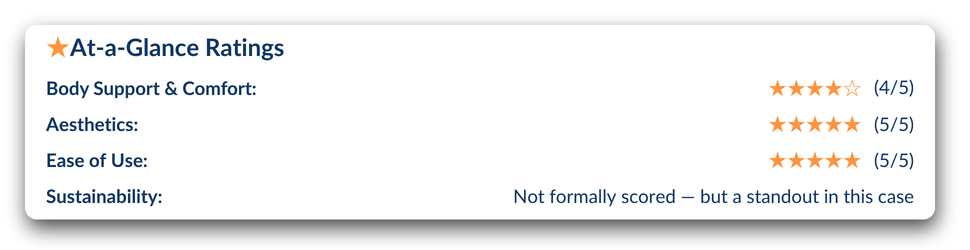
The Scorecard
 Body Support & Comfort: 4/5
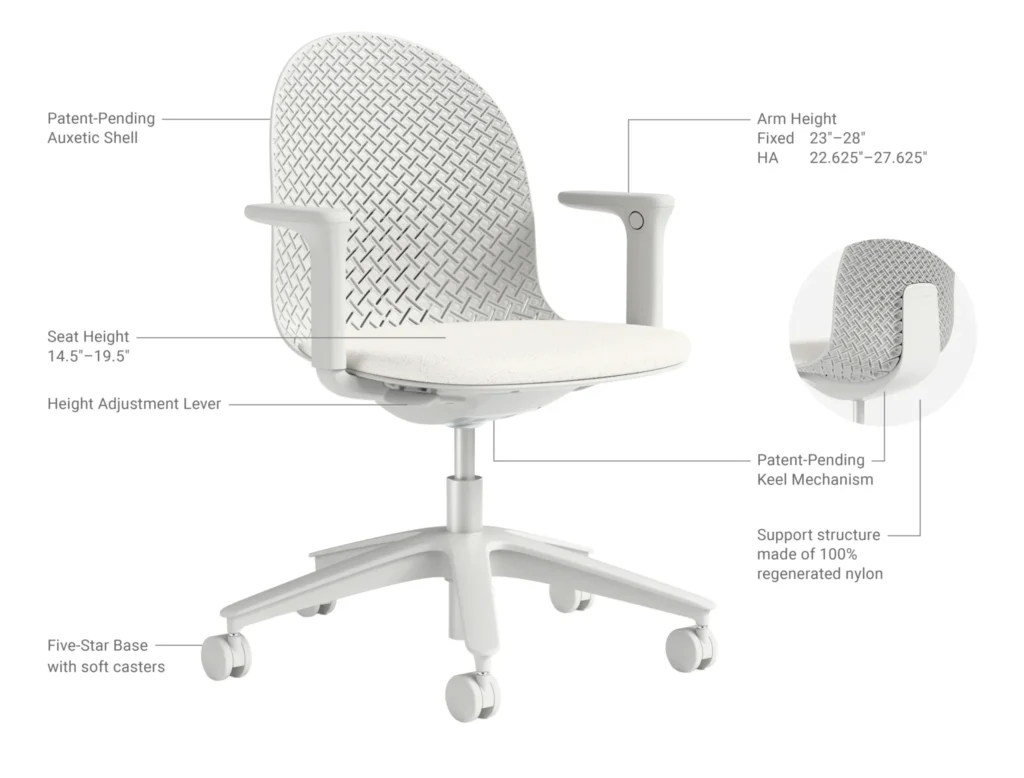
The auxetic shell is made up of precisely engineered slits that create a responsive seating surface that flexes with the body. Paired with the patient-pending Keel Mechanism, which enables forward and rearward tilt, the chair supports natural posture shifts well.
Blink excels at forward-leaning work which is the posture most chairs overlook but users spend much of their day in. While not as plush or lumbar-specific as a traditional office chair, it delivers dynamic comfort aligned with real-world behavior.
Aesthetics: 5/5
Blink stands out immediately. The fully dipped color approach — where the entire chair, including casters, is produced in a single tone — creates a cohesive, elevated look. The auxetic pattern adds depth and visual interest without overwhelming a space.
Ease of Use: 5/5
With an overall height of 32” – 37.2” and seat width of approximately 20”, users can pick your height and go. The Keel Mechanism intuitively responds to each user’s weight and movement, eliminating the need for additional knobs or levers. As a result, there’s a gentle rocking sensation with every move. In shared environments, this is a major win.
Sustainability: A standout
Blink integrates sustainability into its structure, not just its materials selection but also in prioritizing material efficiency, recyclability, and long-term usability.
What We Loved Most
Design & Aesthetics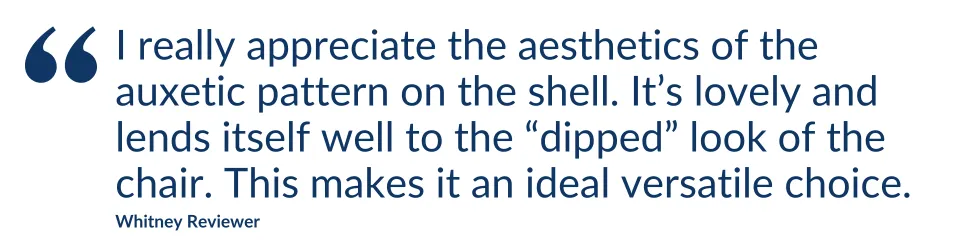
The chair is color dipped from the casters on up. This fully dipped finish is one of Blink’s most compelling features. By producing the chair entirely in one color (including the base and casters) Teknion creates a clean, unified aesthetic more commonly seen in retail, automotive, and athletic product design applications..
The auxetic shell, which is both functional and expressive, adds a layer of visual sophistication while delivering flexibility and strength through its micro-flex zones. It’s a rare case where material innovation becomes a defining aesthetic.
Ergonomics & Movement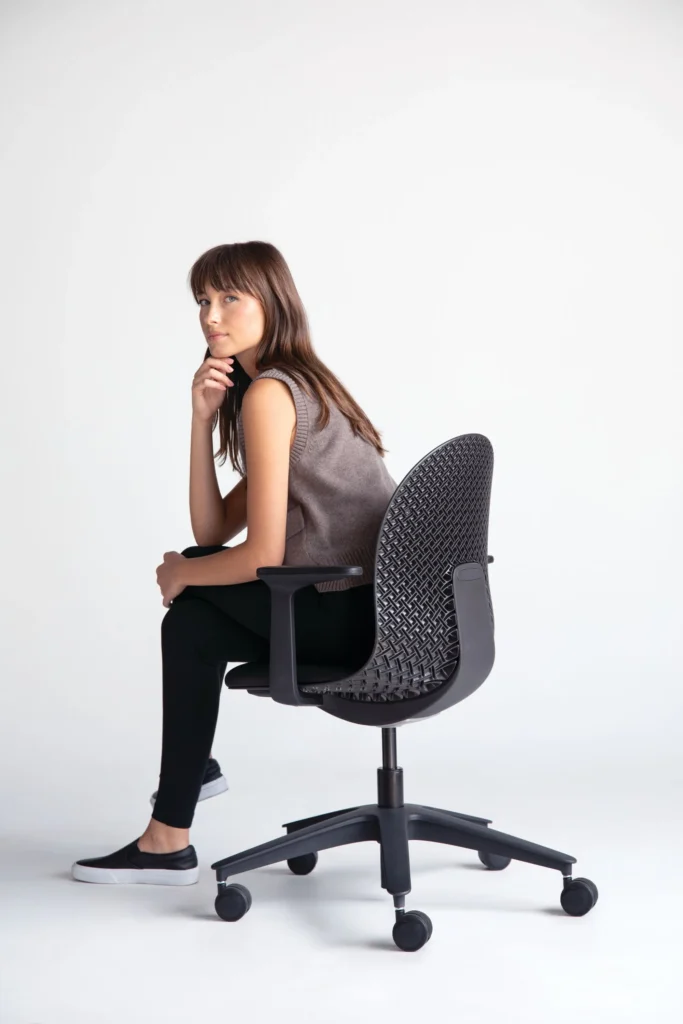
 Blink is designed for how people actually sit — not how they’re supposed to.
Work today is fluid. A single chair may support: focused work, virtual meetings, informal collaboration and social interactions. And often, all within the same hour.
Through both testing and conversations with Teknion’s product team, one insight stands out: even when people appear still, they are constantly shifting, adjusting, and rebalancing.
The Keel Mechanism meets this challenge by:
- Automatically calibrating to each user
- Supporting forward lean, recline, and everything in between
- Enabling smooth, continuous motion
The result is a chair that keeps you in flow without requiring adjustment and without interrupting one’s headspace.
3 Questions with Product Expert Julia La
To better understand the thinking behind Blink, we connected with Julia La, Product Manager in Seating at Teknion. Here’s a shortened version of that conversation:
Q: What workplace behaviors did Blink design for?
A: Hybrid work means one chair supports many people and many tasks often in rapid succession. Blink was designed to adapt instantly to different users and postures, supporting everything from quick touchdown moments to longer focus sessions, without requiring adjustment.
Q: How did you achieve ergonomic performance without traditional mechanisms?
A: Early prototypes were intentionally complex to explore different comfort elements. Over time, these were consolidated into fewer, multi-functional components. Parts of the Keel Mechanism, for example, perform multiple structural and ergonomic roles at once, reducing part count while maintaining performance.
Q: How did sustainability influence the design?
A: Sustainability guided material and construction decisions from the start. By avoiding mixed-material components and adhesives, Blink can be fully disassembled, repaired, and recycled, thereby extending its lifecycle and reducing environmental impact.
Reduction as a Design Strategy
One of Blink’s most compelling contributions is its reduction-first approach. Instead of layering on mechanisms and adjustments, Blink simplifies it with:
- Fewer parts
- Fewer materials
- Fewer decisions for the user
Yet each component performs multiple roles simultaneously. The result is a chair where engineering, material, and form are fully intertwined. Together they deliver performance through simplicity.
Ease of Specification
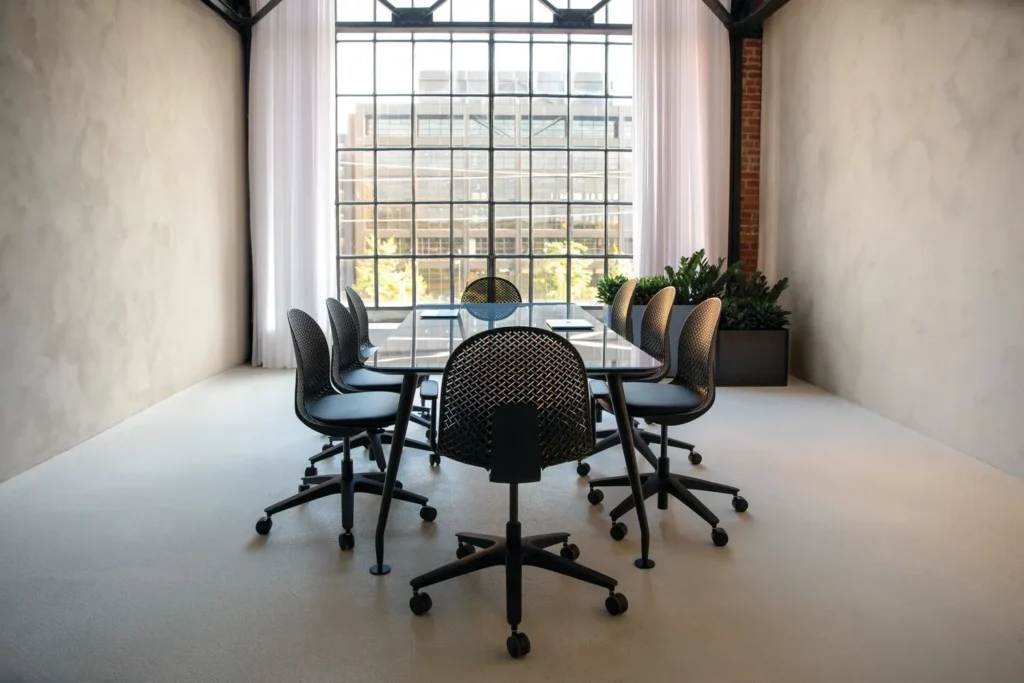 Blink’s versatility is one of its strongest assets. It supports seating in conference rooms, café and social spaces, educational environments, plus touchdown and collaboration zones and more.
While Blink has fixed and height adjustable arm options, we reviewed the armless version, which excelled in supporting side sitting and movement — behaviors often restricted by traditional plastic chairs.
Armless is especially effective where:
- Flexibility is needed
- Turnover is high
- Informal interaction is encouraged
Lightweight Performance
In addition to its structural performance, Blink is notably lightweight, making it easy to move, reposition, and deploy across spaces.
For coworking operators and facility managers, this reinforces Blink’s role as a true multi-use chair, not tied to a single setting.
Sustainability & Lifecycle Thinking
 Blink’s sustainability story goes beyond recycled content since it’s about using fewer materials, more intelligently.
Key highlights:
- Use of regenerated nylon and recycled polypropylene, reduces the carbon content by 30%
- Recycled carpet integration in arm versions
- Use of recyclable aluminum components
- Fully disassembable construction (no permanent bonding)
This “design for disassembly” approach positions Blink as a long-term asset — not a disposable product.
Cleaning & Maintenance
You might be asking: How do you clean the auxetic shell?
On par with other textured or mesh seating, a microfiber cloth is recommended for everyday cleaning with a light vacuum for dust in perforations.
Special Thanks to Whitney Architects
This review was conducted in collaboration with a team of five interiors professionals from Whitney Architects in Chicago, including:
Laura Grodoski, Senior Project Manager
Lindsey Burghgraef, Senior Project Manager
Courtney Gascoigne, Senior Designer
Elizabeth Spurgis, Senior Project Architect
Veronika Diffley, Principal
Their input ensured a balanced evaluation across design intent, real-world usability, and specification practicality.
Want to Learn More?
- Read the Blink story
- Experience Blink in a showroom setting
- Access Blink pricing & specification module
- Configure your own Blink chair
The Review
Blink Chair
In many ways, Blink is a chair designed for a new reality: one where no one owns their seat, work is fluid, and posture is constantly in motion. At first glance, Blink reads as minimal and refined. But under the surface, it’s doing something more ambitious: applying a reduction-first design philosophy, where fewer components do more work, resulting in a chair that is lighter, more durable, and easier to maintain.
Review Breakdown
-
Body & Support: Backrest
-
Body & Support: Stability when reclining
-
Design: Appealing and professional style
-
Ease of use: Easy to find controls
-
Ease of use: Recline and adjustability